
Beyond the Static Graph: A Manifesto for Dynamic Online Social Network Research
Research on Online Social Networks: Time to Face the Real Challenges
This position paper critiques contemporary Online Social Network (OSN) research and advocates for a shift from static friendship graph analysis to a dynamic, user-centric approach. The authors propose Multi-Resolution Analysis (MRA) using Diffusion Wavelets as a mathematical framework to characterize OSN evolution across varying spatial and temporal scales.
TL;DR
Online Social Network (OSN) research is at a crossroads. While current literature obsesses over static snapshots and descriptive graph metrics (like degree distribution), this paper argues that such approaches are fundamentally flawed because they ignore the dynamic churn of users. The authors propose a shift toward Multi-Resolution Analysis (MRA) using Diffusion Wavelets to capture how social networks breathe, evolve, and die in real-time.
Perspective: The Illusion of Connectivity
By 2009, Facebook already boasted 200 million users and a petabyte-scale infrastructure. Yet, the research community was largely treating it as a static "friendship graph."
The authors point out a dangerous fallacy: when you crawl a network to build a "friendship graph," you are aggregating every link ever created. However, at any given second, only a tiny fraction of those users are actually active. A static graph is a historical graveyard, not a map of a living system. This gap between the inferred static structure and the actual temporal snapshots makes traditional findings—such as high clustering coefficients—potentially meaningless for predicting system behavior or performance.
Methodology: The "Toyfb" Experiment and Diffusion Wavelets
The authors utilize a Hierarchical Scale-Free (HSF) network, dubbed "toyfb," to illustrate the problem.
1. The Architecture of Toyfb
The model starts with small, fully meshed cells and connects them hierarchically.
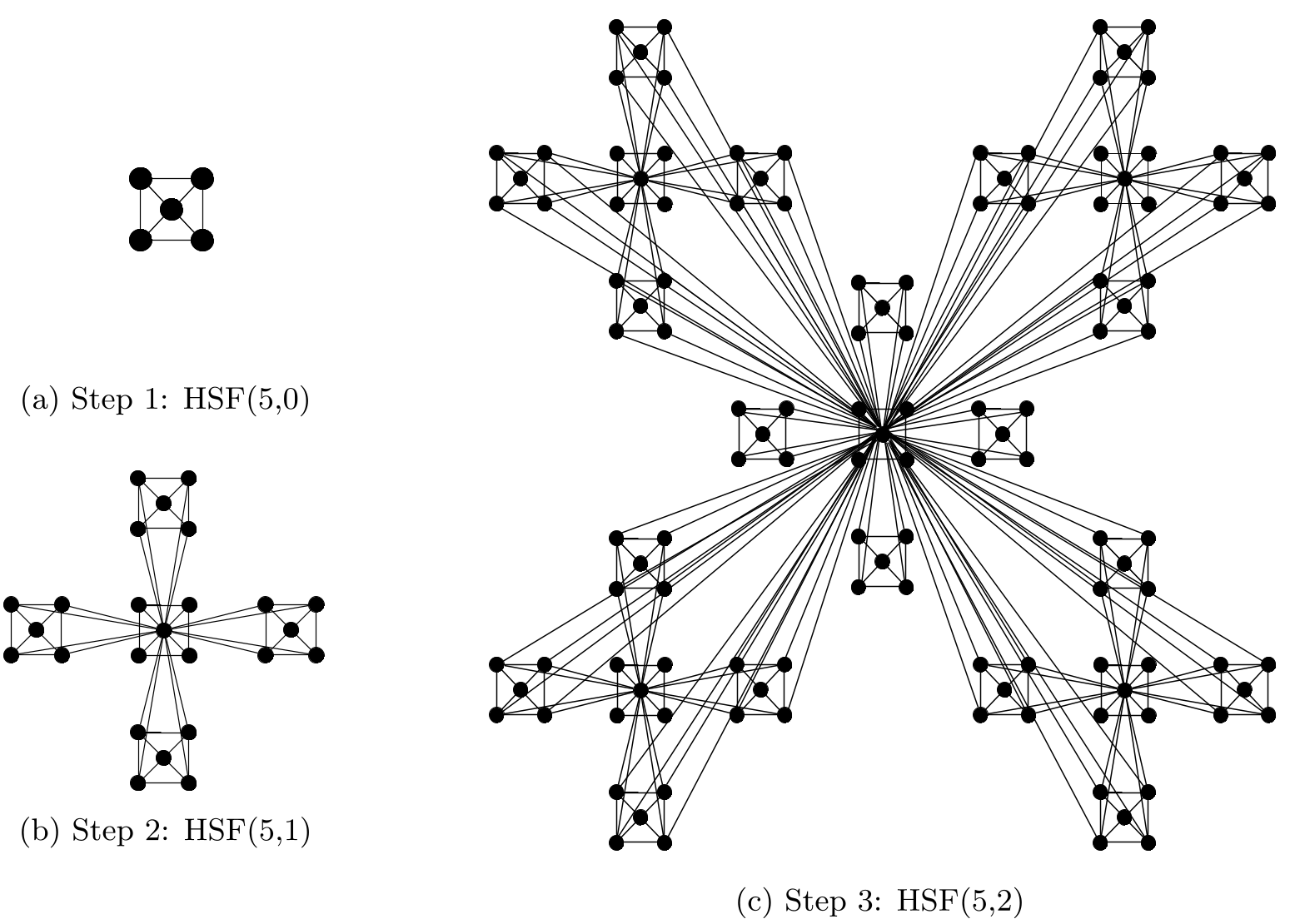 Figure 1: The 3-step construction of the static friendship graph. It looks complex and "small-world" in its aggregated form.
2. The Multi-Scale Solution
To handle the sheer size and noise of OSNs, the authors advocate for Diffusion Wavelets (DW). The intuition is powerful:
- Coarse Scales: Represent large clusters. Changes here are slow and predictive (e.g., the rise of a new geographic community).
- Fine Scales: Represent individual user interactions. Changes here are fast, noisy, and often transient.
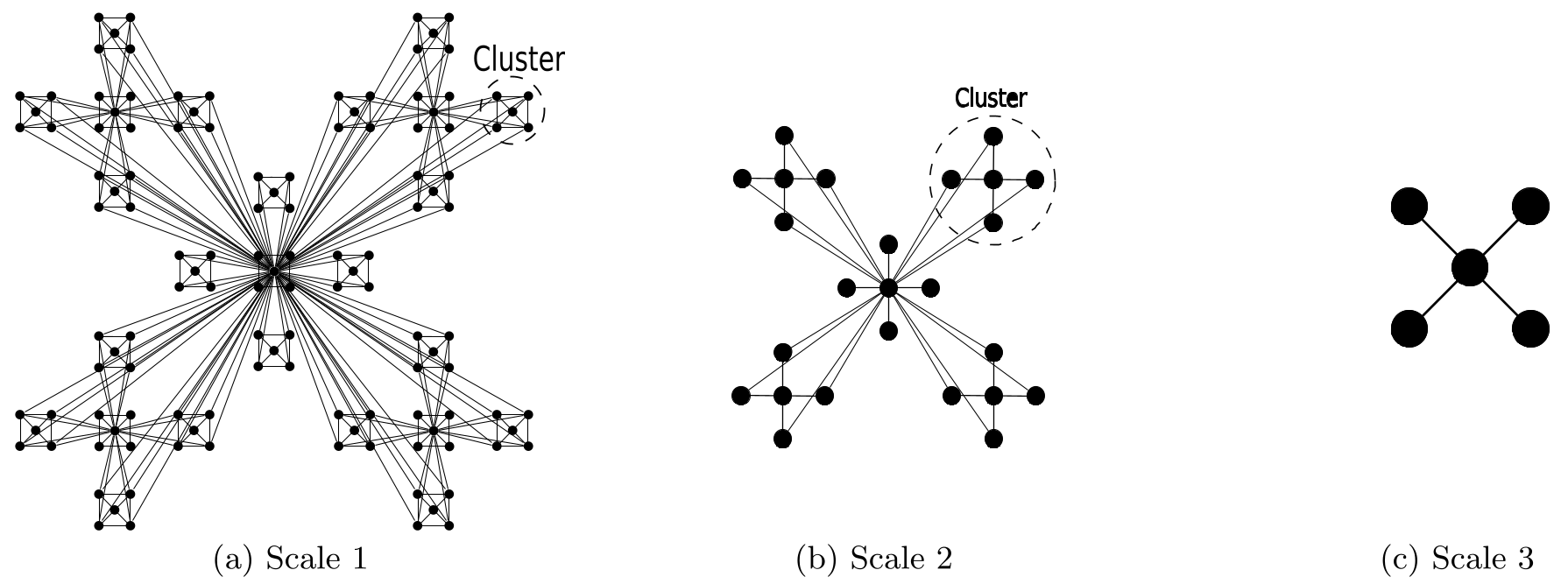 Figure 3: Breaking down the complex graph into multiple resolutions. Scale 3 represents the "backbone," while Scale 1 captures the individual volatility.
Experiments: Why Snapshots Matter
When the authors decomposed their toy model, they found that none of the temporal "snapshots" (the active links at a specific moment) exhibited the special properties found in the static counterpart.
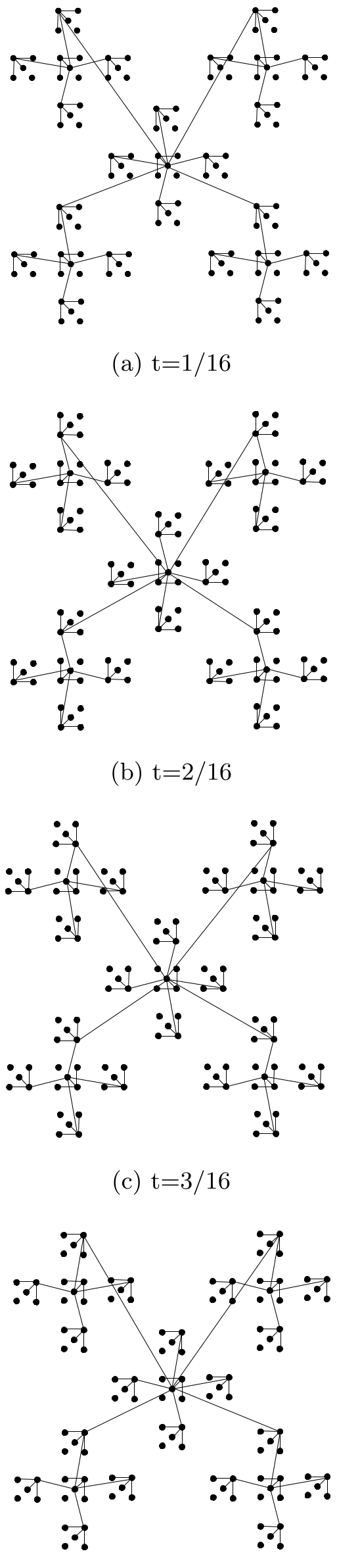 Figure 2: Active friendship snapshots at different time intervals. The "real" network at any moment (d) looks nothing like the aggregated "Static" network.
This proves that if you design a system (like a CDN or a recommendation engine) based on the static graph, you are optimizing for a ghost. Actual traffic and interaction density are much sparser and more localized than a global crawl suggests.
Critical Insight & Future Outlook
The value of this work lies in its "call to arms." It demands that OSN researchers:
- Stop User-Agnostic Modeling: Treat users as "first-class citizens" who join, interact, and leave.
- Embrace Interdisciplinary Tools: Use mathematics like Diffusion Wavelets to separate structural signals from noise.
- Face the Churn: Understand that user migration between OSNs (e.g., why MySpace users moved to Facebook) is just as important as internal dynamics.
Limitations: The "toyfb" model is intentionally stylized. While it proves a mathematical point, real-world dynamics are likely even more chaotic. The challenge remains in obtaining high-quality temporal data, as OSN providers (like Facebook) strictly limit the APIs that third-party researchers use for crawling.
Conclusion
This paper serves as a pivotal reminder that in the world of big data, "more data" (aggregating all history) often leads to "less truth." Only through multi-scale, dynamic analysis can we hope to understand the true socio-economic engine driving the OSN revolution.