
Turning Facebook into a Thermostat: Online Social Networks as Sensors
Online social networks as sensors in smart environments
This paper proposes using Online Social Networks (OSNs) as "virtual sensors" for Smart Environments. By leveraging the Big Five personality model and Natural Language Processing (NLP), the authors aim to predict user traits and preferences to automate environmental adaptations without physical sensor fatigue.
TL;DR
In the quest for truly "Smart" environments, we often focus on physical hardware. This paper argues that the richest sensors aren't on our walls, but in our pockets. By treating Online Social Networks (OSNs) as virtual sensors, we can extract personality traits (the "Big Five") to create environments that adapt not just to where we are, but to who we are.
Background Positioning
This work sits at the intersection of Ambient Intelligence (AmI) and Psychological Profiling. Rather than proposing a new machine learning architecture, it defines a novel paradigm: the "Digital Identity" as a continuous data stream for ubiquitous computing.
Problem & Motivation: The "Blind" Smart Home
Current smart homes are essentially reactive. They turn on lights when they sense motion, but they don't know if you're feeling stressed (needing calm lighting) or celebratory (needing upbeat music).
The authors identify two major gaps:
- Physical Sensor Limitations: Physical sensors capture "What" and "Where," but rarely "Why" or "How" (the mental state).
- The Digital Mirror: Users now treat OSNs as a mirror of their true identity. Ignoring years of historical social data is a wasted opportunity for personalization.
Methodology: The Big Five to Actuator Pipeline
The core concept relies on the Big Five Model (OCEAN: Openness, Conscientiousness, Extroversion, Agreeableness, Neuroticism). The authors hypothesize that if we can map digital behavior to these traits, the environment can anticipate needs.
The "Sensor" Architecture
The proposed sensor doesn't just look at text; it looks at Network Properties:
- Network Bandwidth (NET): Activity frequency and network size.
- Message Content (MSG): Usage of URLs, sentiment, and stylistic markers.
- Reciprocity (REC): How others interact with the user, indicating social standing.
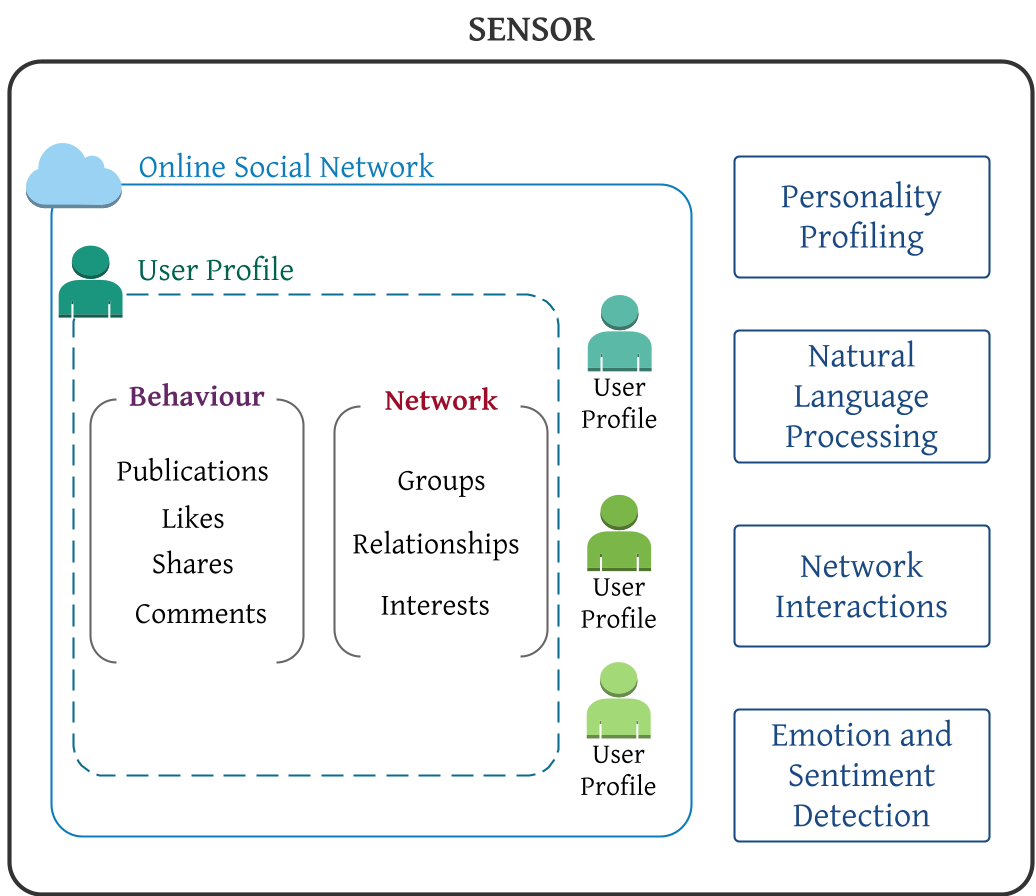 Fig 1: The conceptual flow from social data extraction via APIs to environmental adaptation.
Logic Flow
Through Natural Language Processing (NLP), the system detects a "Humour Shift." If a user posts about being disappointed, the environment (the actuator) could cross-reference TV schedules or music libraries to play something that alleviates that specific negative emotion.
Experimental Insights
The paper synthesizes several findings regarding how personality manifests online:
- Extroverts: High friend counts, frequent photo posting, but—interestingly—less regret over content posted.
- Conscientious Users: Fewer wall postings but much higher levels of "content regret," indicating a need for high-privacy environmental settings.
- Neuroticism: Higher use of first-person pronouns and negative emotional language, signaling an immediate need for environment-based stress relief.
Critical Analysis & Conclusion
Takeaway
The shift from Physical Sensing to Social Sensing allows smart environments to bypass the "cold-start problem." Because users have years of OSN history, a room can "know" a new inhabitant instantly.
Limitations
- Platform Bias: As the authors note, a Twitter user's data (short, fragmented) produces different profiles than a Facebook user's data.
- Privacy & awareness: With increasing user awareness of data tracking, the "Digital Mirror" may become a "Digital Mask," where users perform a versions of themselves rather than being authentic, potentially degrading sensor accuracy.
Future Outlook
The most ambitious application is Group Harmonization. Imagine a conference room that aggregates the social profiles of five attendees to automatically select a background ambient temperature or music genre that satisfies the "Common Preference" of the group’s collective personality. This moves technology from personal assistance to social facilitation.