
Understanding the "We" in Web 2.0: Why Students Flocked to Facebook
Online social networks: Why do students use facebook?
This paper investigates the drivers of student engagement on Facebook by conceptualizing usage as an intentional social action ("We-Intention"). Integrating Social Influence Theory, Social Presence Theory, and the Uses and Gratifications (U&G) paradigm, the study identifies social presence and group norms as the primary determinants of collective platform usage.
TL;DR
This seminal 2010 study shifts the focus of social media research from individual adoption to collective action. By surveying university students, the researchers found that the intention to use Facebook is not just a personal choice but a "joint commitment." The secret sauce for platform stickiness? Social Presence and Shared Group Norms, rather than mere information gathering or self-discovery.
Background: Beyond the Individual
In the early days of social media research, most scholars used the Technology Acceptance Model (TAM) to see why an individual would use a tool. However, Facebook isn't a spreadsheet; it’s a digital "hangout." This paper argues that using social networks is an intentional social action. You don't just use it; you participate in it with others.
The Problem: The Gap in Collective Action Theory
Existing research struggled to explain the exponential growth of Facebook among students. The authors identified a major oversight: prior work ignored the "We-Intention"—an individual's commitment to engage in joint action. They hypothesized that the traditional "I-Intention" (e.g., "I will use this tool") was insufficient for platforms where the value depends entirely on who else is there.
Methodology: The We-Intention Model
The authors integrated three major theoretical pillars to find the drivers of Facebook usage:
- Social Influence: How others shape our behavior (Compliance, Internalization, and Identification).
- Uses and Gratifications (U&G): What psychological needs the platform satisfies (e.g., entertainment, purposive value).
- Social Presence: The feeling that other "real" people are actually there with you.
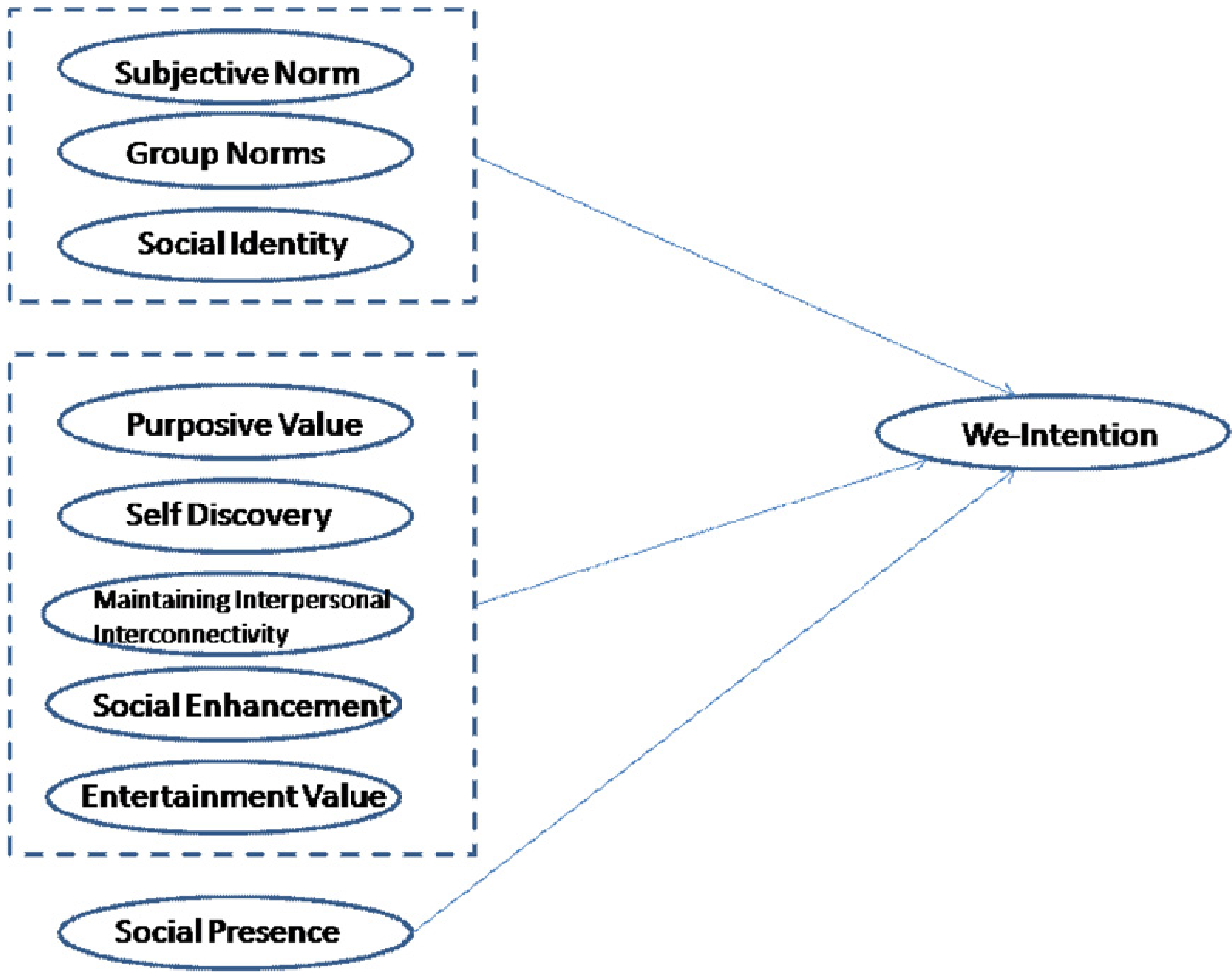
Figure 1: The proposed research model connecting Social Influence, U&G values, and Social Presence to We-Intention.
Key Insights & Results
The study analyzed 182 Facebook users, mostly university students aged 19-23. Using Partial Least Squares (PLS) analysis, several surprising findings emerged:
- The Power of Being "There": Social Presence was the strongest driver. Features like the "News Feed" (groundbreaking at the time) allowed students to feel the "warmth" and "sensibility" of their peers, driving the urge to stay connected.
- Values Matter: "Maintaining interpersonal interconnectivity" and "Social Enhancement" were significant, while "Purposive Value" (seeking specific info) was less critical.
- Group Norms Over Peer Pressure: Interestingly, while "Group Norms" (shared values) strongly influenced intention, "Subjective Norms" (compliance with others' expectations) did not. People used Facebook because they shared the community's values, not just because they felt forced to join.
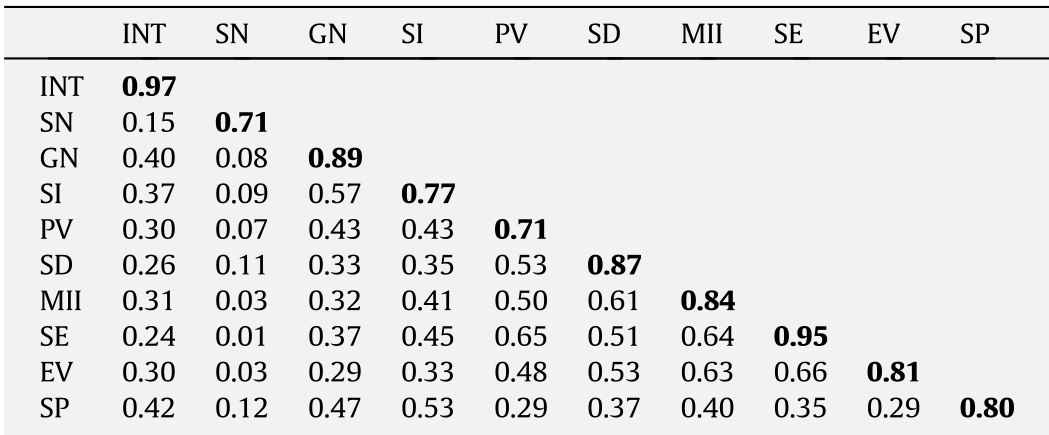
Table 1: Discriminant validity and correlations of the constructs.
Critical Analysis: Is "We" Always Better?
While the study provides a robust framework for group-oriented usage, it has limitations:
- The Identification Paradox: Surprisingly, "Social Identity" (sense of belonging) wasn't a significant driver. The authors suggest that if a user joins too many groups, their sense of belonging to any single one is diluted—a precursor to what we now call "community fatigue."
- Contextual Bias: The sample was 86% students. While Facebook began in academia, the findings might not apply to professional networks like LinkedIn, where purposive value might outweigh social presence.
Conclusion & Future Outlook
This work paved the way for understanding social media as a space for collaborative learning and social capital building. For current developers, the takeaway is clear: to build a successful social platform, don't just build features; build a sense of presence. The transition from Web 2.0 to the Metaverse will likely rely on these same principles of "We-Intention" and "Social Presence" documented here over a decade ago.