
Why Students Flock to Facebook: The Power of Social Presence and "We-Intention"
Online social networks: Why do students use facebook?
This study investigates the drivers of student engagement on Facebook by conceptualizing usage as "We-Intention"—a collective social action. Utilizing a sample of 182 students, the research validates a model integrating Social Influence, Social Presence, and the Uses and Gratifications (U&G) paradigm, identifying social presence as the primary catalyst for continued use.
TL;DR
While many attribute social media success to simple "fun," this study reveals a deeper psychological mechanism: We-Intention. By analyzing 182 Facebook users, the researchers found that the "sense of being with others" (Social Presence) and alignment with Group Norms are far more influential than individual information-seeking or self-discovery.
Background: From Individual Adoption to Collective Action
In the early days of Information Systems (IS) research, we viewed technology adoption through the lens of individual utility (the "I-Intention"). However, Social Networking Sites (SNS) are inherently collective. You don't use Facebook alone; you use it because we use it together. This paper shifts the paradigm by treating Facebook usage as an intentional social action.
The Problem: Why Traditional Models Fail Social Media
Traditional models (like TAM) focus on "Perceived Usefulness." But why do students stay on a platform for hours? It isn't just to "get things done." The authors argue that existing research missed the socially situated nature of the Web 2.0 experience—specifically, how social influence and the psychological presence of others create a commitment to "joint action."
Methodology: The "We-Intention" Framework
The researchers built a comprehensive model combining three major theoretical pillars:
- Social Influence: Assessing Compliance (Subjective Norms), Internalization (Group Norms), and Identification (Social Identity).
- Uses & Gratifications (U&G): Five values ranging from purposive (info-seeking) to social enhancement (status).
- Social Presence: The degree to which a medium allows a user to feel the presence of other living beings.
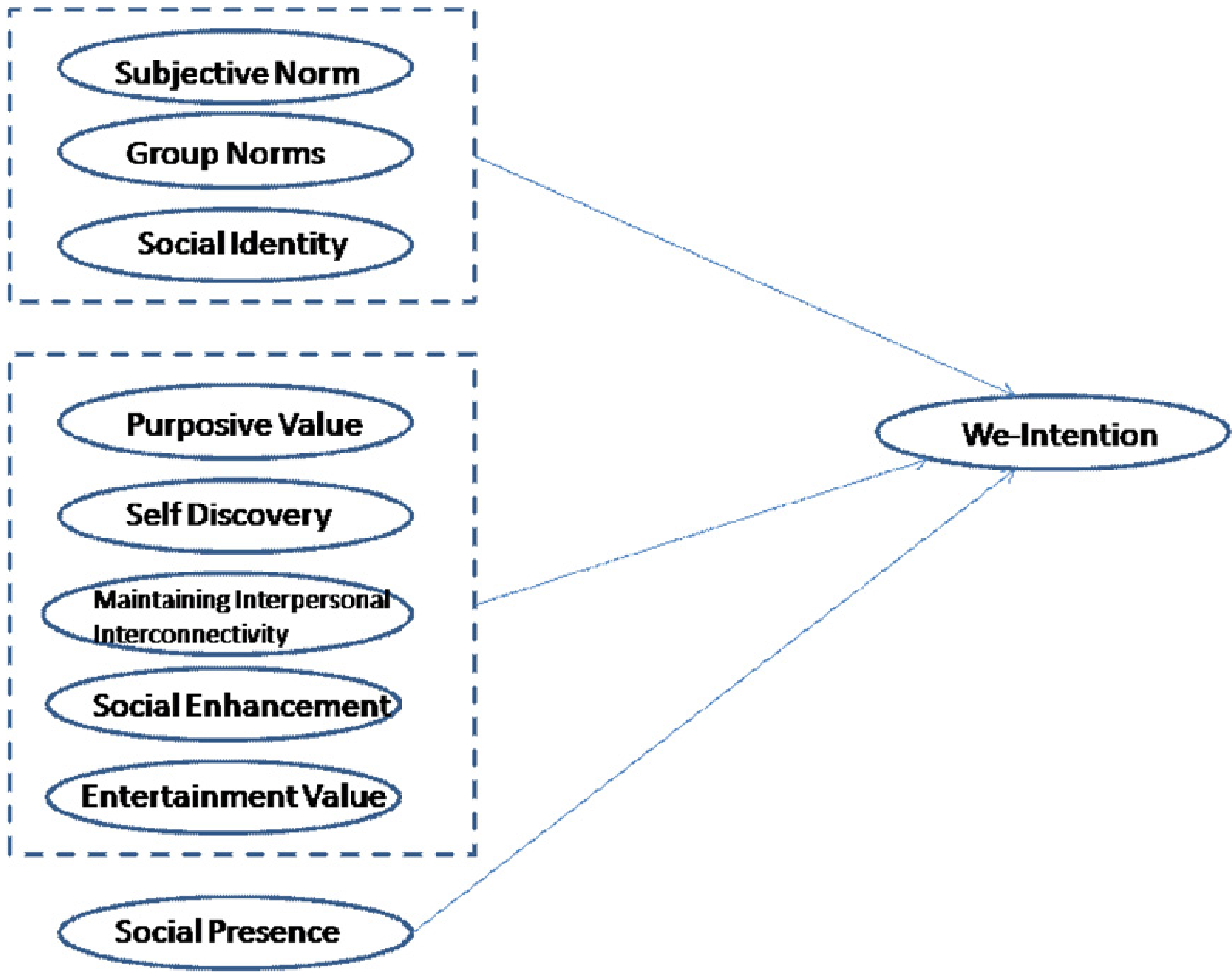 Figure 1: The proposed research model exploring the determinants of We-Intention.
Key Insights from the Data
The study utilized Partial Least Square (PLS) analysis to test the structural relationships. The results provided some unexpected "reality checks":
- The Social Presence Dominance: Social Presence was the strongest driver. Features like "News Feeds" and real-time "Chat" aren't just features; they are the psychological glue that creates a sense of "human warmth" and "personalness."
- Group Norms vs. Subjective Norms: While "Subjective Norms" (pressure from others) had little effect, "Group Norms" (shared values) were significant. This suggests that students use Facebook because it aligns with their group's identity, not because they are "forced" to by social pressure.
- The Social Value of U&G: Maintaining interpersonal connectivity and seeking social enhancement were critical. Interestingly, "Self-Discovery" and "Purposive Value" (getting work done) were less influential in driving the intention to return.
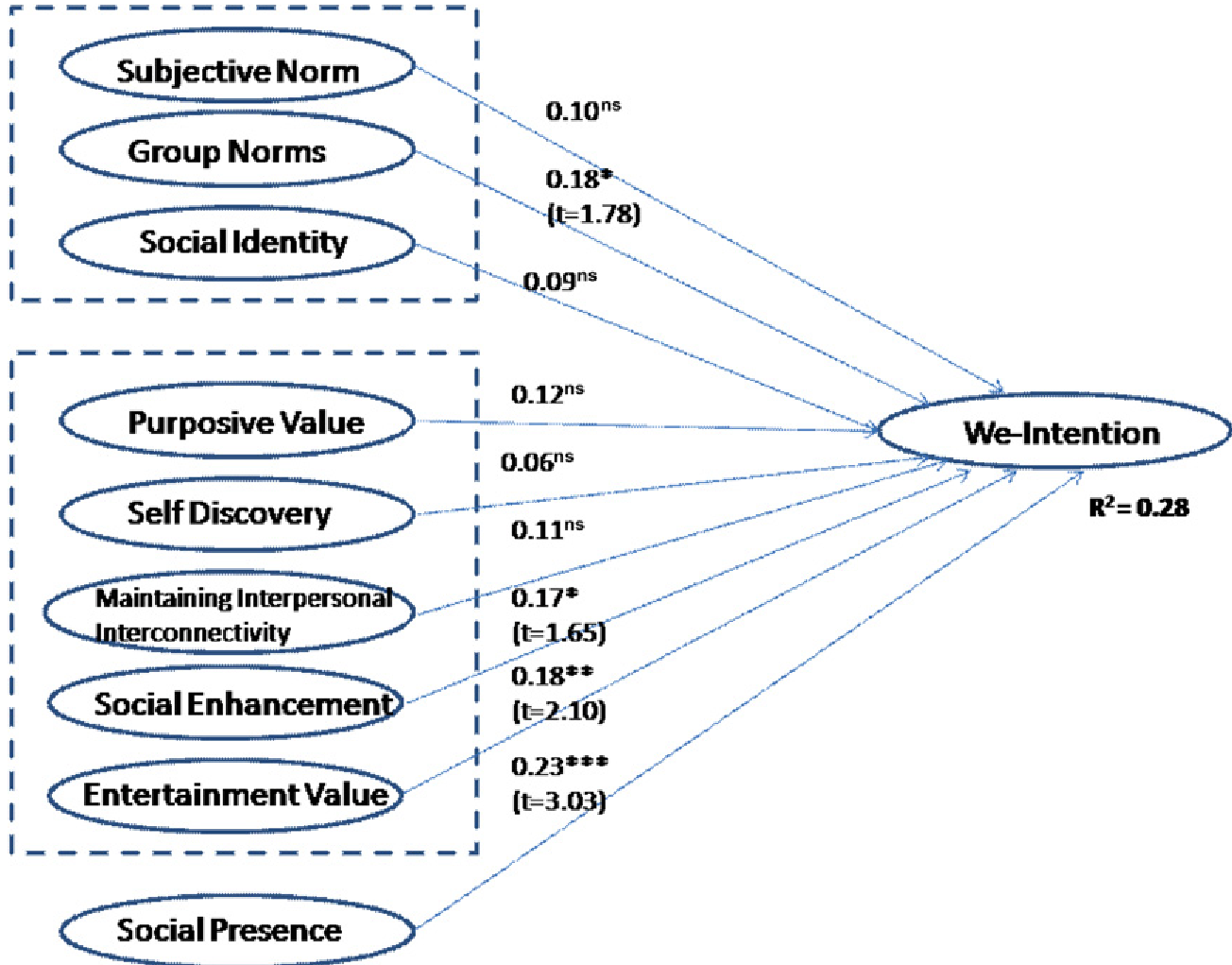 Figure 2: Empirical results showing path coefficients. Note the high significance of Social Presence.
Critical Analysis: Why "Social Identity" Might Have Failed
Surprisingly, Social Identity (feeling a sense of belonging) did not significantly impact We-Intention. The authors suggest a modern paradox: because students join too many groups and communities on Facebook, their sense of belonging to any single group is diluted. This "identity fragmentation" is a crucial insight for community managers today.
Conclusion & Takeaway
This paper proves that the "Social" in Social Media is its greatest engine. For developers and educators:
- Prioritize Presence: If you want to keep users, make them feel the presence of others through activity feeds and real-time indicators.
- Foster Values: Aim for platforms that support "Interpersonal Connectivity" rather than just content consumption.
Limitations: The study is cross-sectional and focused on a student demographic from 2010. In today's landscape of algorithmic feeds (TikTok) and fragmented privacy, the "Group Norms" might be shifting toward "Interest-Based Communities."
Reference: Cheung, C. M. K., Chiu, P. Y., & Lee, M. K. O. (2011). Online social networks: Why do students use facebook? Computers in Human Behavior.