
OSQC: Bringing Industrial Quality Control to the Chaos of Crowdsourcing
An online statistical quality control framework for performance management in crowdsourcing
The paper introduces OSQC (Online Statistical Quality Control), a framework for performance management in crowdsourcing. It combines a novel Hybrid Gold-Plurality (HGP) algorithm for worker error estimation with a Multi-rule Statistical Quality Control (SQC) system to dynamically monitor and evict poor-performing workers in real-time.
TL;DR
The OSQC framework introduces a rigorous, online statistical monitoring system for crowdsourcing. By treating worker contributions like a manufacturing process, it uses the Hybrid Gold-Plurality (HGP) algorithm and a Multi-rule QC system to detect and evict poor performers in real-time, improving final data accuracy by an average of 4%.
The Core Conflict: Aggressive vs. Conservative Eviction
In any crowdsourcing task—from labeling images of waterbirds to sentiment analysis—platforms face a dilemma. If you are too aggressive in evicting workers, you risk losing good talent based on a few difficult tasks, damaging the platform's reputation. If you are too conservative, "spammers" or low-knowledge workers stay in the system too long, polluting the dataset and increasing costs.
The authors argue that existing "late-stage" filtering is too costly. Instead, they propose borrowing Statistical Quality Control (SQC)—a staple of industrial engineering—to create a "middle path" that monitors workers continuously.
Methodology: The OSQC Framework
The framework consists of two integrated modules:
- Workers’ Error Estimation Module (WEEM): Uses the HGP algorithm. Instead of relying solely on "Gold Standard" tasks (which are expensive) or "Plurality" (which fails if the majority is wrong), HGP calculates a weighted error probability by combining both signals.
- Workers’ Performance Management Module (WoPM): This is the decision-making engine. It takes the estimated error and passes it through a Multi-rule QC system.
The HGP Algorithm Logic
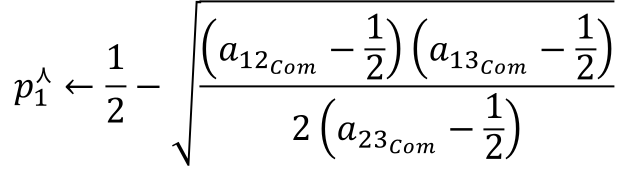
The HGP algorithm calculates the agreement rate () between workers and blends it with gold-standard performance (). This hybrid approach allows the system to remain robust even when gold-standard data is sparse.
The Decision Engine: Multi-Rule QC
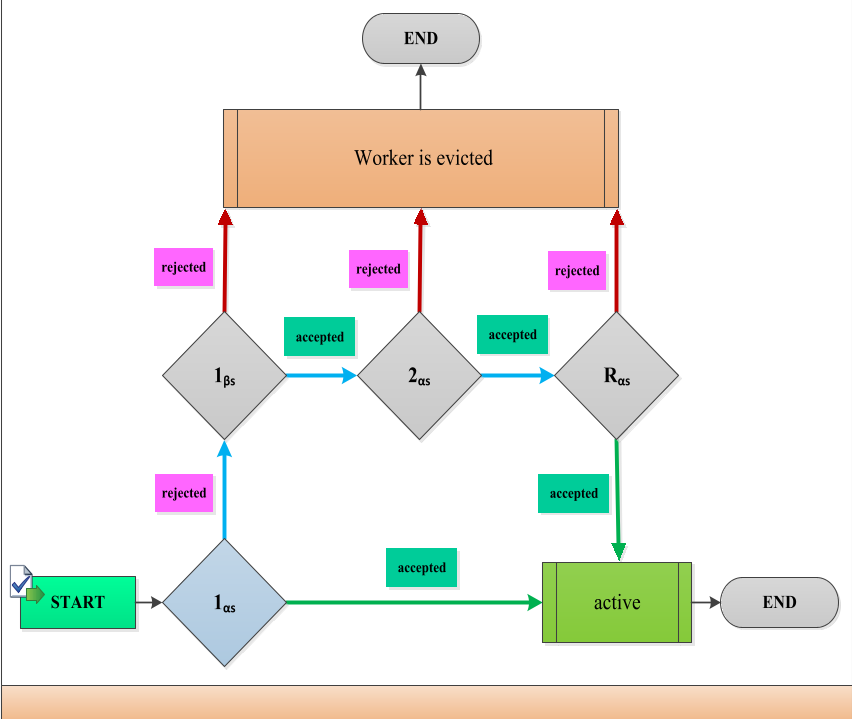
Rather than a simple threshold, OSQC uses four distinct rules based on (standard deviation) limits. This acts like a "warning system":
- Rule 1αs / 1βs: Immediate rejection if a batch error is far outside the norm.
- Rule 2αs: Rejection if two consecutive batches show declining quality.
- Rule Rαs: Rejection if the distance between the current and previous batch error exceeds a specific variance threshold.
Experimental Results
The authors tested OSQC using a dataset from Welinder et al., involving MTurk workers identifying "ducks" in images.
Key Findings:
- Performance Gain: OSQC outperformed standard Majority Voting (MoV) in 81.5% of tested scenarios.
- Dynamic Batching: The system proved sensitive to batch sizes. A batch size of 15 was often optimal when combined with specific sensitivity settings.
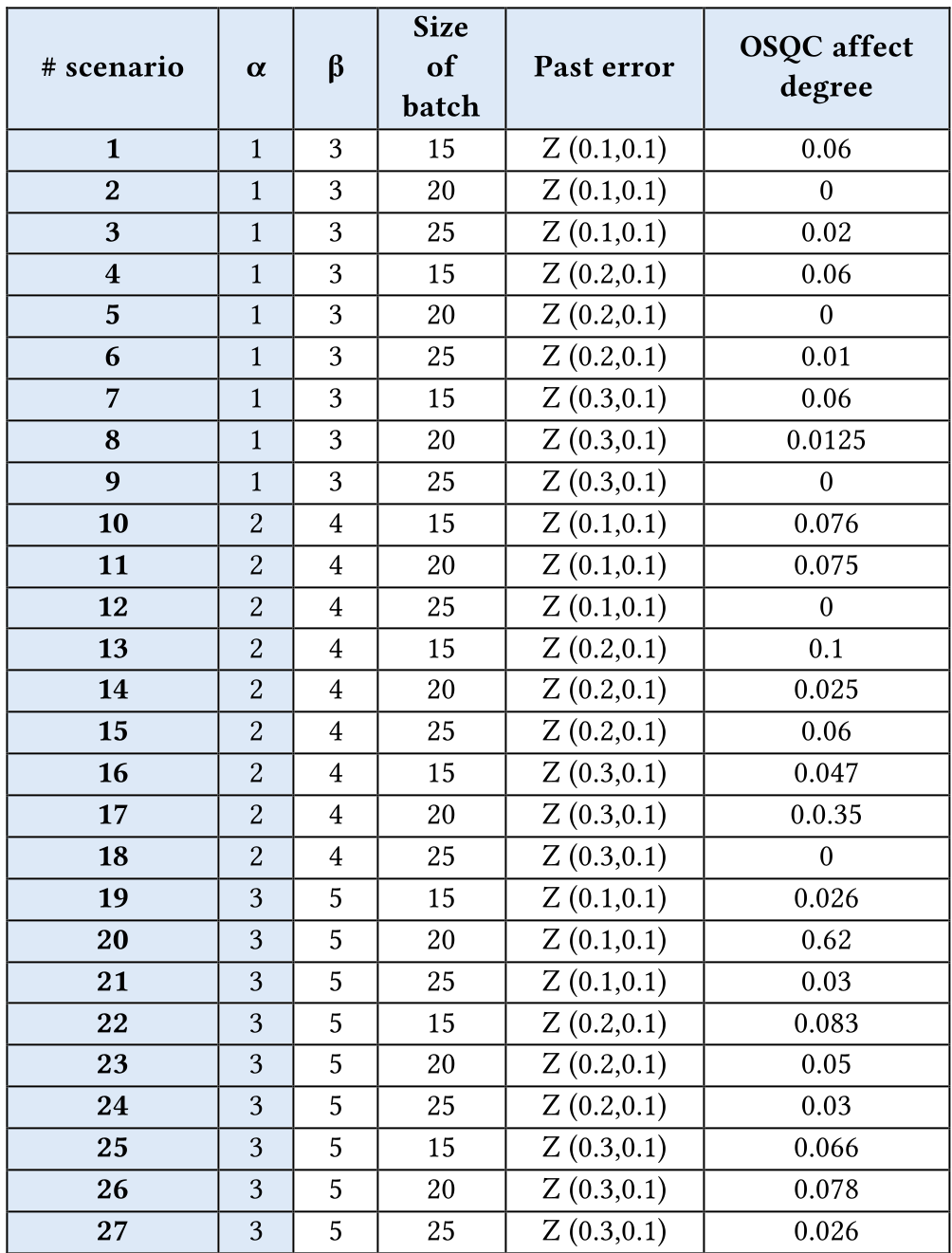
- Impact Degree: The "OSQC Affect Degree" (the delta in error reduction) peaked when past worker history was used to fine-tune the current control limits.
Depth Insight: Why It Works
The brilliance of OSQC lies in its use of the Moving Average. By decreasing the weight of "past error" as a worker completes more batches ( decreases over time), the system prioritizes recent behavior. This allows workers who were initially "learning" the task to stay in the system while identifying those whose quality is genuinely deteriorating.
Strategic Conclusion
OSQC bridges the gap between traditional industrial quality management and modern AI data labeling. It proves that we don't need "perfect" ground truth to manage a crowd; we just need a sufficiently advanced statistical mirror to reflect the crowd's internal consistency against sparse known facts.
Future Outlook: As data-centric AI becomes the norm, integrating OSQC-like frameworks into labeling pipelines (like Labelbox or Scale AI) could significantly reduce the cost of human-in-the-loop validation.