
Connected in Old Age: How Online Communities Facilitate Social Support for the Elderly
Online support communities for older people: investigating network patterns and characteristics of social support
This paper presents a PhD research framework investigating how older adults exchange social support within online communities. Using a multi-method approach combining Qualitative Content Analysis and Social Network Analysis (SNA), the study identifies seven key support categories and maps the structural differences between empathic and informational communication patterns.
TL;DR
This research investigates the digital social fabric of the elderly, moving beyond simple website "accessibility" to explore "sociability." By analyzing 1.5 years of message data from SeniorNet, the study identifies distinct patterns of empathy and support, proving that digital spaces can facilitate deep, meaningful connections for older adults through specific communication roles and network structures.
Beyond Information Accessibility: The Social Motivation
For years, the HCI (Human-Computer Interaction) community focused on making buttons bigger and text clearer for older users. However, Ulrike Pfeil argues that we have ignored the why. Older adults aren't just looking for info; they are looking for companionship and support.
The core challenge is that social support isn't a monolith. How does a message about "medication facts" differ in its social impact from a "virtual hug" (Deep Support)? This paper seeks to bridge the gap between qualitative sentiment and quantitative network structure.
Methodology: Coding Support and Mapping Connections
The researcher developed a coding scheme to categorize the types of support being exchanged. This isn't just theory; it’s a toolkit for understanding digital empathy.
The Taxonomy of Support
| Category | Description |
|---|---|
| Self-disclosure | Sharing personal/medical struggles. |
| Deep Support | Highly customized, emotional responses. |
| Light Support | Generic uplifting comments (e.g., "Hang in there"). |
| Community Building | Meta-talk about the board itself. |
Architecture of a Community
To see how these categories manifested physically, the author used Social Network Analysis (SNA). By treating each user as a "node" and each reply as a "link," the research visualized the "sociogram" of the community.
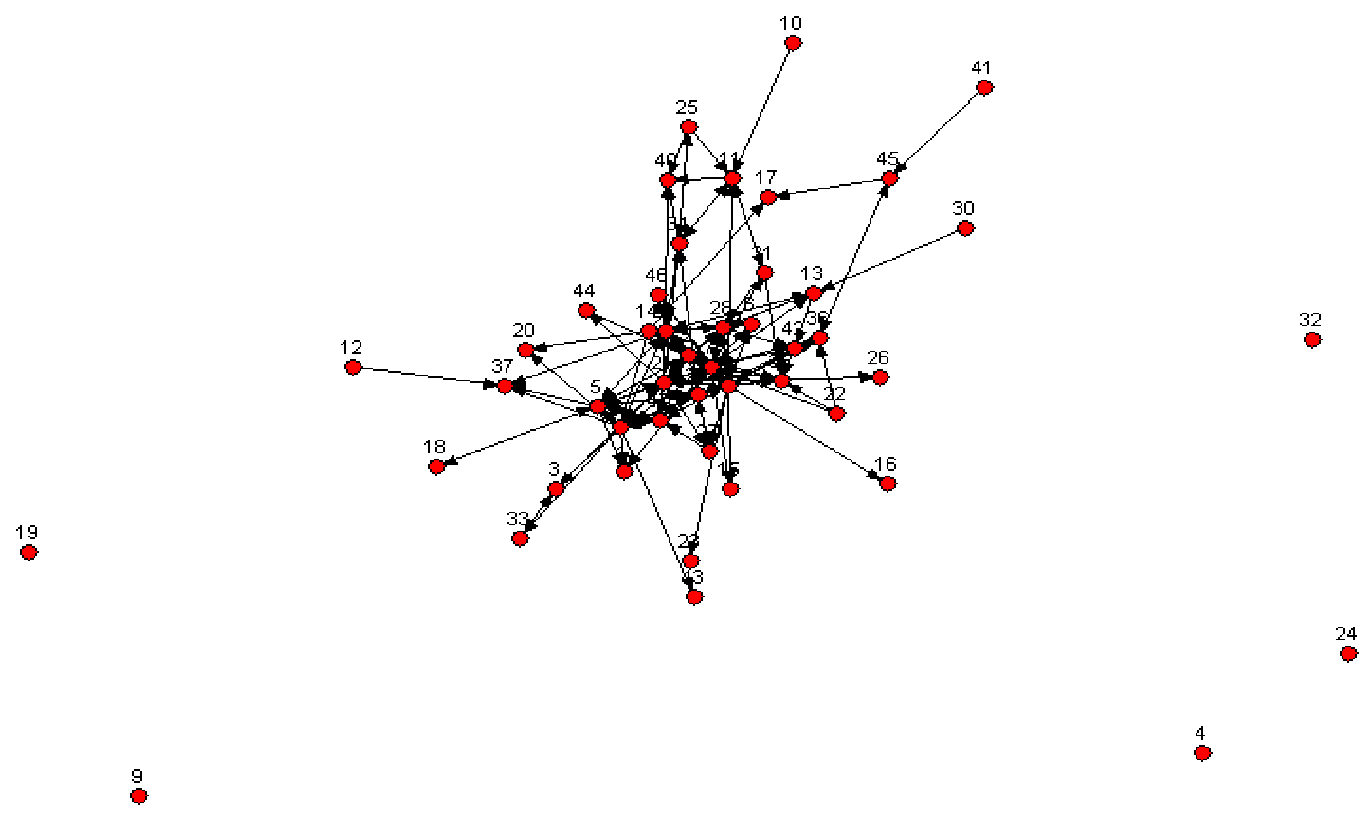 Figure 1: Sociogram of communication activities within the online support community.
Key Insights: Support Changes the Network
The most profound finding is that support-related communication creates a different "shape" of network than purely informational talk.
- Closer Connections: Empathic networks have higher density. People are more connected and "closer" to each other when the topic is emotional support.
- Directionality: Messages seeking support are usually broadcast to the whole group ("Does anyone know...?"), while messages giving support are targeted and specific.
- The "Deep Support" Clique: While light support flows everywhere, "Deep support" tends to happen in small, exclusive sub-groups. This suggests that intimacy in digital spaces requires a degree of "privatization" or smaller group dynamics.
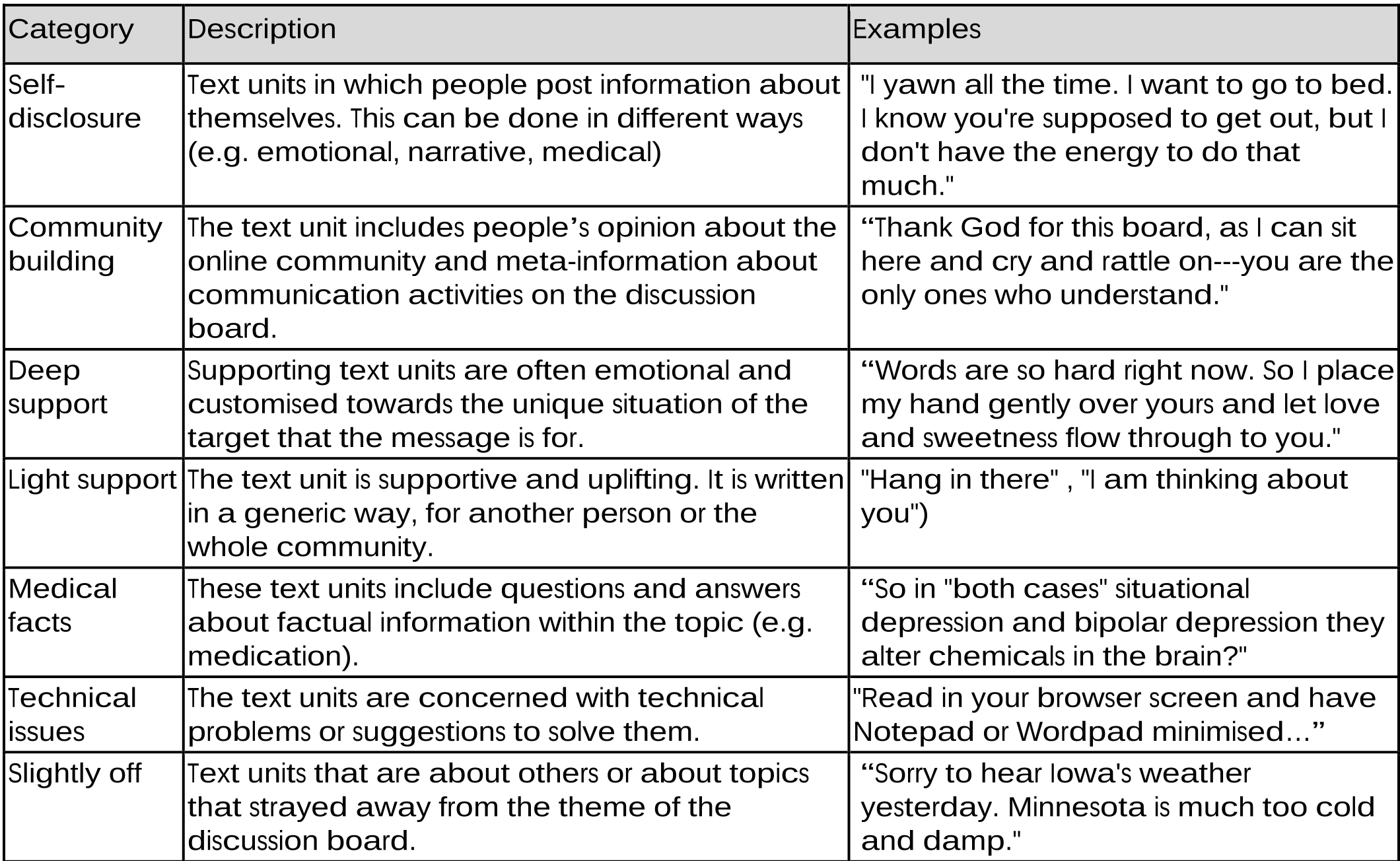 Table 1: The 7-category code scheme used to analyze support characteristics.
Critical Analysis & Future Outlook
This work is a vital step toward a "Descriptive Model of Online Social Support." It moves us from viewing the internet as an information library to viewing it as a social sanctuary.
Limitations: The data analyzed (from 2000-2001) reflects an era of early discussion boards. In today's era of video calls and instant messaging, the friction of "Self-disclosure" might be lower, but the risk of "information overload" is higher.
The Takeaway for Designers: If you are building a platform for the elderly, don't just build a forum. Build tools that facilitate "roles"—allow veterans to emerge as "Deep Supporters" and ensure that "Seekers" can easily broadcast their needs to the wider community.
Conclusion
Ulrike Pfeil’s research illuminates the invisible labor of online care. By understanding how relationships form, dissolve, and are reconstructed, we can design digital spaces that don't just "work" for older people, but actually care for them.