
Beyond the Classroom: Why a Tutor’s Social Network Position Predicts Professional Success
A Study of the Correlation between Online Tutors’ Social Network Position and Their Performance
This study utilizes Social Network Analysis (SNA) to investigate the relationship between online tutors' positions in a professional Working Forum and their official performance remuneration. By analyzing interaction data from Peking University's E-Learning Workshop, the researchers established that tutors' centrality within the virtual learning community (VLC) is a significant predictor of their professional performance.
TL;DR
Is an online tutor’s activity in a professional forum just "noise," or is it a signal of their actual teaching quality? This study analyzes the Working Forum of Peking University’s E-Learning Workshop using Social Network Analysis (SNA). The findings reveal a robust correlation between a tutor's "centrality" (their influence and connectivity in the network) and their performance remuneration, suggesting that the most effective teachers are also the most central nodes in their professional communities.
The "Invisible" Contribution Problem
Evaluating online tutors is notoriously difficult. While most institutions use a framework covering ethics, professional level, and attitude, these metrics often miss the collaborative dimension. Tutors who solve problems for peers, share experiences, and lead discussions contribute to the collective intelligence of the institution, yet this labor often remains unquantified and unrewarded.
The authors argue that a Virtual Learning Community (VLC) is not just a discussion board but a social structure that reflects the intrinsic motivation and capability of its members.
Methodology: Mapping the Social Fabric
The researchers tracked 478 active members over eight months, coding 13,000 posts into a matrix of interactions. They moved beyond simple post counts, instead focusing on Centrality—a measure of an actor's "coreness" in the network.
The Centrality Toolbox
The study employed five distinct metrics to define a "Star" tutor:
- Degree Centrality: The sheer volume of direct connections (Who is talking to whom?).
- Betweenness: Who acts as a "bridge" or information gatekeeper between different groups?
- Eigenvector Centrality: Who is connected to other influential people? (The "Google PageRank" of tutors).
- Closeness: Who can reach all other members most efficiently?
- Coreness: Who belongs to the cohesive "engine room" of the forum?
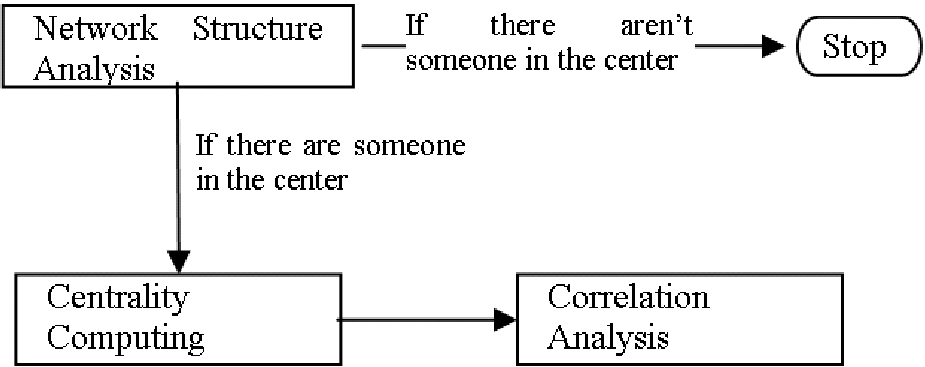 Fig 1: The Research Framework combining SNA metrics with performance data.
Key Insights: Peers Know Best
The results from Ucinet 6 analysis provided a striking visual and statistical confirmation of the researchers' intuition.
1. The "Star" Consistency
The study found a high degree of consistency across different centrality measures. The top-performing tutors were almost always the same individuals who occupied the center of the network map. As shown in the network visualization, the community is not a flat structure; it is a "core-periphery" system where a few key tutors drive the majority of the value.
2. Knowledge Sharing vs. Noise
Interestingly, In-Degree centrality (the number of times others replied to a tutor) had a stronger correlation with remuneration than Out-Degree (the number of posts a tutor initiated).
- The Intuition: Anyone can post frequently (Out-Degree), but being replied to (In-Degree) signifies that your peers find your contributions valuable or authoritative.
3. The Experience Multiplier
The correlation between social position and pay was significantly higher for veteran tutors. This suggests that over time, a tutor’s true ability and attitude "crystallize" in their social interactions.
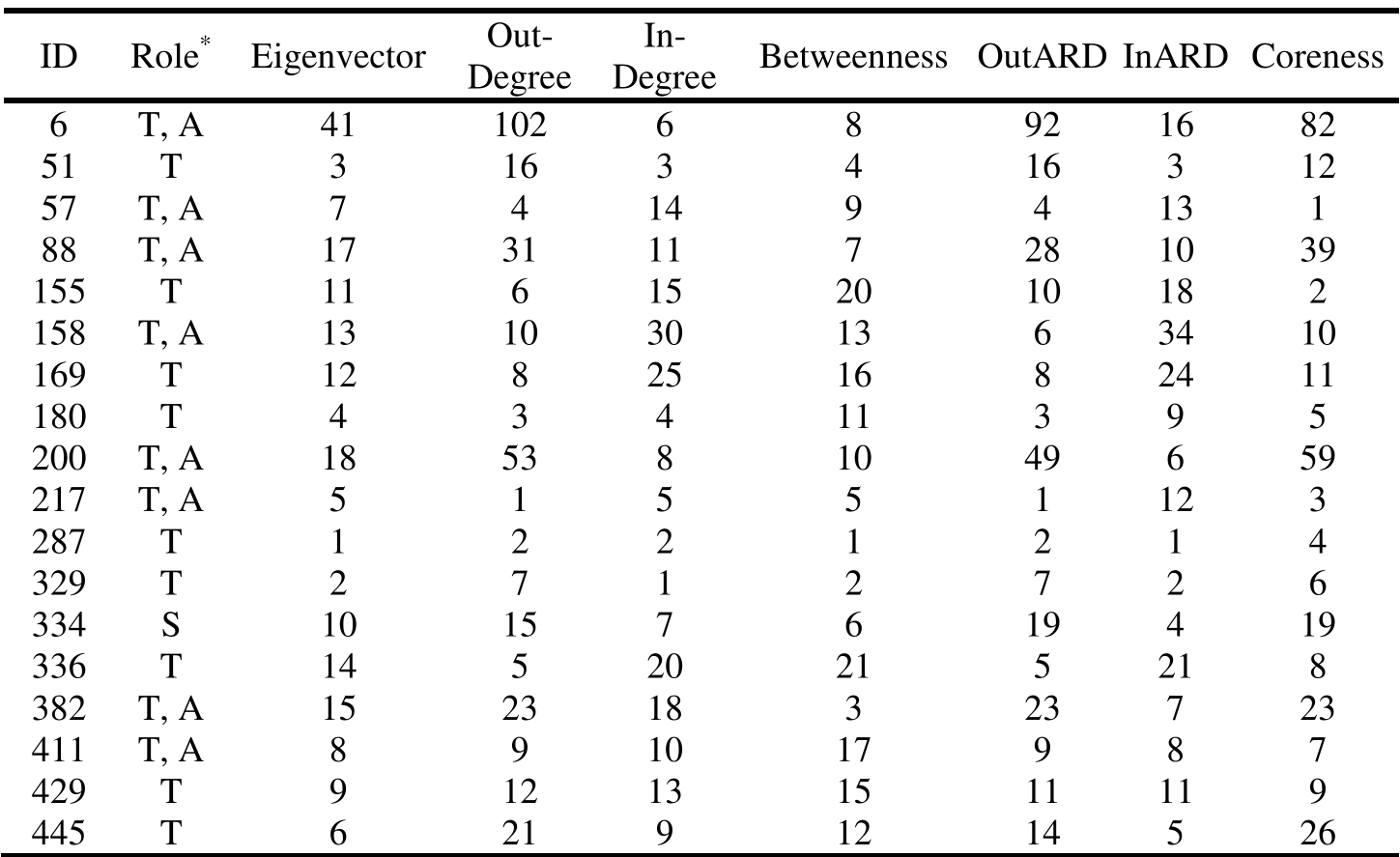 Table 2: Top 10 Actors by Centrality—showing that tutors and assistants dominate the core of the network.
Critical Analysis & Future Outlook
This paper serves as a vital proof-of-concept for Algorithmic HR in education. By proving that social metrics align with official performance scores, the authors provide a pathway to automate parts of the evaluation process.
Limitations:
- Content Neutrality: The study treats all replies as "1" in the matrix. It does not distinguish between a "Thank you" and a detailed technical solution. Future work should incorporate Sentiment Analysis or Natural Language Processing (NLP) to weight the quality of the interactions.
- Platform Specificity: The results are tied to a real-name Working Forum. Anonymity might drastically alter these social dynamics.
The Takeaway for Educational Leaders: Centrality is not just a mathematical curiosity; it is a signal of leadership and professional engagement. Institutions should stop looking at forum participation as an "optional extra" and start viewing it as a core component of a tutor’s professional identity.