
OntoDataClean: Harmonizing Distributed Data through Ontology-Based Preprocessing
OntoDataClean: Ontology-Based Integration and Preprocessing of Distributed Data
This paper introduces OntoDataClean, a framework and tool designed for ontology-based integration and preprocessing of distributed databases within the Knowledge Discovery in Databases (KDD) process. It utilizes the Web Ontology Language (OWL) to formalize data cleaning rules, enabling automatic instance-level transformations in a federated environment.
Executive Summary
TL;DR: OntoDataClean is a specialized tool that leverages ontologies to automate the "dirty work" of the Knowledge Discovery in Databases (KDD) process—data cleaning and integration. By using OWL-based metadata to store transformation logic, it allows domain experts to formalize cleaning rules once and apply them automatically across distributed, heterogeneous biomedical databases.
Context: Within the academic landscape, this work represents a transition from purely schema-level integration (mapping tables) to instance-level intelligence (fixing the actual data points). It addresses the "garbage in, garbage out" problem of data mining by ensuring high-quality inputs through a federated architecture.
The "80/20" Problem in Data Science
It is a well-known industry secret that data scientists spend 80% of their time cleaning data and only 20% analyzing it. In the biomedical field, this problem is exacerbated by:
- Heterogeneity: Different labs use different formats (e.g., binary vs. decimal representations).
- Distribution: Data is scattered across remote servers; centralizing it into a Data Warehouse often results in "stale" data.
- Inconsistency: Missing values and terminological variants (synonyms) make cross-source comparison nearly impossible.
The authors' insight is that ontologies—typically used for classification—are actually the perfect vessel for "Preprocessing Metadata."
Methodology: The Preprocessing Ontology
The core innovation lies in the OntoDataClean Preprocessing Ontology. Instead of hard-coding cleaning scripts (SQL/Python), the logic is stored in a formal OWL file.
Architecture Breakdown
- Federated Access: The system doesn't copy data. It queries remote sources in real-time, ensuring information is always up-to-date.
- The Cleaning Model: This class hierarchy handles six critical transformations:
- Scale: Mathematical formulas (e.g., Log transforms).
- Pattern/Format: Regex-like string modifications.
- Missing Values: Intelligent replacement (mean, freq) or deletion.
- Synonyms: Resolving terminological drift.
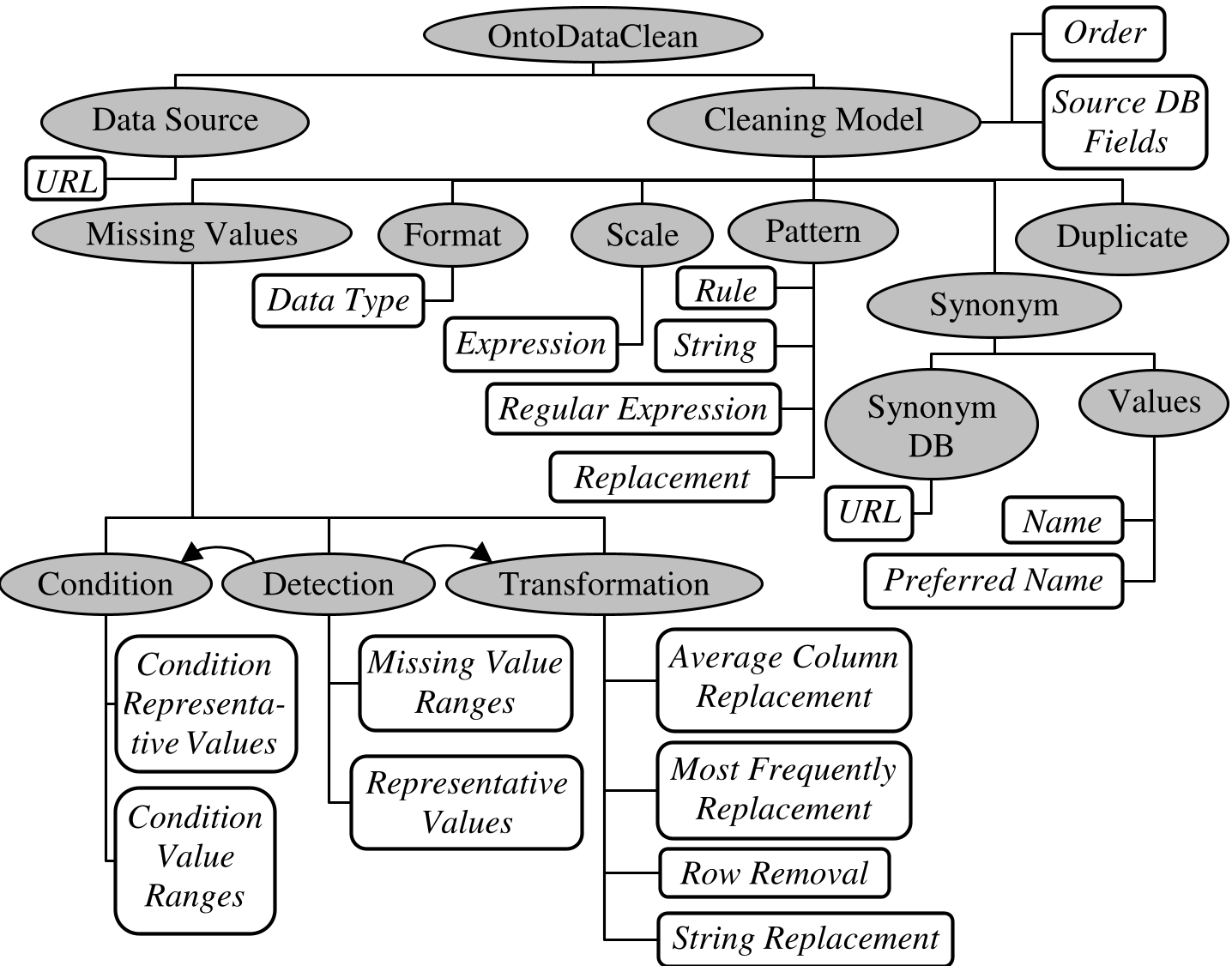 Figure 1: The OWL-based class structure defining the Cleaning Model and its transformation subtypes.
Experimental Results: Proving the Concept
The authors tested OntoDataClean on several high-profile biomedical databases. A standout case was the BioMérieux experiment involving biochemical profiles.
- The Problem: Data was stored as binary-like strings (e.g.,
-++ -+-). - The Solution: A pattern transformation within the ontology converted these into decimal representations (e.g.,
64215). - Filtering: Rows containing noise (marked as
?) were automatically purged during the query phase.
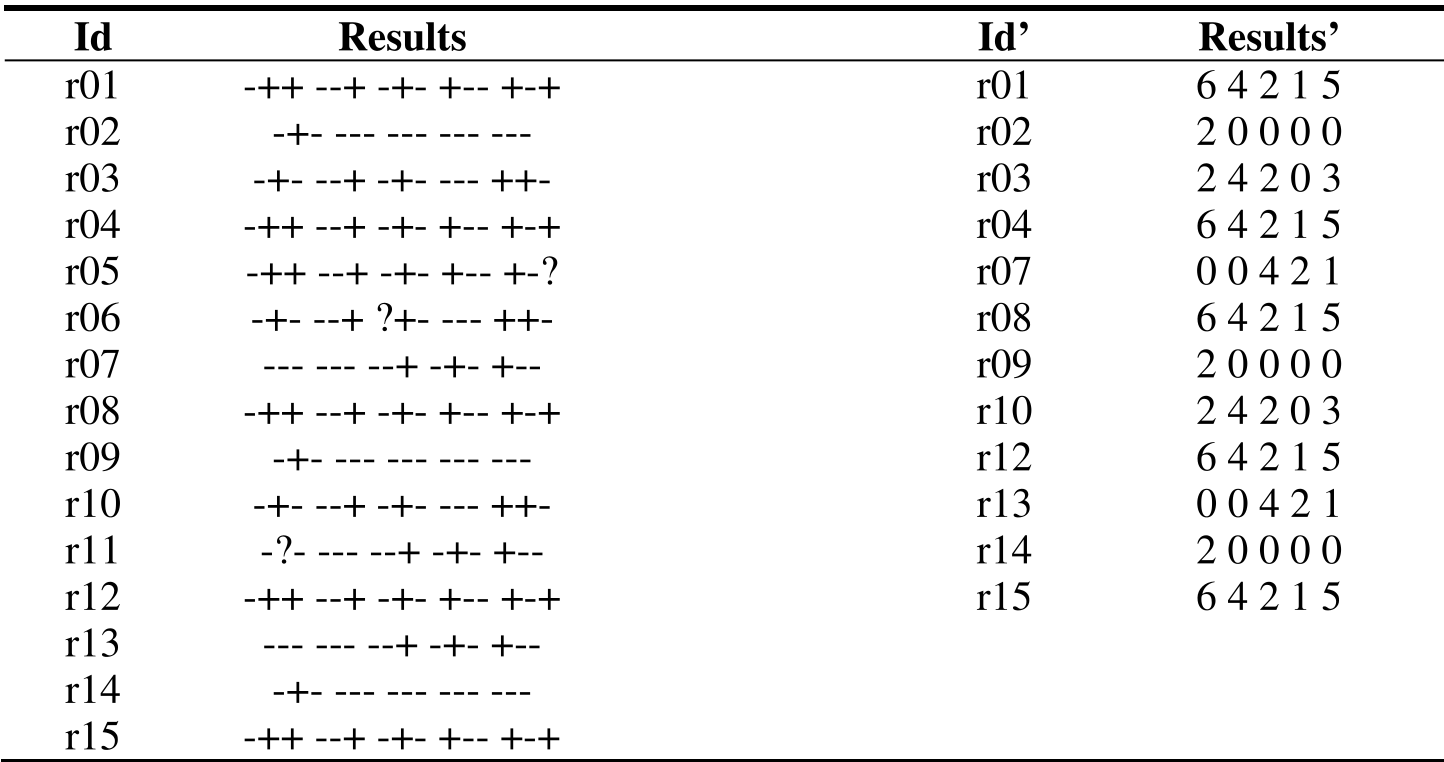 Figure 2: Comparative results showing raw biochemical strings (left) vs. the cleaned, decimal-standardized output (right).
Critical Insight & Future Outlook
The true value of OntoDataClean is its Expert-in-the-loop design. It creates an intuitive framework where a biologist (the data expert) can define "what clean data looks like" in an ontology editor like Protégé, while the system handles the "how" across distributed SQL databases.
Limitations: The current approach requires manual ontology construction, which can be labor-intensive. Additionally, "federated" queries can suffer from latency compared to centralized warehouses.
The Road Ahead: The authors point toward Semi-automatic inconsistency detection. Imagine an AI that suggests transformations to the expert, who simply clicks "Approve." This would bridge the final gap between raw, messy distributed data and high-velocity knowledge discovery.