
DOSN-PROV: Mapping the Pedigree of Data in Decentralized Social Networks
An Ontological Model and Services for Capturing and Tracking Provenance in Decentralized Social Networks
The paper introduces DOSN-PROV, an ontological model based on the W3C PROV-O specification designed to capture and track data provenance in Decentralized Online Social Networks (DOSNs). By integrating ontologies like FOAF and SIOC, it establishes a framework for verifying the authenticity and trajectory of social interactions (posts, shares, reactions) in peer-to-peer environments.
TL;DR
As we shift from centralized giants like Facebook to Decentralized Online Social Networks (DOSNs), we lose the "central source of truth." This paper presents DOSN-PROV, an ontological framework that brings professional-grade data provenance to the decentralized web. By extending the W3C PROV-O standard, it allows users to track the "who, when, and how" of every post, share, and reaction across a peer-to-peer landscape.
The Trust Gap in the Decentralized Web
In a centralized world, the platform owner validates the data. In a decentralized network (like those built on Solid or P2P architectures), data is stored in individual "Pods." While this solves privacy concerns, it creates a massive accountability gap. If a piece of information is shared ten times, how do you verify its original author? How do you know if the content was altered along the way?
Existing solutions often focus on either metadata for centralized silos or raw data storage without the historical context. The authors identify that without a formal Provenance model, DOSNs cannot achieve the reliability required for mainstream adoption.
Methodology: The DOSN-PROV Architecture
The researchers developed an architecture that sits atop DOSN platforms. It consists of three main components:
- DOSN-PROV Ontology: A semantic bridge combining
PROV-O(for provenance),SIOC(for social actions), andFOAF(for identity). - Capture Service: An automated collector that intercept user actions (like a "Like" or a "Comment") and records them as RDF triples.
- Tracking Service: A SPARQL-based engine that can query the history of any entity, effectively "rewinding" the social feed to find the source.
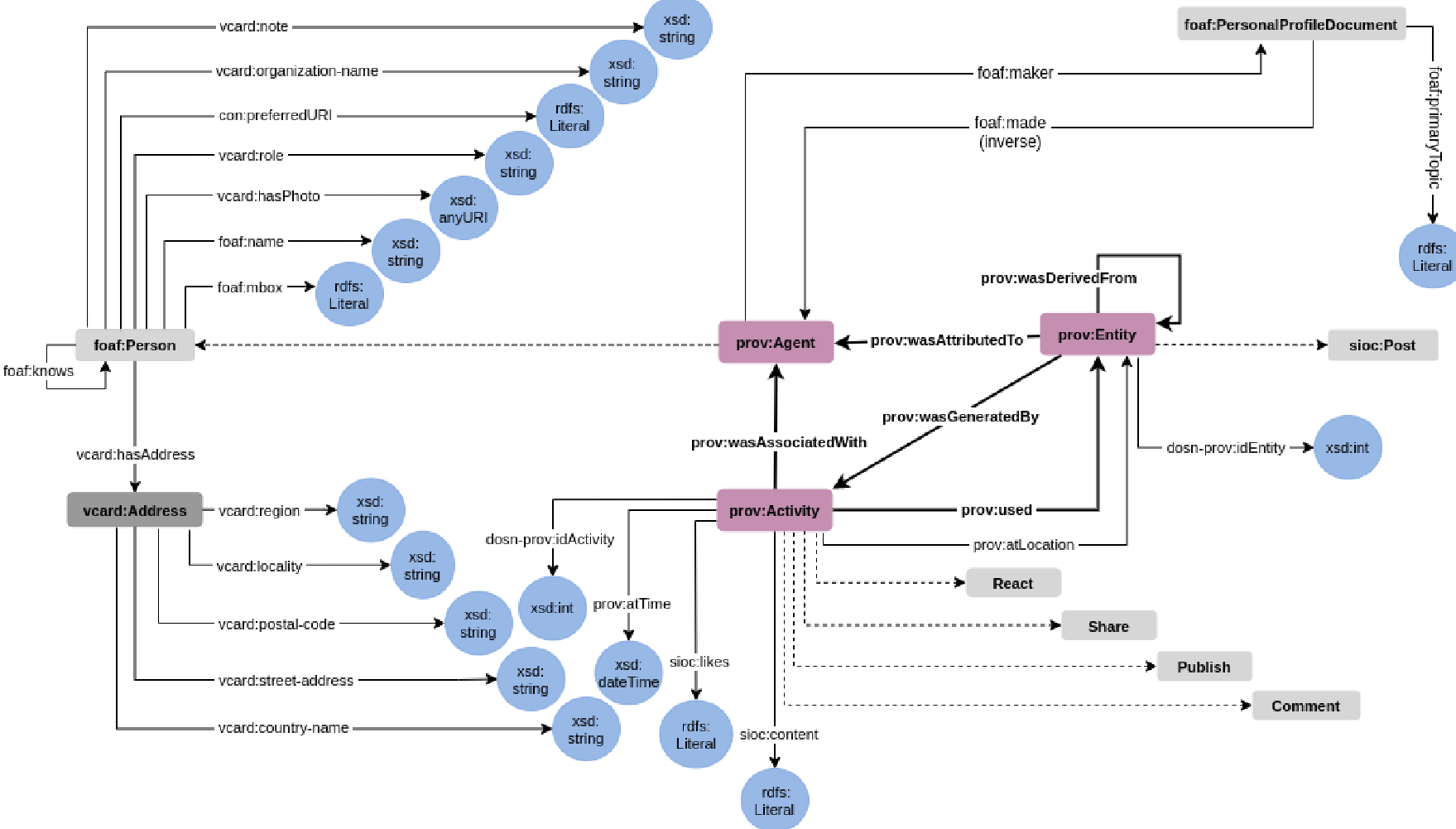 Figure 1: The DOSN-PROV Ontological Model mapping agents to activities and entities.
The Logic of Attribution
The model uses the prov:Agent to represent users identified by a WebID. When a user creates a sioc:Post, the system logs a prov:wasAttributedTo relationship. If that post is shared, the new post is linked via prov:wasDerivedFrom. This creates a verifiable graph of information flow.
Experimental Validation
To test the system, the authors built a functional application on Solid. They evaluated the model using OOPS! (OntOlogy Pitfall Scanner) to ensure no logical inconsistencies existed.
Performance Under Load
A critical concern for decentralized services is latency. The authors used Apache Jena TDB for storage and tested response times against increasing numbers of simultaneous users and data volume (triples).
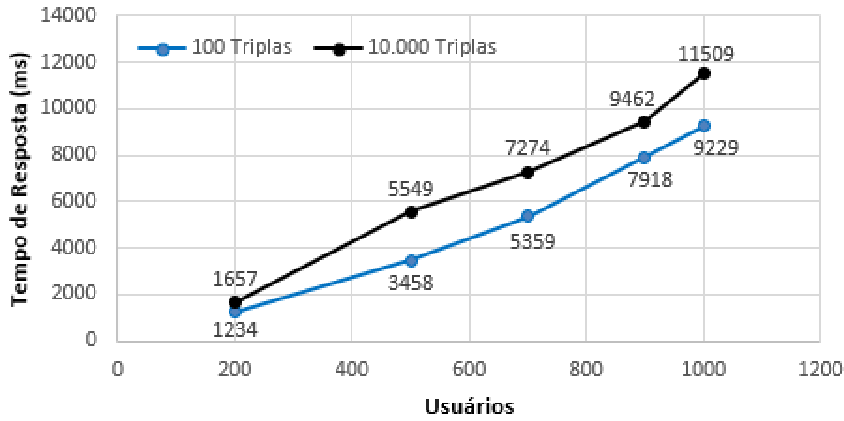 Figure 2: Tracking Service response times remain stable even as data triples scale from 100 to 10,000.
The results were promising:
- Latency: Even with 700-1,000 concurrent users, the response time stayed within acceptable web limits (averaging under 2-4 seconds for tracking).
- Completeness: SPARQL queries successfully retrieved full derivation paths, proving that the model can track a post back to its original author regardless of how many times it was shared.
Critical Insight & Conclusion
The true value of this paper lies in its interoperability. By sticking to W3C standards rather than inventing a proprietary format, DOSN-PROV allows different decentralized social networks to "speak" the same provenance language.
Limitations: While the model is robust, it currently relies on a centralized triplestore for the provenance data itself. Future work will likely need to explore distributed ledgers (blockchains) to store these RDF triples if the goal is absolute, tamper-proof decentralization.
Final Takeaway: DOSN-PROV provides the necessary "paper trail" for the decentralized era, proving that privacy-first social networks don't have to sacrifice information integrity.