
OWL-BPC: Precision Customization for the Human Semantic Web
Ontology-Based Business Process Customization for Composite Web Services
The paper introduces OWL-BPC, an ontology-based framework for the automatic customization of service-based business processes in a consumer-centric Semantic Web. It enables a "Primary Business Process" (PBP) to automatically adapt to a "Secondary Business Process" (SBP) by resolving semantic, behavioral, and rendezvous mismatches.
TL;DR
As the Web shifts from a "producer-centric" to a "consumer-centric" paradigm, the ability to tailor business processes to individual partner needs becomes critical. This paper presents OWL-BPC, a semantic framework that enables business processes to "sense" mismatches with their partners and "act" by reconfiguring themselves—leveraging ontology matching and ECA (Event-Condition-Action) rules.
The "Producer-Centric" Bottleneck
In traditional B2B interactions, the producer dictates the workflow. If a customer (or partner) has a different data format or process sequence, the producer's system often breaks, necessitating expensive manual code changes.
The authors identify three primary "frictions" that inhibit automated collaboration:
- Semantic Mismatches: Different names/types for the same business parameter.
- Behavioral Mismatches: A PBP might expect concurrent execution while an SBP requires a strict sequence.
- Rendezvous Misalignments: Incompatible timing constraints, such as a vendor's delivery window falling outside a buyer's inventory lead time.
Methodology: The Detection-Enactment Loop
The architecture is split into two logical brains: the Customization Detector and the Customization Enactor.
1. Detection via Goal Analysis and OnExCat
The system doesn't just look at code; it looks at intent. By performing a goal-based decomposition, the framework identifies which "Atomic Processes" (tasks) are actually relevant to the collaboration. To bridge the gap between different vocabularies, the authors use OnExCat (Ontology Extraction and Categorization), which uses probabilistic text categorization (SVMV) and term co-occurrence to map heterogeneous domain terms to a common upper ontology.
2. Enactment via ECA Rules
Once a mismatch (e.g., a "Different-Order" event) is detected, it triggers the ECA Engine.
- Event: A detected discrepancy.
- Condition: Logic to evaluate if action is needed.
- Action: A transformation command (e.g.,
ReorderContent) that modifies the PBP's OWL-S representation.
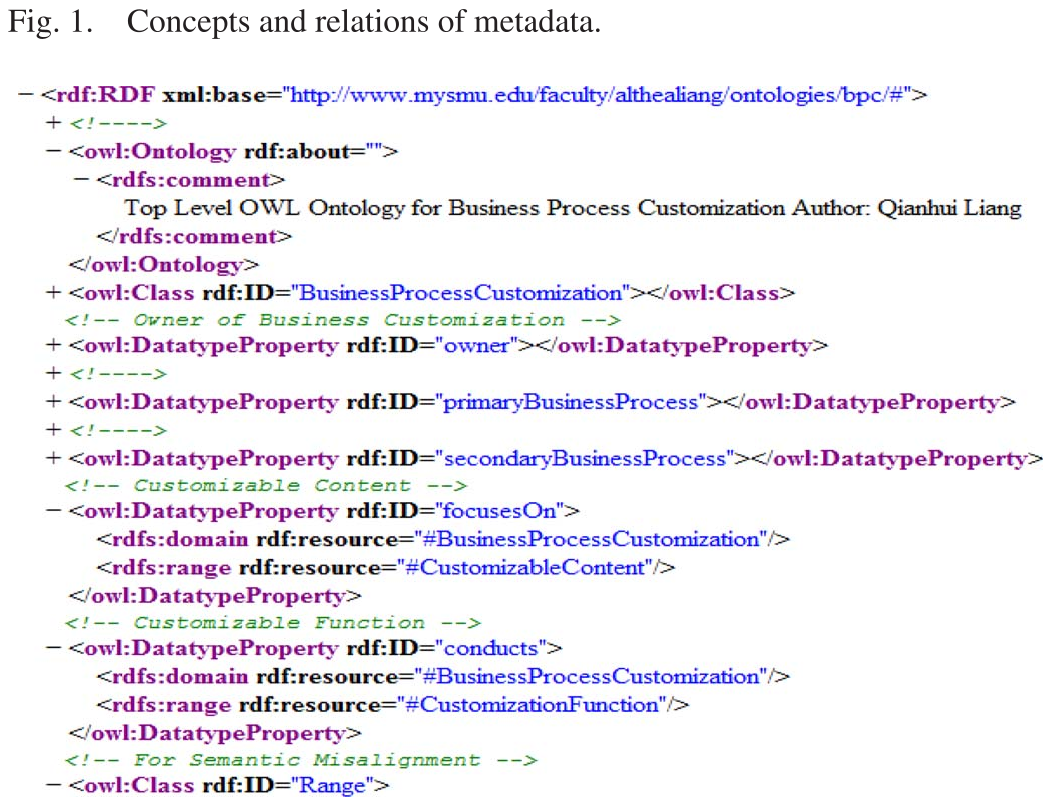 Figure 1: The OWL-BPC Top-Level Ontology, defining "What" is customized and "How" it is done.
Validating the Logic: Supply Chain Example
The paper illustrates a scenario where a Vendor (PBP) must adapt to a Manufacturer (SBP). The system successfully:
- Reordered the "Add Products" steps to match the buyer's workflow.
- Adjusted "DeliveryTime" parameters to satisfy the buyer's lead-time constraints.
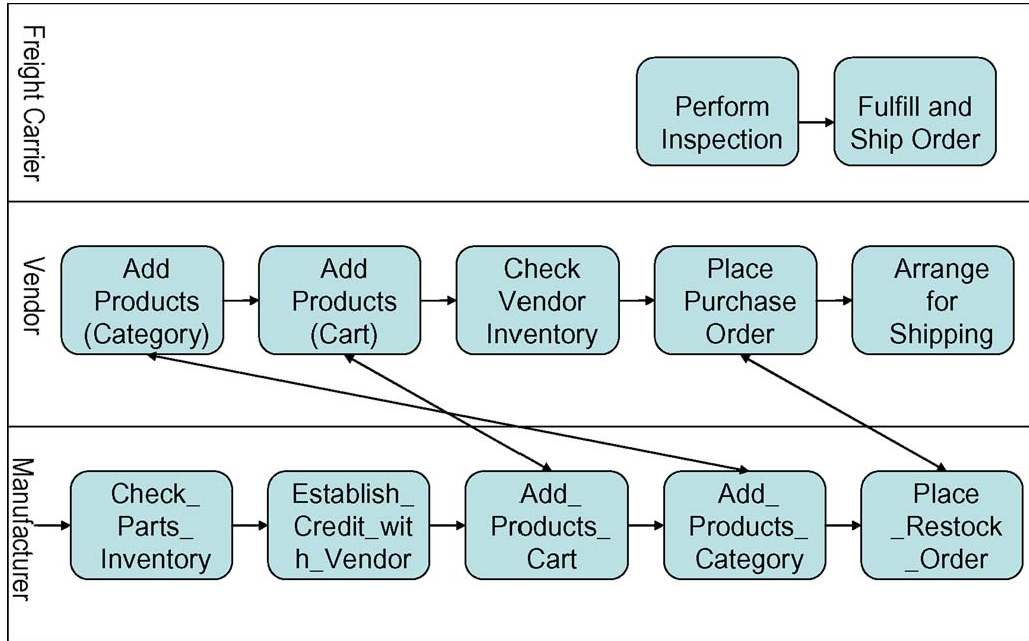 Figure 2: The Implementation Framework featuring the Jess Rule Engine and the OnExCat tool.
Critical Insight & Analysis
The brilliance of OWL-BPC lies in its Semantic Abstraction. By treating process customization as an ontological problem rather than a hard-coding problem, it allows for "Knowledge-Pull" interactions.
Limitations to Consider:
- Ontology Accuracy: OnExCat has an 85% accuracy rate. In high-stakes financial transactions, a 15% error rate requires a "human-in-the-loop" screening, which the authors acknowledge.
- Static vs. Dynamic: The current implementation is largely static (pre-instantiation). Future work must move toward real-time, mid-execution adaptation to handle highly volatile business environments.
Conclusion
OWL-BPC represents an essential step toward a self-configuring Semantic Web. By automating the resolution of structural and semantic misalignments, it provides the "agility" that modern Service-Oriented Architectures (SOA) promise but frequently fail to deliver due to integration complexity.