
OMA-ML: Breaking the Silos of Automated Machine Learning with Ontological Meta-Orchestration
An Ontology-Based Concept for Meta AutoML
This paper introduces OMA-ML (Ontology-based Meta AutoML), a novel framework that integrates multiple existing AutoML solutions (like Auto-Sklearn and Auto-Keras) into a unified "Meta AutoML" system. By utilizing a specialized Machine Learning ontology, OMA-ML automates the orchestration of diverse ML libraries to solve the Combined Algorithm Selection and Hyperparameter optimization (CASH) problem across different technology stacks.
TL;DR
Automated Machine Learning (AutoML) has revolutionized how we select algorithms and tune hyperparameters, but it remains fragmented. Most tools are locked into specific libraries like Scikit-learn or TensorFlow. OMA-ML (Ontology-based Meta AutoML) proposes a "Meta" layer that sits above these tools, using a formal ML Ontology to orchestrate multiple AutoML engines in parallel, providing a unified, technology-independent solution for both developers and domain experts.
The "Library Lock-in" Problem
The current AutoML landscape is a collection of walled gardens. If you use Auto-Sklearn, you are committed to the Scikit-learn ecosystem. If you choose Auto-Keras, you are bound to TensorFlow/Keras. This creates two major pain points:
- Technology Lock-in: You cannot easily compare if a Deep Learning model from Keras outperforms a Gradient Boosted Tree from Scikit-learn without building two separate workflows.
- Accessibility Gap: Powerful academic tools often require deep Python knowledge, while user-friendly commercial tools are proprietary and opaque.
OMA-ML identifies that the core challenge isn't building another optimizer, but building a system that knows which optimizer to use for which task.
Methodology: The Ontological Backbone
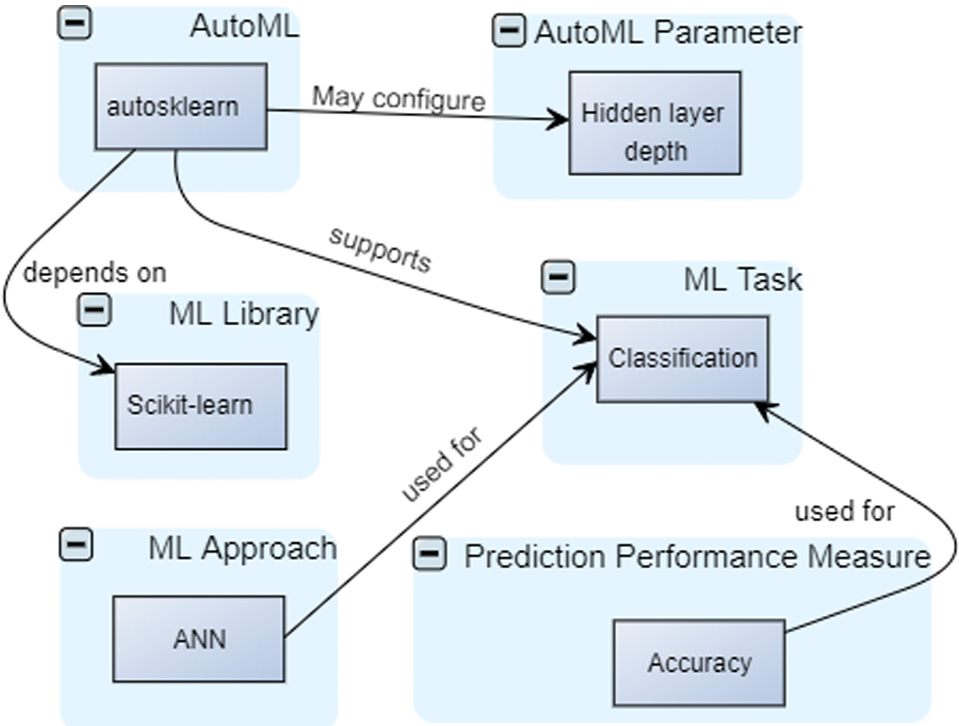
The heart of OMA-ML is a Machine Learning Ontology modeled in RDF. This isn't just a database; it’s a semantic map of the ML world including:
- 63 ML approaches (ANN, SVM, etc.)
- 15 ML tasks (Classification, Regression, etc.)
- 9 AutoML solutions and their associated hardware requirements.
Architecture & Intuition
OMA-ML uses a 3-layer architecture governed by a Blackboard Pattern.
- Presentation Layer: A GUI-based wizard (powered by Blazor) uses the ontology to offer only "legal" configurations to the user.
- Logic Layer (The Controller): This is the brain. It analyzes the dataset (features, missing values, size) and queries the ontology to select the best "Strategy."
- Data Layer: Manages the adapters that connect to different AutoML libraries (running in isolated Docker containers).
How Meta-AutoML Works
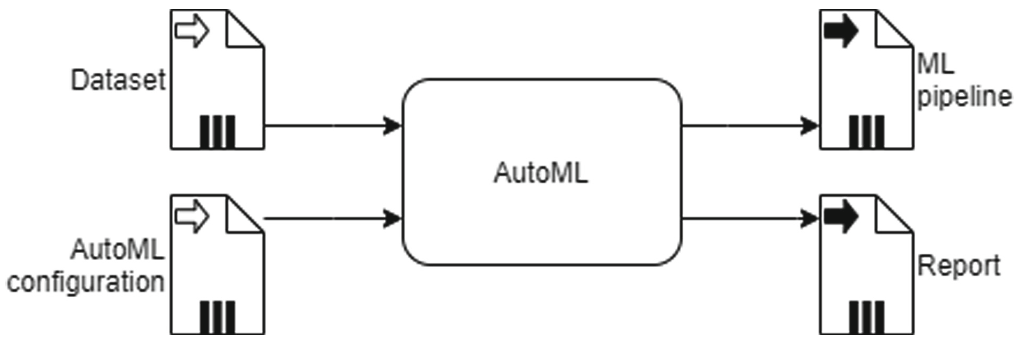
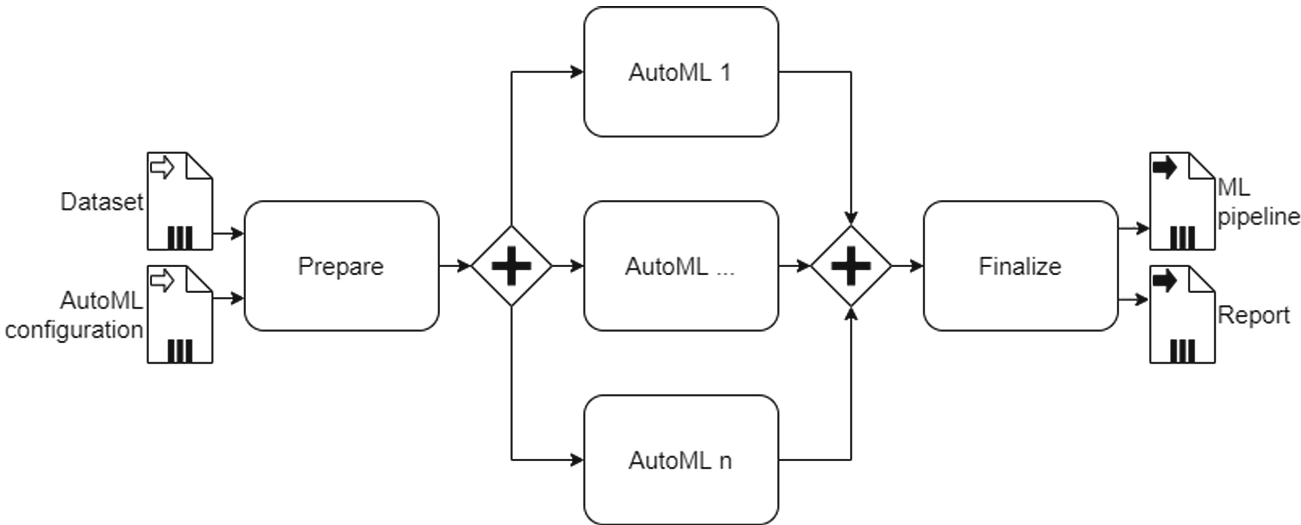
Instead of running one algorithm, OMA-ML triggers multiple AutoML engines in parallel. If your dataset contains text but a chosen AutoML engine only handles numbers, OMA-ML’s controller automatically applies an encoding pre-processor based on the ontology's rules.
Experiments & Concept Validation
As a conceptual framework with ongoing implementation, OMA-ML’s value is validated through its ability to solve the CASH (Combined Algorithm Selection and Hyperparameter optimization) problem across heterogeneous environments.
- Extensibility: Adding a new tool like Mamba or LightGBM doesn't requires a rewrite; you simply update the ontology and add an adapter.
- User Interface: The system converts complex ML constraints into a simple GUI wizard, democratizing high-performance ML for biologists, economists, and other non-programmers.
Critical Insight & Conclusion
OMA-ML represents a shift from Automation to Orchestration. By treating existing AutoML tools as workers in a larger factory, OMA-ML effectively solves the technology fragmentation issue.
Takeaway: The future of ML is not just "Auto," but "Meta." The ability to bridge the gap between different software ecosystems (Interoperability) is just as important as the raw predictive power of the models themselves.
Limitations: The current challenge lies in the computational overhead of running multiple AutoML engines in parallel and the manual effort required to keep the ML Ontology up-to-date with the rapidly evolving AI field. Future work involving supervised learning on OMA-ML logs could eventually allow the system to "learn how to learn," further optimizing its strategy selection.