
Ontology-Driven Web Mining: Elevating Multi-label Text Classification Precision to 94.5%
A New Method for Conceptual Classification of Multi-label Texts in Web Mining Based on Ontology
The paper introduces a novel inductive learning method for multi-label text classification in web mining, integrating Ontology with Term Space Reduction (TSR) and Mutual Information (MI). Tested on the Reuters-21578 dataset, the method achieves a State-of-the-Art (SOTA) average precision of 94.5%, outperforming traditional SVM and Naïve Bayes models.
TL;DR
This research presents a powerful hybrid approach to multi-label text classification by merging statistical learning with domain Ontologies. By utilizing Term Space Reduction (TSR) and Mutual Information (MI), and then refining the results through semantic hierarchies, the authors achieved a landmark 94.5% average precision on the Reuters-21578 dataset, notably outperforming industry-standard Support Vector Machines (SVM).
Problem & Motivation: The Semantic Gap in Web Mining
The explosion of textual data on the web has rendered traditional keyword-based methods increasingly inadequate. The core issue is the lack of semantic interpretation: keywords alone cannot capture the underlying meaning or the multi-faceted nature of complex documents.
Existing statistical models like Naïve Bayes or Decision Trees often suffer from the "curse of dimensionality" and cannot distinguish between terms that are statistically significant but semantically irrelevant to a specific category. The authors’ insight was to use an Ontology as a "conceptual anchor" to filter out statistically noisy terms that don't satisfy semantic proximity constraints.
Methodology: Bridging Statistics and Semantics
The proposed method follows a rigorous pipeline designed to reduce noise while maximizing conceptual clarity.
1. Term Space Reduction (TSR) & Feature Selection
The system first cleans the data using standard NLP techniques (Stop-word removal, Porter Stemming). To handle the high dimensionality, it uses Mutual Information (MI) to rank terms.
The MI formula used to measure the association between term and category is:
Only the top 300 terms with the highest MI scores are retained for the document descriptor matrix.
2. The Semantic Refinement Layer
The unique contribution of this work is the Ontology integration. When a document is classified, the system checks the semantic distance between the terms and the category within the domain ontology.
- The Logic: If multiple terms suggest a positive classification, the system identifies the term semantically nearest to the category .
- The Result: This effectively eliminates "Incorrect Positives," leading to higher precision at various threshold limits.
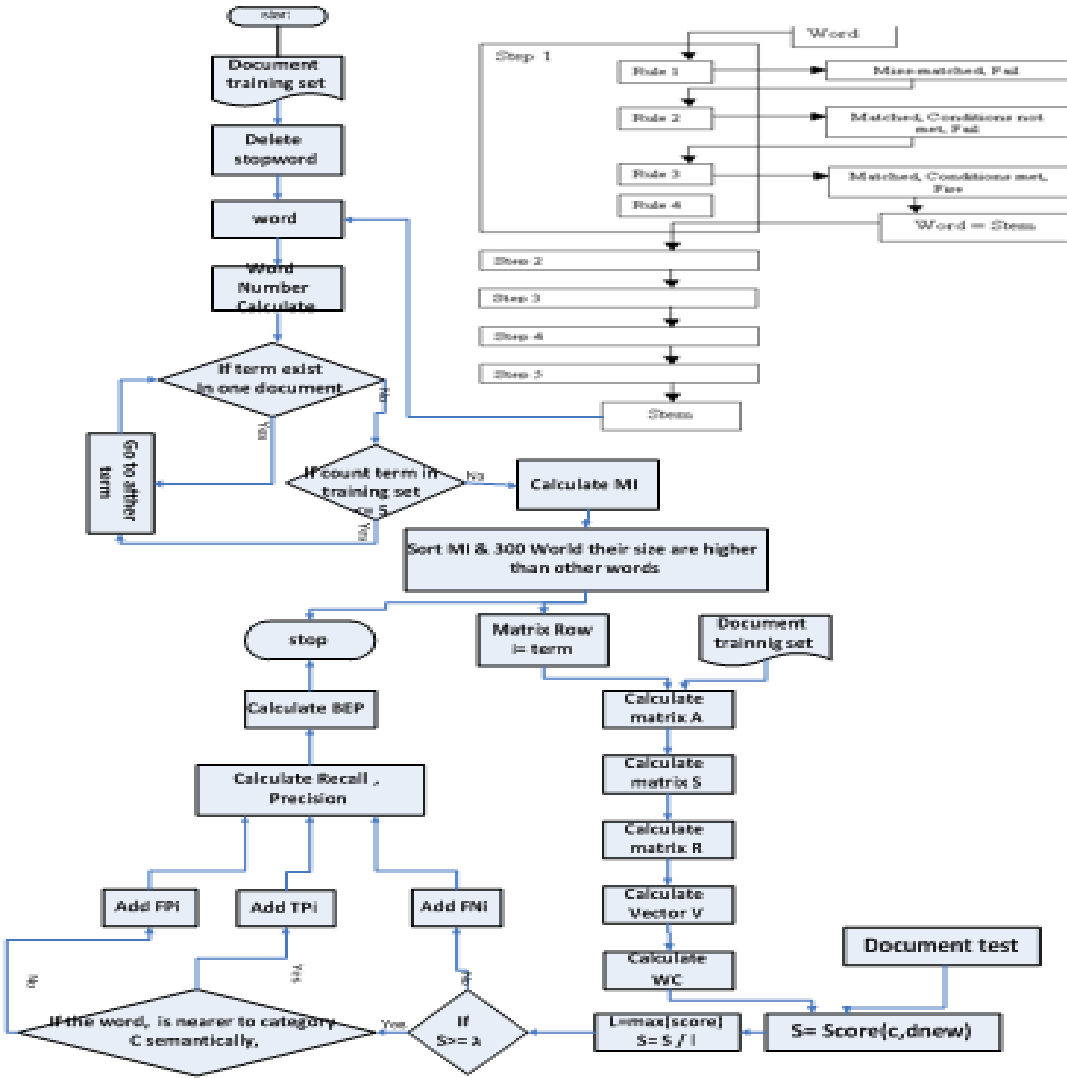 Figure 1: The proposed workflow illustrating the integration of TSR and Ontology refinement.
Experiments & Results: Surpassing SOTA
The method was evaluated against the "Reuters-21578 Apte Split," a benchmark for multi-label text categorization.
Comparative Performance
The results demonstrate a clear hierarchy of performance, with the Ontology-based method leading the pack:
- Proposed Method (Ontology): 94.5%
- Linear SVM: 92.0%
- Decision Trees: 88.4%
- Naïve Bayes: 81.5%
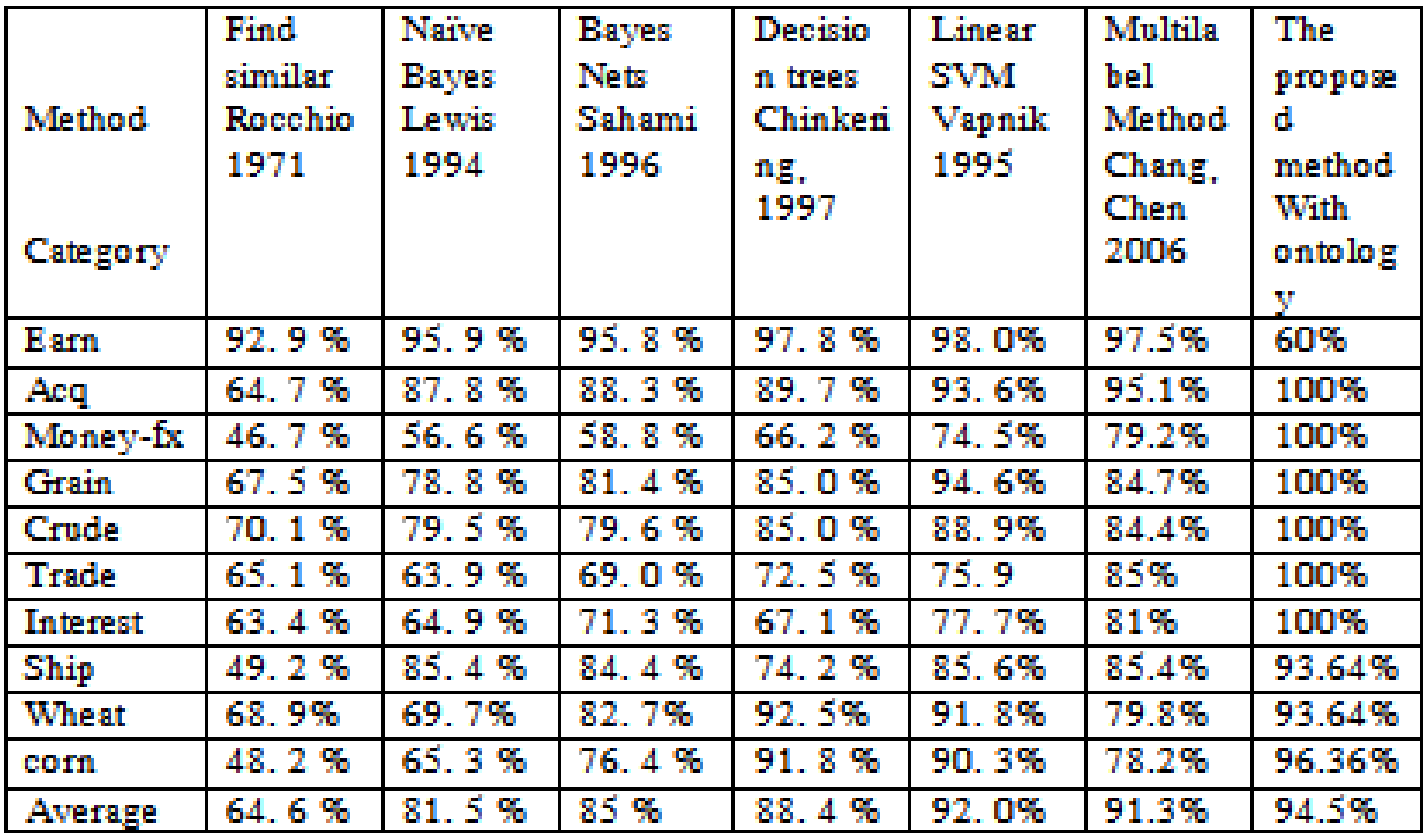 Table 1: Performance comparison across 10 Reuters categories. Note the 100% precision in categories like Acq, Money-fx, and Grain.
Why it Works: The "Singularity" in Precision
By applying the Ontology refinement, the researchers observed that "incorrectly categorized positive documents" were frequently reduced to zero. This creates a high-precision environment even when the classification threshold varies, a significant advantage over purely statistical models like Rocchio (Find Similar).
Critical Analysis & Conclusion
The strength of this paper lies in its hybrid philosophy. While many contemporary researchers focus exclusively on deep learning, this work proves that "Old School" symbolic AI (Ontologies) can still provide a massive performance boost when combined with statistical methods.
Limitations & Future Work
- Ontology Dependency: The system's performance is heavily reliant on the quality and coverage of the underlying Ontology.
- Scalability: Manual construction of ontologies is labor-intensive. The authors suggest that moving toward automatic synchronization and feedback-based training of ontologies will be the next frontier to make this method more operational for the broader web.
Takeaway: If you want precision, don't just count words—understand their relationships. This paper provides a robust blueprint for how semantic knowledge can fix the inherent flaws of statistical text classification.