
Beyond Keywords: Using Ontologies to Decode the "Why" Behind User Decisions
OntologyBased ContextDependent Personalization Technology
The paper introduces an ontology-based personalization technology for Recommendation Systems (RS) that extracts semantically interpretable contexts from historical customer data. By combining domain ontologies with a unique feature aggregation and filtering mechanism, the system (validated via an "Intelligent E-mail Assistant") transforms heterogeneous data into personal decision rules using machine learning.
TL;DR
The paper presents a framework for building highly personalized Recommendation Systems (RS) by moving beyond simple collaborative filtering. It utilizes Domain Ontologies to transform messy, unstructured historical data into an "Object Database," allowing a machine learning engine to extract semantically rich, cause-consequence rules. In practical tests, this "Intelligent Assistant" successfully automated email filing with high precision by understanding the context of the sender and content.
The Personalization Gap: Why Your Current RS is Blind
Most modern recommendation systems are surprisingly "shallow." They rely on surface-level correlations—similar users bought this, so you might too. However, they lack an understanding of Context.
The authors argue that true personalization requires capturing the "driving forces" of a user. The challenge is threefold:
- Heterogeneity: How do you combine a PDF attachment, a sender's LinkedIn job title, and the sentiment of an email body?
- Context: How do you define the relationship between a sender and a specific project folder?
- Dimensionality: With thousands of possible features, which ones actually dictate a user's choice?
Methodology: The Ontology-to-Rule Pipeline
The proposed technology breaks down the problem into a structured four-stage pipeline:
1. The Semantic Blueprint (Ontology)
Instead of treating data as a flat table, the authors build a domain ontology. This acts as a map, defining what an "EmailItem" is, how it connects to a "Company," and the "Position" of a "Person." This transforms raw data into a structured Object DB.
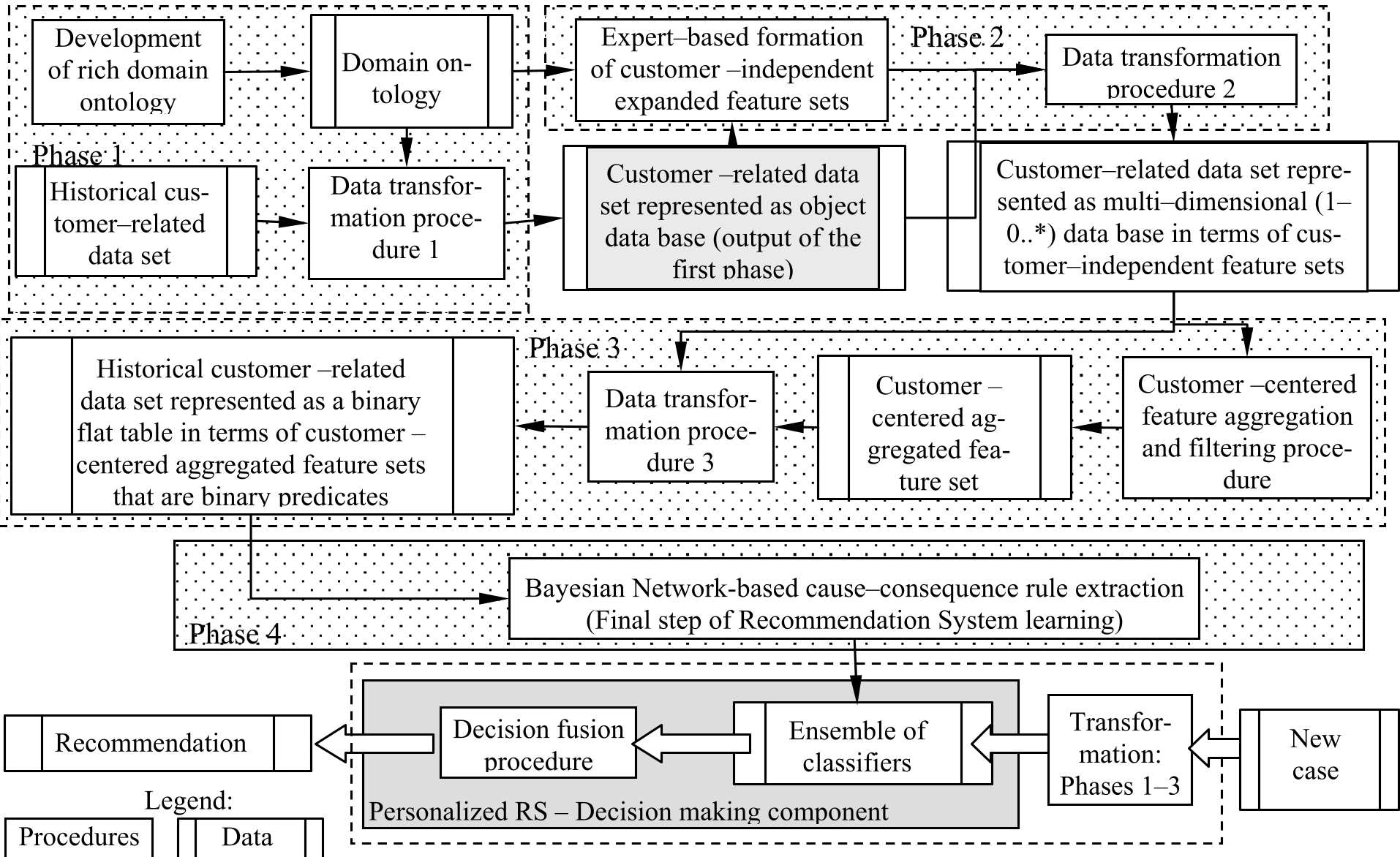 Figure 1: The full lifecycle from raw data samples to cause-consequence decision making.
2. Probabilistic Feature Filtering
The core innovation lies in the Customer-Centered Feature Space. The authors use a specific probabilistic inequality: Essentially, a feature is only kept if it significantly increases the probability of a specific recommendation (e.g., "Move to Folder X") over all other options. This filters out the noise and focuses on features relevant to the specific individual.
3. Rule Extraction
The system doesn't just output a probability; it generates Cause-Consequence Rules. For example: If (Company = 'KelwinMag') AND (Position = 'Contract Admin') THEN (Target = 'Legal Folder').
Case Study: The Intelligent E-mail Assistant
To prove the tech, they built a plugin for MS Outlook. It uses IBM LanguageWare to perform Text Mining, extracting entities (Names, Phones, URLs) and mapping them back to the ontology.
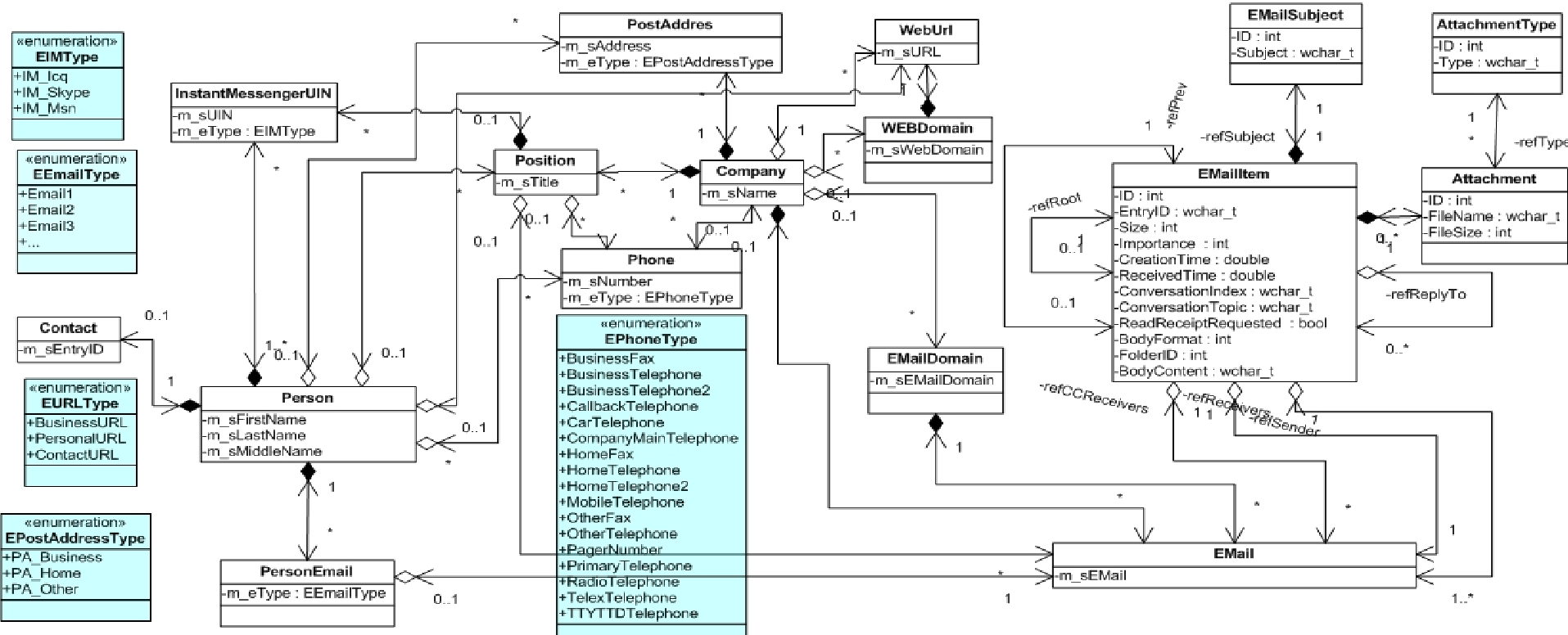 Figure 3: The ontology used to interpret MS Outlook data, linking people, companies, and roles.
Experimental Validation
The system was tested on real-life email profiles. Unlike many academic papers that use "sanitized" datasets, this work dealt with messy, real-world communications.
- Average Accuracy: 75% coverage with an impressively low 8% false alarm rate.
- Interpretability: Because the features are derived from an ontology, every recommendation can be traced back to a logical rule (e.g., recognizing a specific phone number format associated with a known contact).
Success Example (Table 1 Context): For many specific folders (IDs 4, 5, 12, 14), the system achieved 100% accuracy (Precision=1.0), demonstrating that when the context is well-defined by the ontology, the machine learning model becomes incredibly reliable.
Critical Insight: Why This Matters
The shift from "Data-driven" to "Knowledge-and-Data-driven" is the key takeaway here. By using an ontology, the authors provide the machine learning model with a Pre-defined World View. This drastically reduces the amount of training data needed to achieve personalization, as the model doesn't have to "learn" what a company or a phone number is from scratch—it already knows the structure and only needs to learn the user's specific preferences within that structure.
Future Outlook
While the results are promising, the authors note that bad recommendations in certain folders suggest the need for Ontology Evolution—the system should ideally learn to update its own "map" of the world as it encounters new types of data. In the age of LLMs, this framework offers a fascinating bridge between structured knowledge and unstructured text processing.
Keywords: Ontology, Recommendation Systems, Feature Selection, Context-Awareness, Personalization.