
Intelligent E-Learning: Bridging the Pure Cold-Start Gap with Ontologies
7438_Ontology-based E-learning Content Recommender System for Addressing the Pure Cold-start Problem.
This paper proposes an Ontology-based E-learning Content Recommender System specifically designed to solve the Pure Cold-start Problem in Personalized Learning Environments (PLE). By integrating semantic web technologies (OWL, SPARQL) with collaborative filtering, the system achieves a 79% learner satisfaction rate.
TL;DR
Recommender systems in education often fail exactly when they are needed most: the first time a student logs in. This paper introduces a sophisticated Ontology-based semantic framework that effectively solves the "Pure Cold-start Problem" (zero initial ratings) by leveraging Learning Styles and Domain Knowledge. It achieves high-accuracy similarity grouping (76.4%) and high user satisfaction (79%) without needing years of historical data.
The "Zero-Knowledge" Motivation
Traditional recommendation engines face a catch-22: to know what you like, they need you to rate items; but to get you to rate items, they need to show you things you like. This is the Pure Cold-start Problem. In an E-learning context, this failure is critical—if a student’s first few recommended resources are too hard, too easy, or mismatched to their learning style, they are likely to drop out.
The authors' insight was to move away from "What did other people buy?" toward "What kind of learner are you?" and "What pedagogical characteristics does this object have?"
Methodology: The Semantic Triple-Threat
The core of the system is a three-way ontological structure built using Java and Jena APIs:
- Learner Sub-ontology: Models the student's "DNA," including background knowledge and learning styles based on the Felder-Silverman model (FSLSM) (e.g., Active vs. Reflective, Visual vs. Verbal).
- Learning Material Sub-ontology: Annotates educational content using the IEEE LOM standard, focusing on difficulty level, interactivity type, and resource structure.
- Learner Log: Tracks the "Dynamic Profile"—updating the learner's preferences as they interact with the system.
The Architecture
The system bypasses the need for massive matrix factorization by using SPARQL Queries to find "Pedagogical Twins"—users who share similar learning profiles even if they haven't rated the same items.
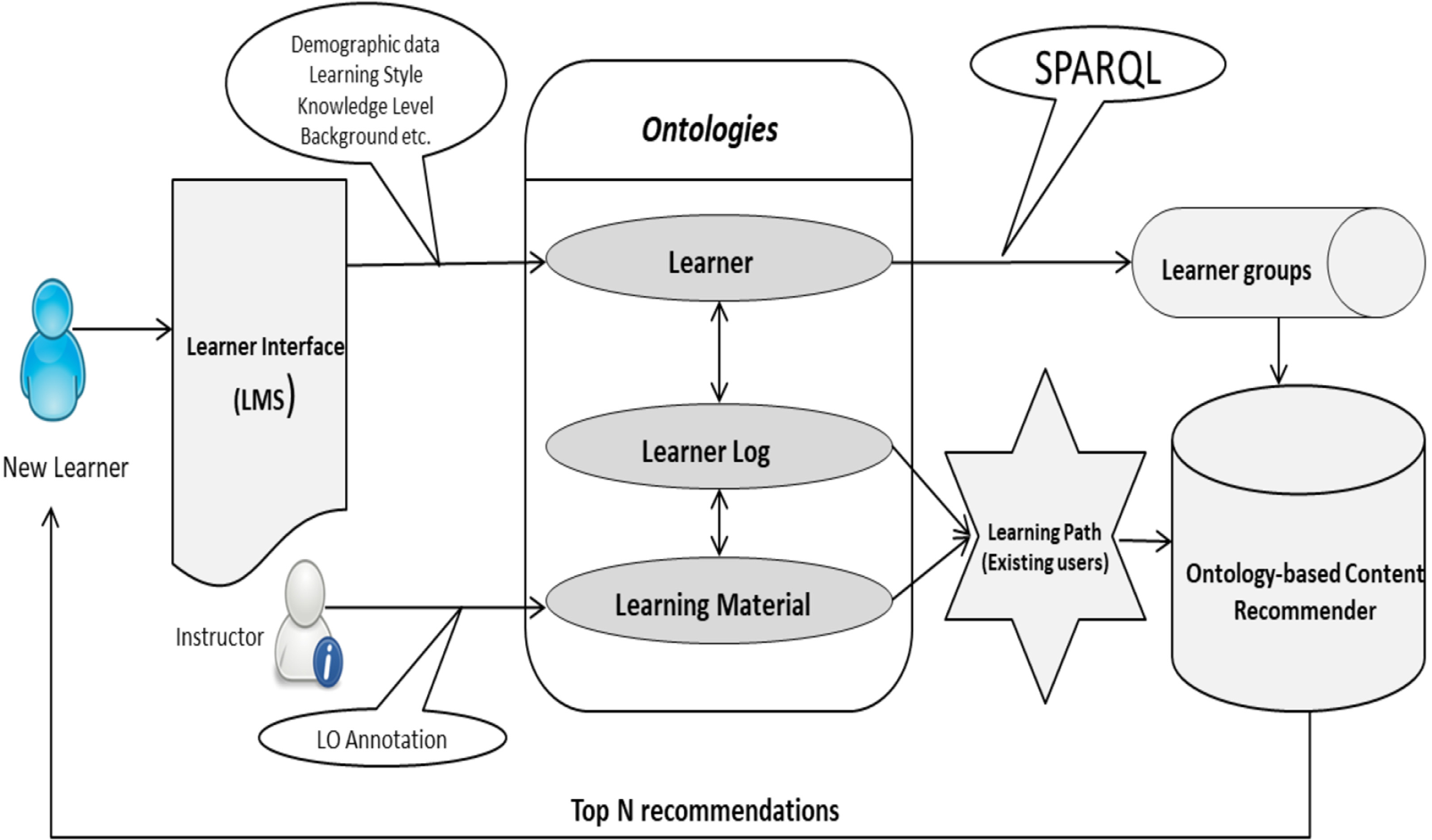 Figure 1: The proposed framework for ontology-based content recommendation.
Experiments: SPARQL vs. Machine Learning
The authors compared their semantic grouping (using SPARQL) against a Multivariate K-means Clustering algorithm (an unsupervised ML technique).
Key Findings:
- Accuracy: The semantic model achieved a 76.4% match with the natural clusters found by ML when using "Background Knowledge" and "Learning Style" together.
- Efficiency: SPARQL queries were consistently faster, taking roughly half the time (~85ms) of the clustering algorithm (~178ms) to compute similar groups.
- Satisfaction: In a live test with 40 participants, 79% of learners rated the cold-start recommendations as "Good" to "Excellent."
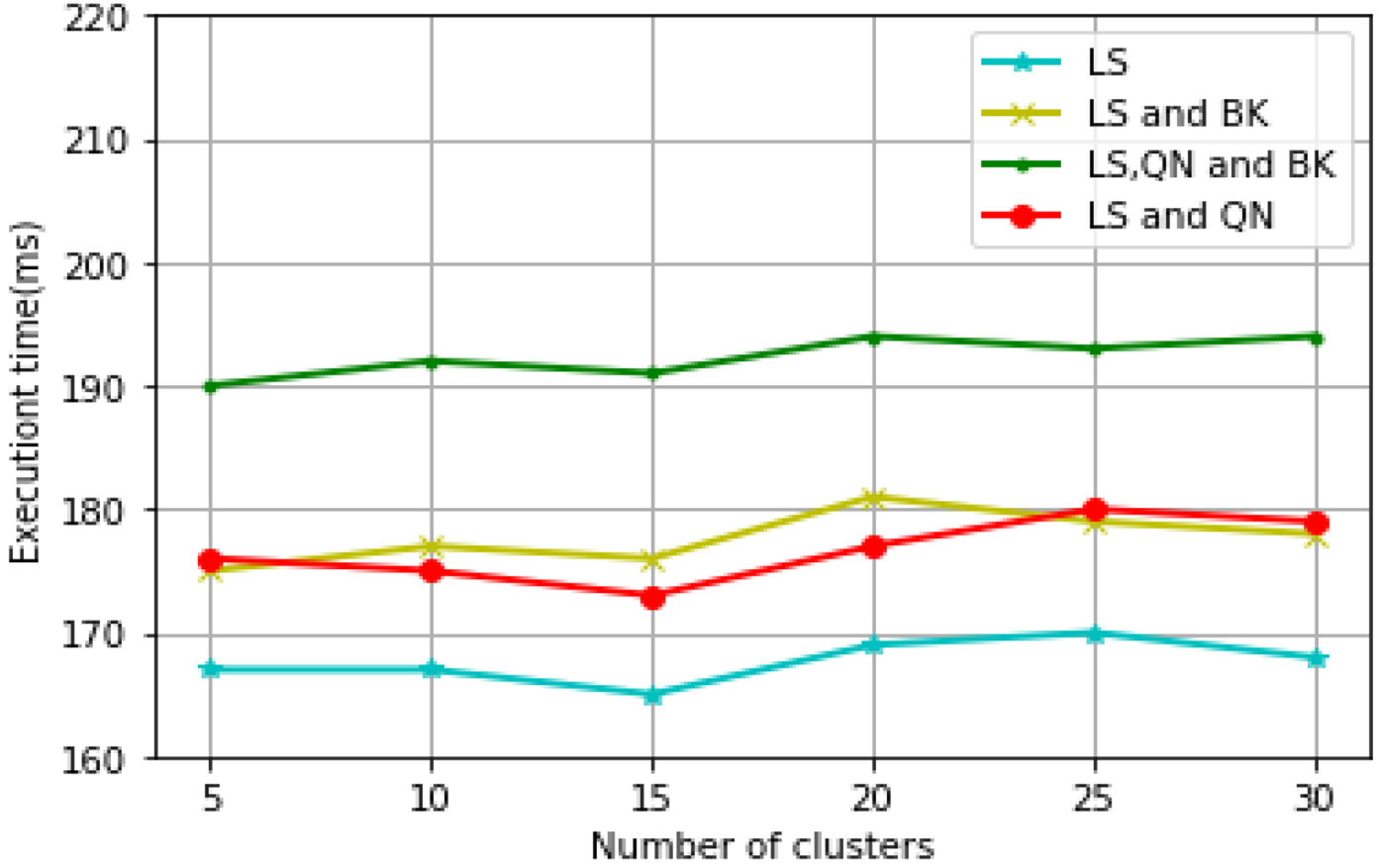 Figure 2: Execution time comparison across different learner attributes.
Critical Insight: Why Pedagogical Mapping Wins
The success of this approach lies in the Semantic Mapping Rules. Instead of just looking for statistical correlations, the system uses "reasoning":
- IF Knowledge Level = Basic AND Topic = Data Structures Recommend LOs with Difficulty = Very Easy / Easy.
- IF Learning Style = Visual Prioritize LOs with Format = Video/Diagram.
This "Logic-First" approach provides a safety net that pure statistical models (like Matrix Factorization) lack when data is sparse.
Conclusion & Road Ahead
The paper effectively demonstrates that Ontologies are not just "fancy dictionaries"—they are powerful inference engines that can solve the most stubborn problem in recommender systems. By formalizing pedagogical knowledge, we can create PLEs that understand a student's needs before they even click a single button.
Limitations: The accuracy drops (to 46.9%) when only Learning Style is used for grouping, suggesting that a multi-dimensional profile (Knowledge + Style + Qualification) is mandatory for success. Future work aims to incorporate even more variables like age and gender to further refine the "Pedagogical Twin" matching.