
Beyond One-Size-Fits-All: A Semantic Hub for Personalized Adaptive E-Learning
Ontology based E-learning framework: A personalized, adaptive and context aware model
The paper proposes an Ontology-based E-learning framework designed for high-degree personalization and adaptivity. It introduces a hybrid machine learning model (LCHAIT) for learner categorization and a Rule-based knowledge driven recommender (KASER) to provide context-aware content, achieving significant improvements in long-term student academic performance.
TL;DR
The shift towards digital education has often ignored the unique cognitive rhythm of individual learners. This paper introduces a comprehensive E-learning framework that leverages Ontologies for machine-understandable content and a hybrid AI model, LCHAIT, to categorize learners. By moving from static content delivery to a dynamic, relative-grading-based recommendation system (KASER), the authors report a marked increase in student productivity and grades over a three-year study.
The "Understanding" Gap in E-Learning
Most existing Learning Management Systems (LMS) treat educational content as mere binary data—machine-readable but not machine-understandable. This lack of semantic depth prevents systems from knowing why a student is struggling. Prior works often focused solely on academic grades, ignoring behavioral traits, learning styles (e.g., Visual vs. Verbal), and demographic context. This paper argues that without a "Semantic Web 3.0" approach, personalization remains superficial.
Methodology: The LCHAIT & KASER Engine
The core of the architecture is built on two pillars: Learner Characterization and Semantic Recommendation.
1. Hybrid Categorization (LCHAIT)
The framework utilizes LCHAIT (Learner Categorization with Hybrid Artificial Intelligence Techniques). It combines the historical memory of Case-Based Reasoning (CBR) with the predictive power of Artificial Neural Networks (ANN).
- The Intuition: When a new learner arrives, CBR retrieves the most similar existing "profiles." If no perfect match exists, an ANN (trained on these similar cases) adapts and predicts the most suitable category: Novice, Easy, Proficient, or Expert.
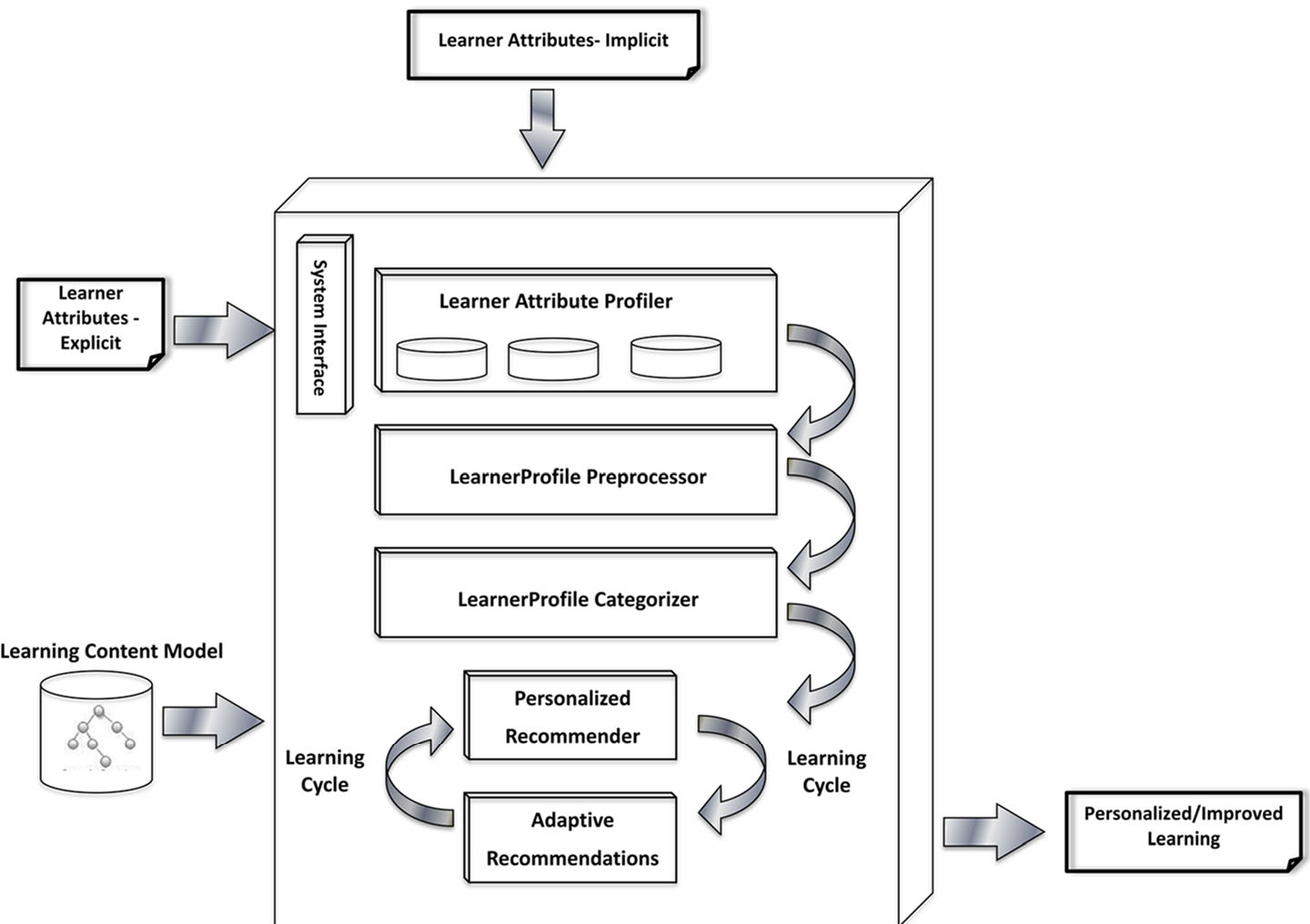 Fig 1. High-level Architecture of the Personalized E-Learning Framework
2. Knowledge-Based Recommender (KASER)
Unlike collaborative filtering which relies on user ratings (often plagued by cold-start issues), KASER uses a rule-based engine acting on the CourseOntology. It dynamically upgrades or downgrades content difficulty based on bi-weekly assessments, ensuring students are always operating at their optimal "Zone of Proximal Development."
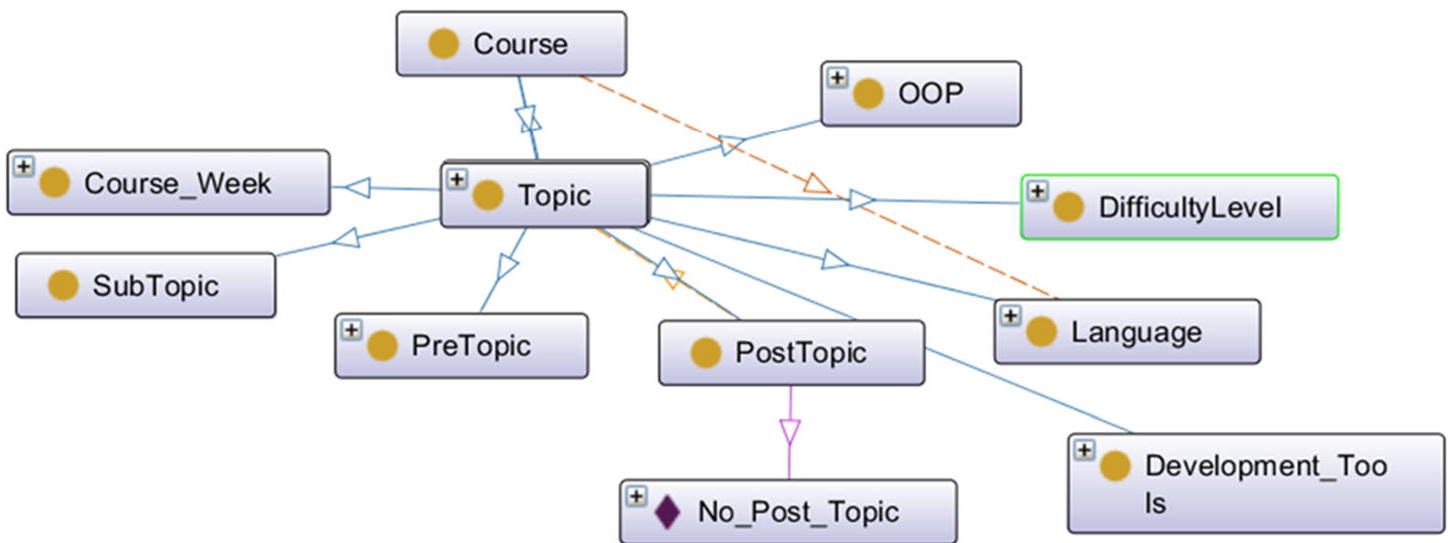 Fig 2. Semantic Mapping of Learning Objects and Difficulty Levels
Experimental Proof: Long-term Academic Impact
The researchers didn't just test this in a lab; they applied it to real university courses (C++, C#, and Java) over three years (2015–2017).
- Categorization Superiority: LCHAIT reached 70.84% accuracy, outperforming classic Fuzzy Logic and standalone Neural Networks.
- Grade Improvement: Students using the KASER framework showed significantly higher mid-term and final-term scores compared to both the "Conventional" approach and the previously established PAeLS model.
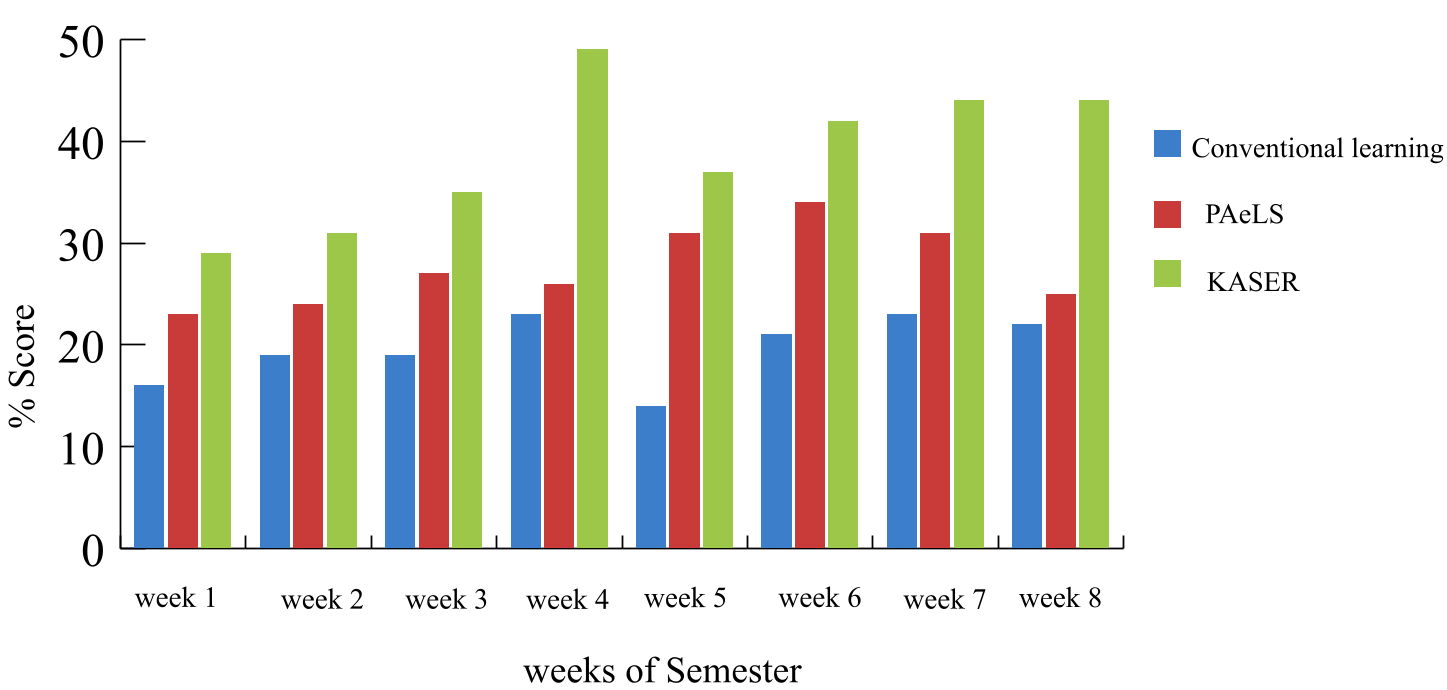 Fig 3. Weekly impact on learner performance compared to conventional systems
Critical Insight: Why This Works
The success of this framework lies in its comprehensive profiling. By including 12 attributes ranging from Pre-Req GPA and Learning Style to Locale and Age, the LCHAIT model captures a high-dimensional representation of the learner. Furthermore, the use of Relative Grading within the rule base creates a competitive yet adaptive environment, preventing "Learner Stagnation" where a student might otherwise get stuck in a 'Novice' track forever.
Conclusion & Future Horizons
This paper proves that Ontologies are not just theoretical constructs but powerful tools for high-stakes personalization. The next evolution of this work likely involves making the rule-base even more dynamic through Genetic Algorithms or incorporating Large Language Models to generate the "Relative Grading" rules automatically. As we move toward 250 million global e-learners by 2025, systems that "understand" the student will be the only way to scale quality education.
Takeaway for Practitioners: When building recommendation engines for education, prioritize semantic content mapping over user ratings to bypass the cold-start problem and achieve true pedagogical adaptivity.