
Beyond One-Size-Fits-All: An Ontology-Based Framework for Personalized Cancer Genomics
Ontology-Based Framework for Personalized Diagnosis and Prognosis of Cancer Based on Gene Expression Data
The paper proposes an ontology-based framework for personalized cancer diagnosis and prognosis by integrating gene expression data with machine learning models. The core methodology introduces personalized modeling techniques—Specifically WWKNN and TWNFI—which achieved a state-of-the-art accuracy of 87.01% on the DLBCL lymphoma dataset.
TL;DR
This research addresses the "heterogeneity gap" in cancer treatment by proposing a framework that combines Personalized Modeling with Ontology-based knowledge management. Moving away from "global" models that treat all patients as a single distribution, the authors introduce methods like WWKNN and TWNFI that tailor diagnostic logic to each individual’s gene expression profile, achieving accuracy improvements and enabling new knowledge discovery.
The Problem: The Heterogeneity Trap
In cancer research, the "Global Model" is the standard: you train an SVM or a Linear Regression on a massive dataset and apply that fixed logic to every new patient. However, cancer is notoriously heterogeneous. A gene that is a primary driver for Patient A might be noise for Patient B.
Existing systems suffer from two major flaws:
- Lack of Precision: Global averages ignore the "local" nuances of a patient's unique genomic neighborhood.
- Disconnected Knowledge: Even when a model discovers a new gene relationship, there is no formal way to "evolve" our medical knowledge base automatically.
Methodology: Personalized & Evolving Intelligence
The authors pivot toward Personalized Modeling. Unlike global models, these focus on the individual sample at hand.
1. WWKNN (Weighted Variable Weighted Distance K-Nearest Neighbor)
The core intuition is that in the high-dimensional space of 7,000+ genes, only a few are relevant to a specific patient's neighborhood. WWKNN calculates a Personalized Sub-space by:
- Finding the K-nearest neighbors.
- Weighting variables (genes) using a Signal-to-Noise Ratio (SNR) calculated only within that local neighborhood.
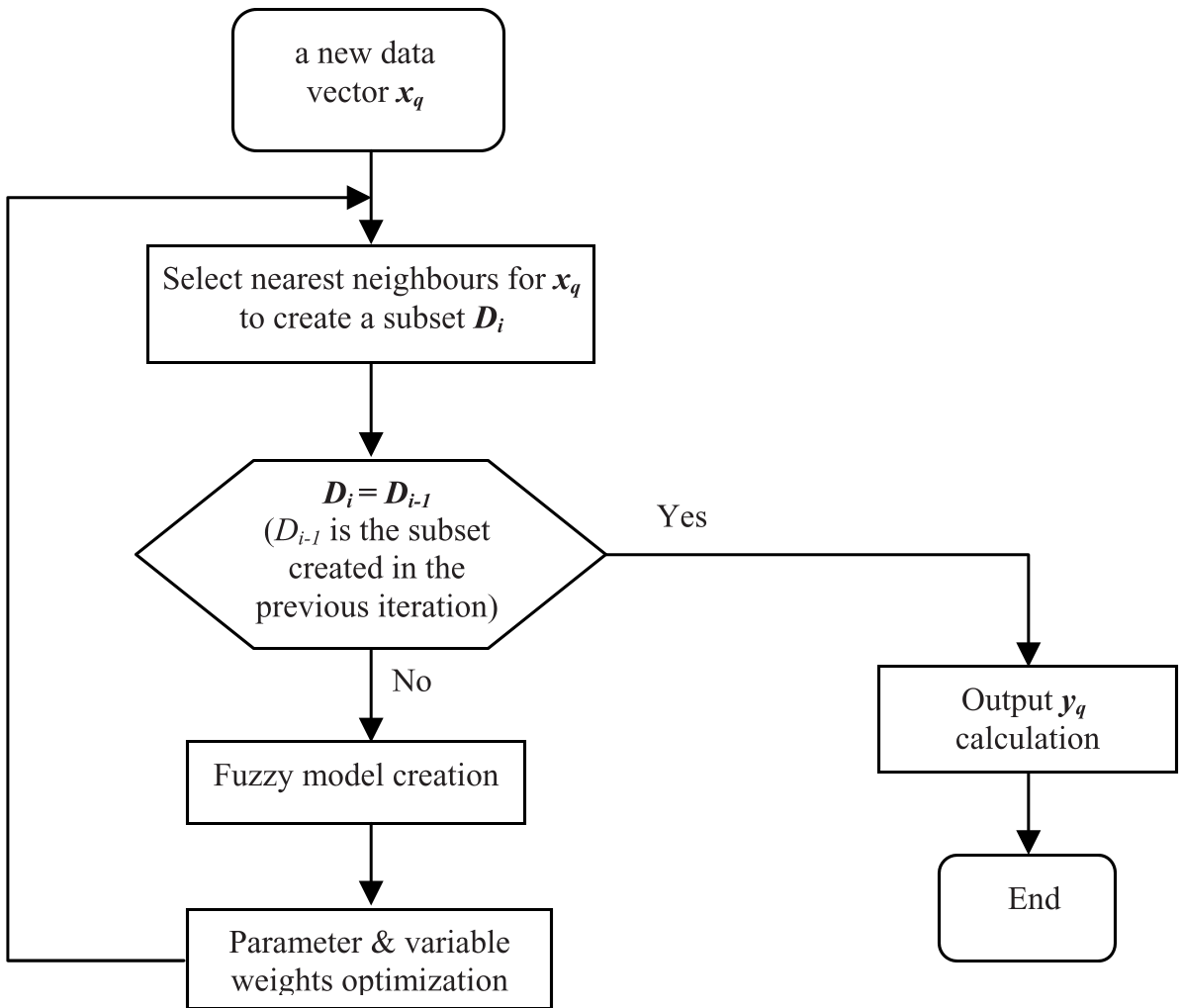 Fig 1: The TWNFI algorithm process, showing the transition from input vectors to personalized fuzzy rules.
2. The Ontology Framework
The diagnostic results aren't just numbers; they are fed into an Evolving Ontology. This acts as a "live" knowledge repository. By using Protégé and Semantic Web standards, the system ensures that as new patients are diagnosed, the underlying understanding of gene-to-disease relationships is updated and shared.
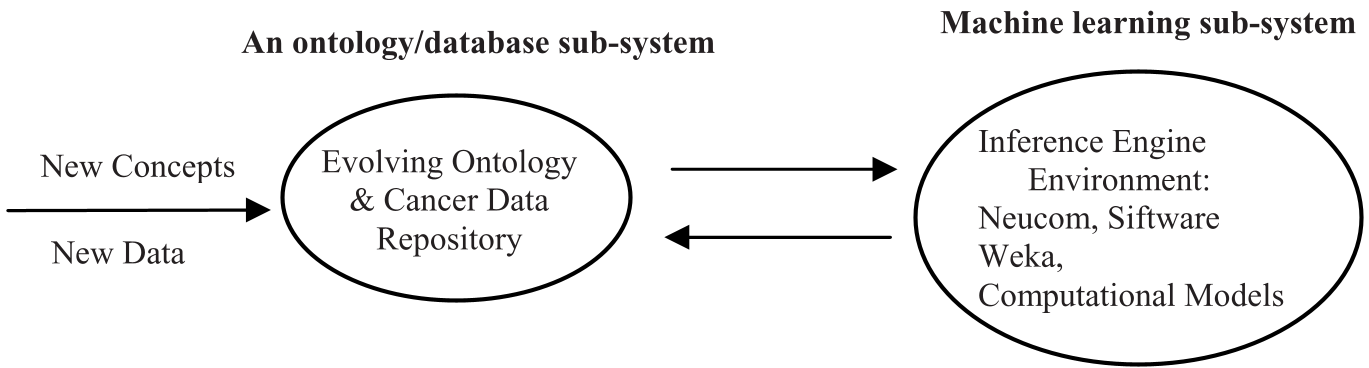 Fig 2: The integrated framework architecture, bridging raw gene data, machine learning, and the knowledge-based ontology.
Experimental Evidence
The study compared Global (MLR, SVM), Local (ECF), and Personalized (WWKNN, TWNFI) models across two datasets: DLBCL (Lymphoma) and CNS (Central Nervous System).
| Model | Type | Accuracy (DLBCL) |
|---|---|---|
| MLR / SVM | Global | 84.42% |
| ECF | Local | 85.71% |
| WWKNN | Personalized | 87.01% |
Key Discovery: The importance of genes changed per sample. For instance, in the CNS data, Gene 2695 was the #1 most important feature for Sample 9 but dropped to #4 for Sample 32. A global model would have assigned a static weight to this gene, potentially misdiagnosing one of the two patients.
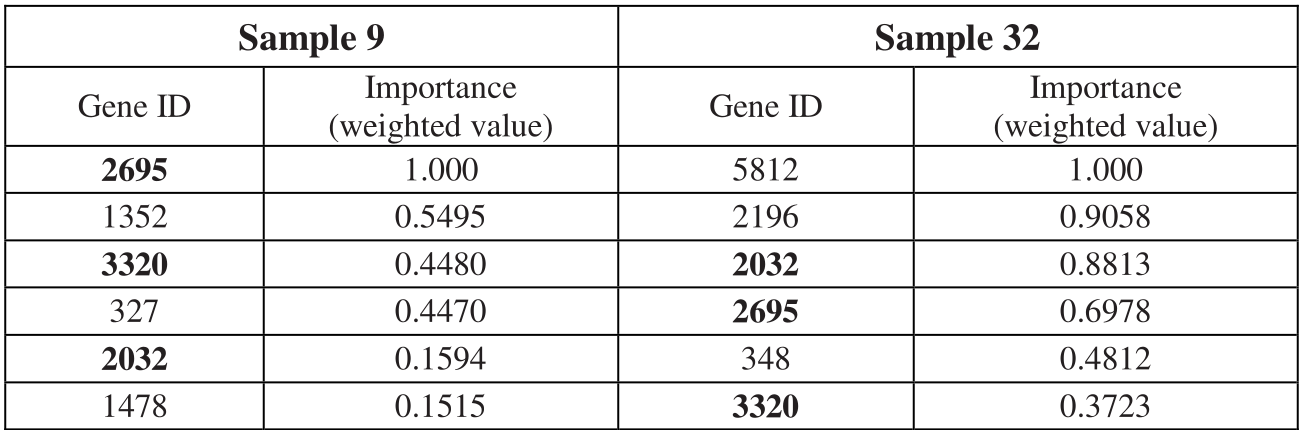 Table 4: Comparative gene importance for different samples, highlighting the necessity of personalized analysis.
Critical Insight & Conclusion
The significance of this work lies not just in the +2.5% accuracy boost over SVM, but in the interpretability and adaptability. By using a Transductive Neuro-Fuzzy Inference System (TWNFI), the model can output actual human-readable rules (e.g., "If Gene A is level X and Gene B is level Y, then Diagnosis is Z").
Future Outlook: The integration of AI with formal Ontologies is the "Holy Grail" of clinical decision support. While this study uses gene expression, the framework is multimodal-ready. The next step in this evolution will likely involve incorporating clinical records and patient history into the same evolving knowledge graph to further refine the "Personalized Sub-space."
Takeaway: Real-world cancer diagnosis cannot rely on "average" patients. Future SOTA systems must be transductive and local, treating every patient as a unique computational problem.