
Bridging the Digital Divide: An Ontology-Based Portal for Marginalized Rural Communities
An ontology-based, multi-modal platform for the inclusion of marginalized rural communities into the knowledge society
The paper introduces the PIASK model, an ontology-based, multi-modal platform designed to integrate Marginalized Rural Communities (MRCs) into the global knowledge society. It focuses on the Dwesa community in South Africa, utilizing a semantic architecture to bridge Indigenous Knowledge Systems (IKS) with modern e-services like e-commerce, e-learning, and e-health.
Executive Summary
TL;DR: This paper presents the PIASK model, a specialized 5-layer platform designed to bring marginalized rural communities in South Africa (specifically Dwesa) into the "Knowledge Economy." By leveraging Semantic Web technologies (RDF/OWL) and multi-modal access, the platform codifies Indigenous Knowledge (IK) and provides critical e-services like e-commerce and e-health tailored to local social structures.
Project Positioning: This is a seminal socio-technical intervention (ICT4D) that shifts the focus from simple infrastructure provision to cultural and semantic alignment between local users and global networks.
Problem & Motivation: The Knowledge Divide
The global information revolution has created a new class of inequality: the divide between the "knows" and the "knows not." In rural South Africa, traditional ICT approaches often fail because:
- Context Misalignment: Solutions are built for Western urban environments, ignoring local customs.
- Epistemic Exclusion: Indigenous Knowledge Systems (IKS)—covering medicine, agriculture, and music—are rarely represented in high-status digital domains.
- Language & Literacy Barriers: Heavily text-reliant, English-only interfaces alienate the primary economic drivers in these regions (often older, less-educated community members).
The authors argue that for ICT to be effective, it must be socially constructed—where knowledge is viewed as a product of community interaction, not just a static resource to be consumed.
Methodology: The PIASK 5-Layer Model
The core innovation is the PIASK Model, which provides a structured approach to handling heterogeneous content and diverse access methods.
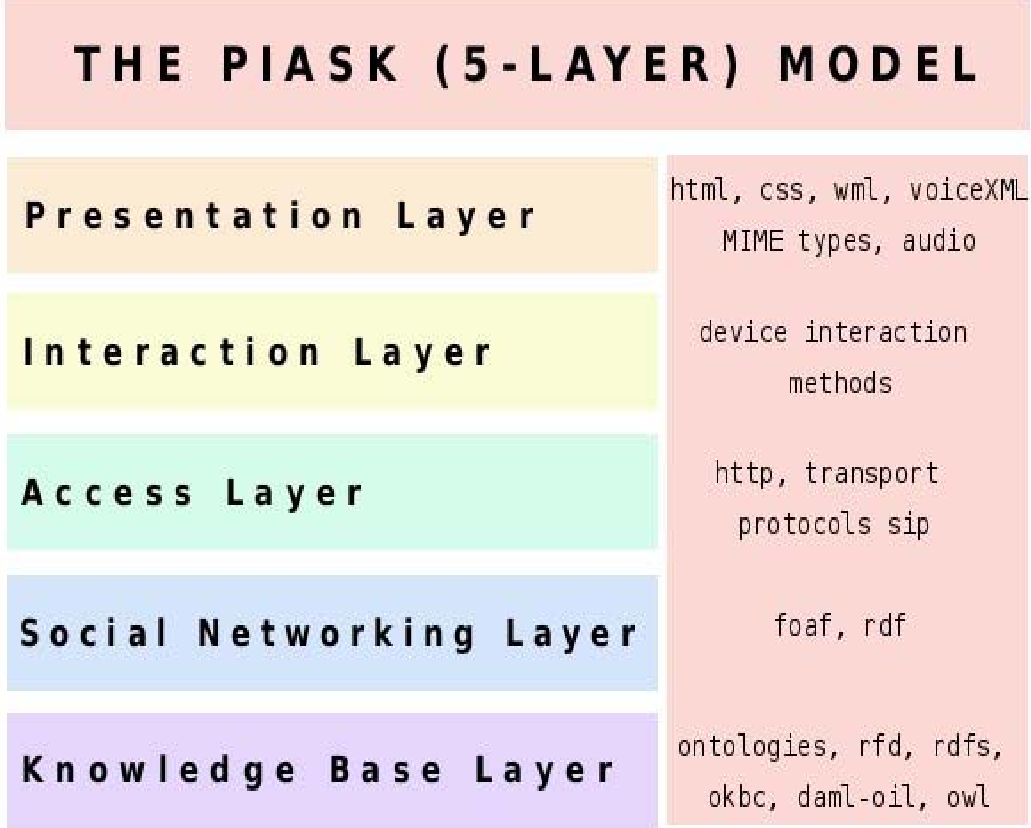
- Presentation Layer: Tailors content formatting (HTML, VoiceXML) based on device constraints.
- Interaction Layer: Supports multi-modal inputs like voice commands and DTMF, crucial for oral-tradition cultures.
- Access Layer: Manages transport protocols (HTTP, SIP) to ensure even basic phones can reach the server.
- Social Networking Layer: Uses the FOAF (Friend of a Friend) specification to model local trust systems and social hierarchies.
- Knowledge Base Layer: The "brain" of the system, utilizing Ontologies (RDF/OWL) to store specialized local knowledge in domains like e-health (e.g., the medicinal properties of the Aloe plant) and e-commerce.
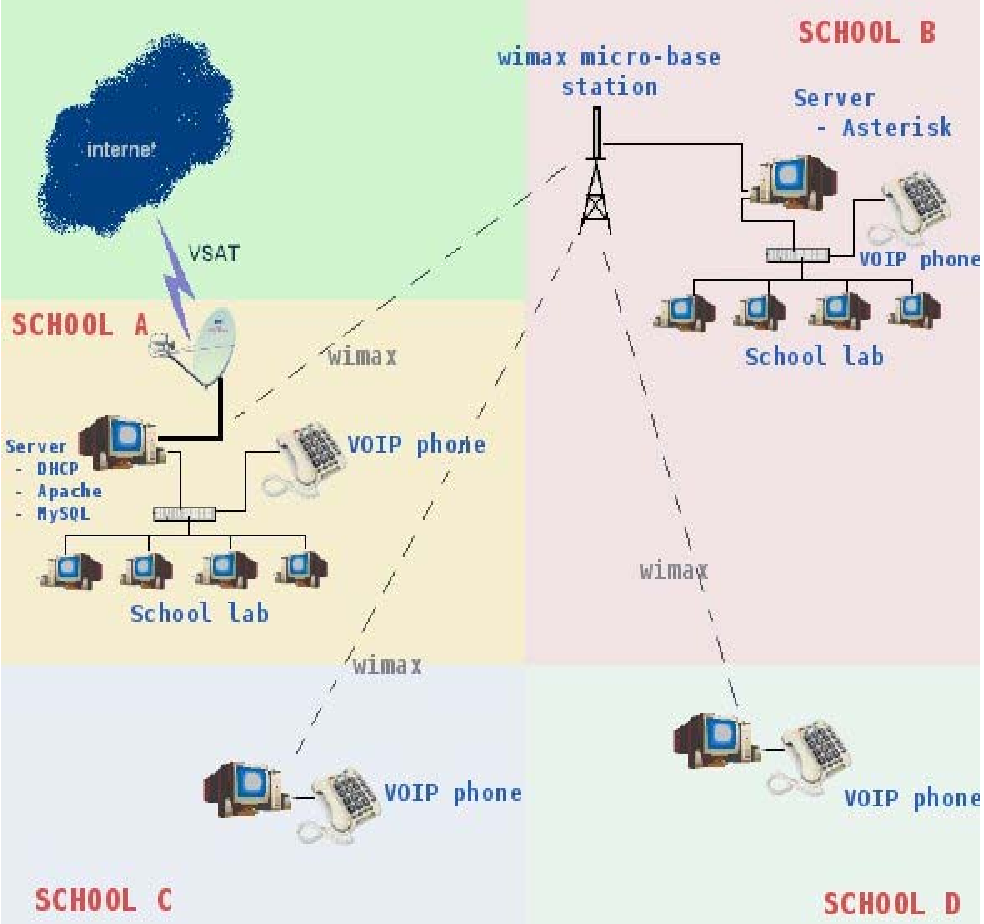
The Architecture in Action: Dwesa Infrastructure
The physical deployment uses a hybrid of VSAT for backhaul and WiMAX for local connectivity across schools, creating a robust "intranet" for the community.
Experiments & Implementation: The E-Commerce Proof of Concept
The authors validated PIASK through a localized e-commerce platform. Instead of a generic shop, they built a "virtual mall" where:
- Locally Produced Content: Traditional Xhosa music and crafts are digitized and sold globally.
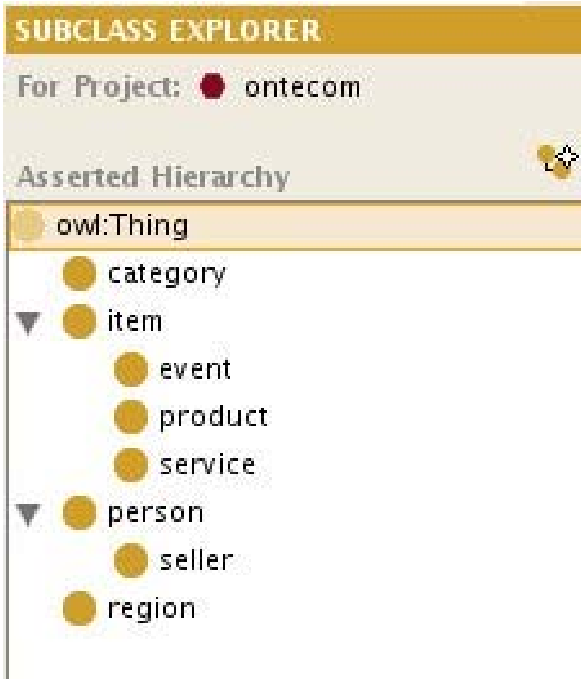
- Semantic Mapping: Items are categorized using an E-commerce Ontology (see below), allowing for intelligent search and discovery.
- Mobile-First Access: Realizing that PCs are rare, they developed mCom, a J2ME mobile client allowing store owners to manage sales via basic cellular devices.
Critical Analysis & Conclusion
Takeaways
The PIASK model proves that Semantic Web technologies are not just for high-end data science; they are vital tools for digital inclusion. By formalizing Indigenous Knowledge, these communities can participate in the global economy without losing their cultural identity.
Limitations
- Sustainability: The paper notes that high costs of VSAT and electricity remain barriers.
- Initial Literacy: Even with multi-modal interfaces, there is a significant "learning curve" for residents who have never seen a computer.
Future Outlook
The shift toward mobile-centric, voice-activated semantic portals (similar to today's LLM-driven agents) was presciently suggested here. Future work in this lineage will likely integrate AI-driven translation and automated knowledge extraction to further lower the barrier for IKS codification.