
Deciphering Influence: The BARR Framework for Identifying Real Opinion Leaders
Who is talking? An ontology-based opinion leader identification framework for word-of-mouth marketing in online social blogs
This paper introduces the BARR framework (Blog, Author, Reader, Relationship), an ontology-based approach to identify opinion leaders within online social blogs for Word-of-Mouth (WoM) marketing. It utilizes Topic Detection and Tracking (TDT) and semantic analysis to pinpoint influential nodes that effectively disseminate product information and shape consumer attitudes.
TL;DR
In the era of hyper-connected social media, "who is talking" matters as much as the message itself. This paper presents the BARR framework, an ontology-driven system designed to filter through the noise of online blogs to identify opinion leaders. Unlike standard metrics that only look at follower counts, BARR analyzes the semantic alignment between blog content, the expertise of authors and readers, and the strength of their interpersonal relationships.
The Evolution of Word-of-Mouth (WoM)
Traditional marketing relies on company-to-customer communication. However, Online Word-of-Mouth (WoM) shifts the power to customer-to-customer interactions. The challenge for modern brands is that not all customers are equal. Opinion leaders—individuals with high social standing and professional expertise—act as information hubs. Identifying them is the "Holy Grail" of viral marketing.
The authors argue that prior work in social network analysis (SNA) was too structural. They ignored the what (content) and the who (expertise) in favor of the how (links). BARR aims to bridge this gap.
Methodology: The BARR Pillars
The BARR framework is built on four interactive pillars:
- Blog Content: Measuring popularity through views, reviews, and topical relevance.
- Author Properties: Assessing domain expertise using automated ontologies.
- Reader Properties: Evaluating the "quality" of the audience engaging with the content.
- Relationship: Analyzing Homophily (similarity) and Tie Strength (intimacy) between the creator and the consumer.
1. The Power of Ontology
To understand expertise, the system extracts a "Domain Ontology" from official sources (e.g., Apple’s website for iPhone data). It then uses Information Entropy to determine key terms and calculates Cosine Similarity between a blogger's post and the official knowledge base.
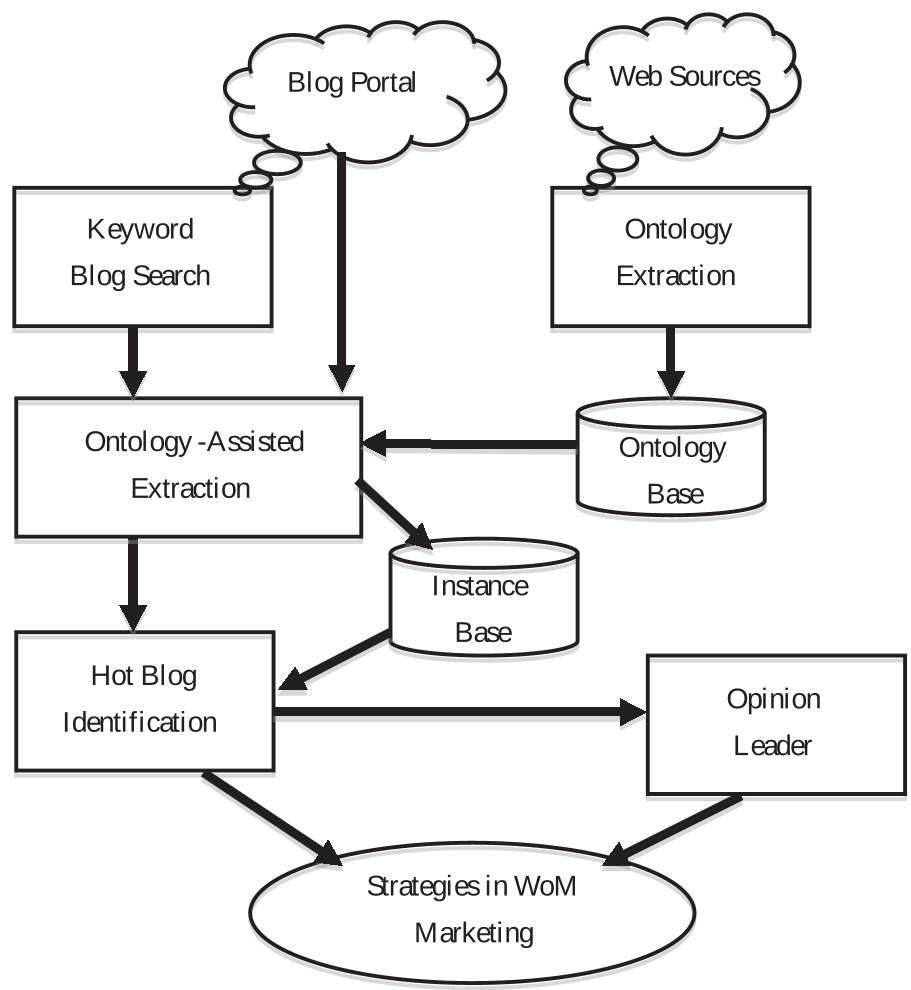 Figure 1: The BARR System Flow—from Keyword Search to Opinion Leader Identification.
2. Identifying "Hot Blogs" via Modified TOPSIS
BARR identifies influential posts by calculating the distance to an "Ideal Solution." Crucially, the authors introduced a coefficient of dispersion. This prevents a single outlier (like an author having huge traffic but zero expertise) from skewing the results, ensuring a balanced leadership profile.
Experimental Results: Quality Over Noise
In a case study involving 311 blogs about the iPhone, the framework outperformed standard Google searches. While a Google search might surface a "celebrity" blog with high comments (noise), BARR identified a "technical" blog that specifically discussed pricing and hardware specs—a much more valuable target for WoM marketing.
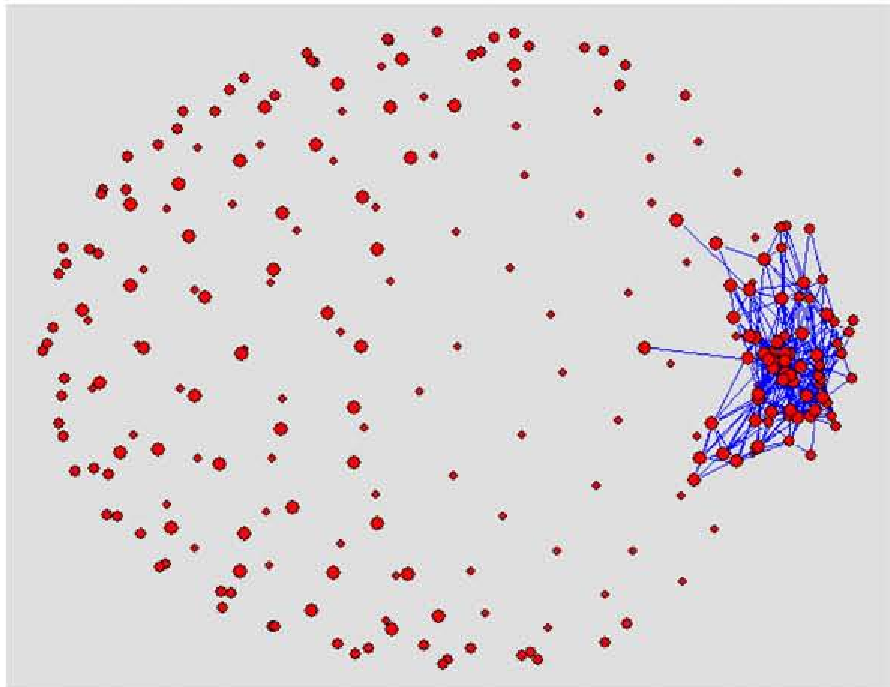 Figure 2: Visualization of blogger relationships based on groups, networks, and shared interests.
The study revealed that influencers aren't just those who write the most; they are those who write well and attract expert readers. As shown in the performance evaluation, BARR balances 11 different parameters to provide a more stable influence score than conventional methods.
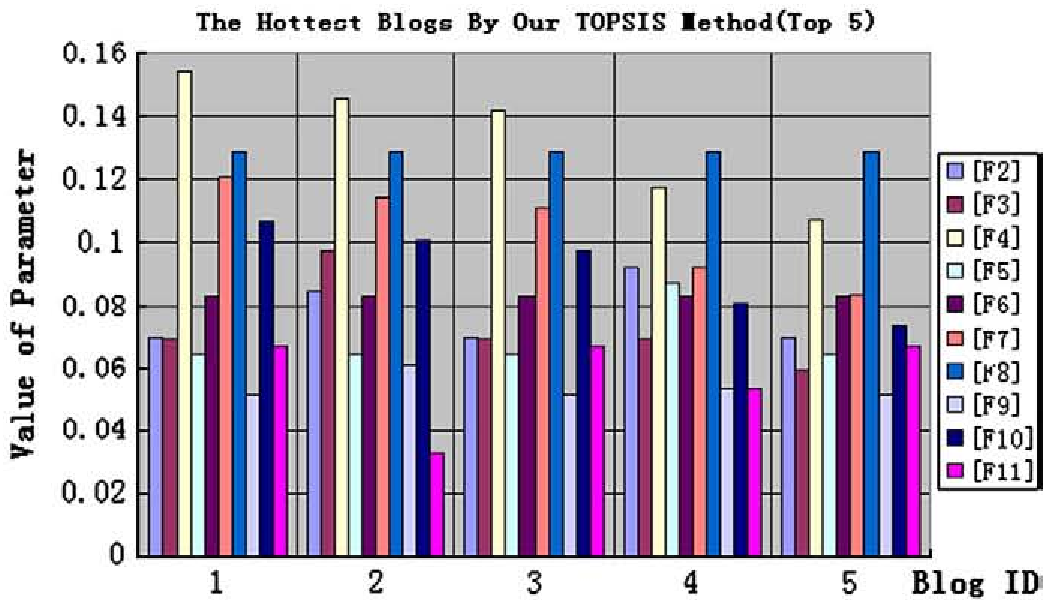 Figure 3: Comparison between BARR and conventional TOPSIS highlighting more balanced parameter distribution.
Critical Insight & Future Outlook
The BARR framework’s greatest strength is its semantic focus. By using ontologies, it creates a "knowledge-aware" influencer map. However, the reliance on manual "ontology engineering" to finalize the knowledge base is a bottleneck.
Takeaway for Industry: In the future of marketing, brands should look beyond "Influencer Scores" on platforms and instead use semantic tools to find authors whose vocabulary and reader-base align perfectly with their product's technical specifications.
Limitations: The study was conducted on blog data from 15 years ago. Today's "blogs" are often fragmented (Twitter/X, Threads). Applying BARR to short-form, high-velocity text would require significant adaptation of the entropy calculations.