
Precise Financial Sentiment: Leveraging Ontologies for Market Intelligence
An Ontology-Based Opinion Mining Approach for the Financial Domain
The paper introduces a semantically-enhanced opinion mining framework specifically designed for financial news. It utilizes a custom OWL 2 financial ontology combined with specialized gazetteer lists and NLP techniques to classify news polarity with high accuracy (87% mean aggregate).
TL;DR
Quantifying the sentiment of financial news is notoriously difficult because "good news" for one asset might be "bad news" for another. This paper presents an Ontology-Based Opinion Mining approach that moves beyond simple word lists. By combining a formal OWL 2 financial ontology with a sophisticated weighting algorithm that considers domain-specific terminology and temporal context, the authors achieve an impressive 87.32% accuracy in classifying news polarity.
Background: Beyond the Bag of Words
In the high-speed world of finance, an analyst's intuition is often overwhelmed by the sheer volume of RSS feeds, blogs, and news reports. Traditional sentiment analysis (Web 1.0/2.0 era) treat text as a "bag of words." If it sees "rise," it logs a positive point. However, in finance, "interest rates rise" can be a disaster for certain stocks while a boon for others.
The authors argue that the Semantic Web (Web 3.0/Linked Data) offers the solution. By using Ontologies, we provide the machine with a "map" of the financial world—defining what a "Financial Market" is, which "Assets" exist, and how they relate.
The Problem & Motivation
Current automated sentiment analysis methods suffer from three main gaps:
- Domain Blindness: Failing to distinguish between general vocabulary and financial-specific jargon.
- Context Ignorance: Not accounting for negations ("not profitable") or intensifiers ("extremely risky").
- Temporal Weighting: Ignoring that a long-term trend (e.g., "growth over the last year") is generally more significant for sentiment analysis than a short-term fluctuation ("dip this morning").
Methodology: The Semantic Framework
The core of the paper is a pipeline that processes RSS feeds through four stages: Extraction, Semantic Annotation, Opinion Mining, and Search.
1. The Financial Ontology
The authors built a specialized ontology using OWL 2 covering:
- Financial Markets: (NYSE, NASDAQ, LSE).
- Financial Intermediaries: (Banks, Brokers, Insurance companies).
- Assets: (Stocks, Commodities, Currencies like Apple Inc. or the Euro).
2. The Weighting Algorithm
Instead of a simple +/- 1 count, the system uses a tiered scoring mechanism:
- General terms: Assigned a base polarity (Positive1/Negative1).
- Domain terms: (e.g., "Appreciating asset") assigned a higher weight (Positive2/Negative2).
- Modifiers: Negations flip the score; Intensifiers double the score.
- Temporal Logic: Long-term expressions double the score, whereas short-term positive gains are weighted lower because they are more volatile.
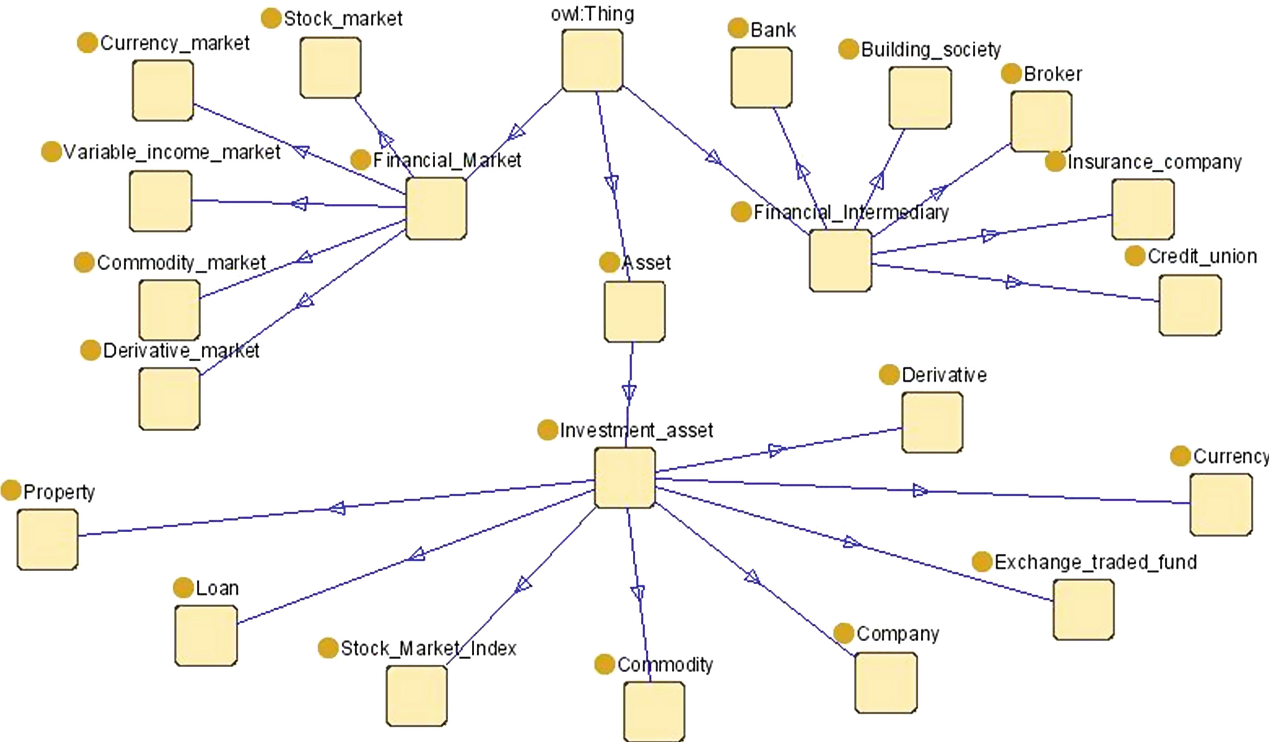 Figure 1: The high-level hierarchy of the developed Financial Ontology.
3. Workflow Architecture
The platform leverages GATE (General Architecture for Text Engineering) and the BWP Gazetteer (which handles noisy text via Levenshtein Edit Distance) to map text to the ontology concepts.
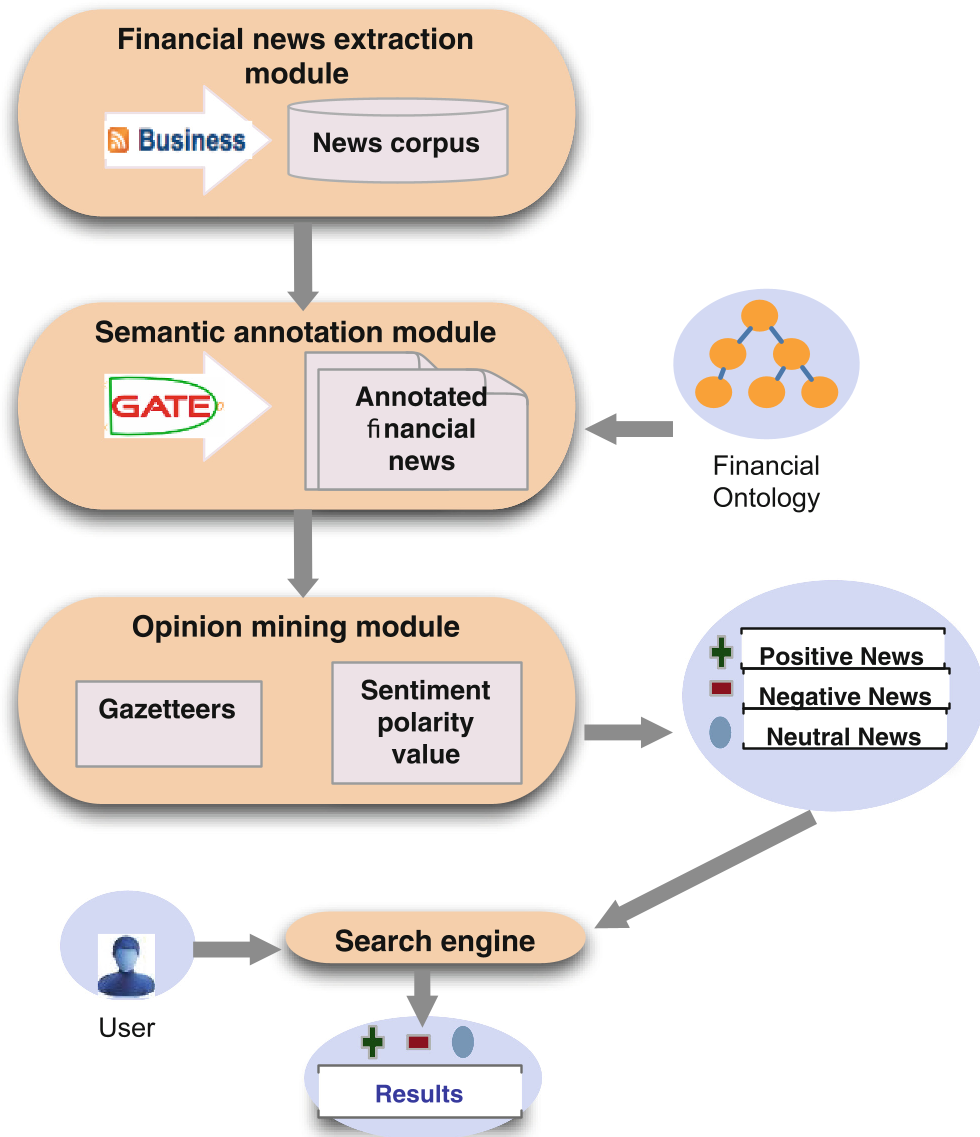 Figure 2: The four-module architecture from RSS extraction to Semantic Search.
Experiments & Results
The system was tested on 900 financial news abstracts (57,210 words). The results were compared against a human-annotated baseline. Across five different query sets (e.g., searching for companies like "Adidas"), the system maintained a remarkably consistent accuracy rate.
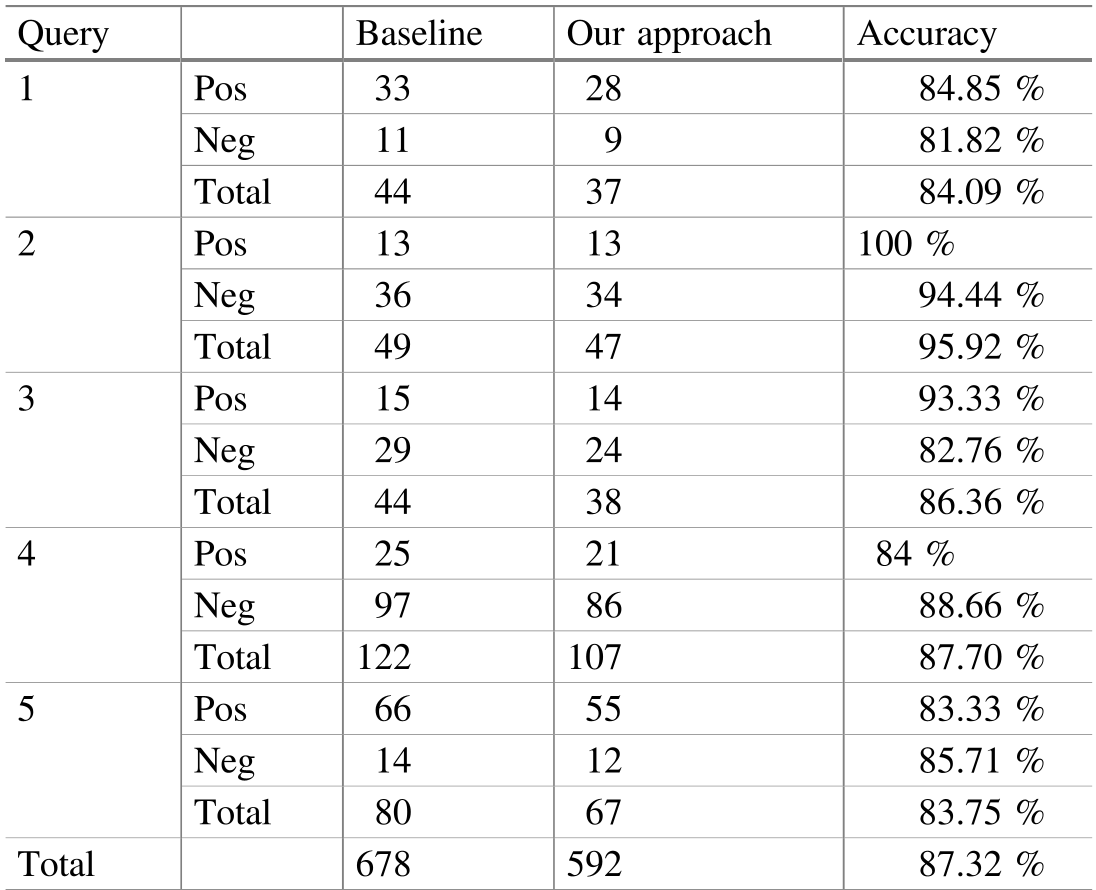 Table 1: Accuracy results for different user queries.
A key discovery: the highest accuracy (95.92% in Query 2) occurred when the news items contained clear domain-specific sentiment markers that the ontology could easily map to specific assets.
Critical Analysis & Conclusion
Takeaway
This research proves that semantics matter. By encoding domain expertise into an ontology, the system avoids the "dumb" errors of traditional NLP. The inclusion of Temporal Sentiment Gazetteers is particularly brilliant—it mirrors how human analysts prioritize long-term stability over intraday noise.
Limitations
While highly accurate, the system relies on predefined gazetteer lists. In the fast-evolving world of "FinTech" or "Crypto," these lists and the ontology itself require constant manual updates to remain relevant.
Future Outlook
The logical next step for this line of research is the integration of Neuro-symbolic AI: combining these rigid, reliable ontological rules with the flexible context-understanding of Large Language Models (LLMs). This would allow the system to handle metaphor and sarcasm ("The market is bleeding") which are common in financial reporting.