
SCT-CPSS: Bridging the Gap Between Social Networks and Real-Time Telehealth
Ontology-Based Personalized Telehealth Scheme in Cloud Computing
This paper introduces SCT-CPSS (Smart Cloud-based Telehealth Cyber Physical Social Systems), a personalized telehealth scheme that integrates medical ontologies with social networking data in a cloud environment. It introduces two specialized algorithms, RTM-DPA and MC-RTAA, to optimize real-time medical matching and resource allocation for smart city healthcare.
TL;DR
The Smart Cloud-based Telehealth Cyber Physical Social Systems (SCT-CPSS) model transforms the "Internet of Medical Things" from a simple data collection tool into a smart diagnostic assistant. By leveraging medical ontologies and dynamic programming, it achieves significant reductions in data storage (from 1GB to 20KB) and provides real-time medical matching that is both accurate and computationally efficient.
Background & Positioning
In the landscape of smart city development, Telehealth is no longer just about remote video calls; it is about Cyber Physical Social Systems (CPSS). While traditional CPS focuses on the interaction between sensors and physical controllers, CPSS integrates the human element—social connections between patients and physicians. This paper positions itself as a solution to the "Matching Bottleneck"—the delay that occurs when a system tries to pair complex, real-time symptoms with a massive database of medical knowledge.
The Core Motivation: Solving the "Static Data" Problem
Most prior work in telehealth focused on prior work limitations:
- Passive Monitoring: Systems merely reported heart rate or temperature without providing diagnostic context.
- Scalability Issues: Matching symptoms to diagnoses becomes an NP-hard problem as the medical knowledge pool grows.
- Social Isolation: They ignored the dynamic "social networking-based" input from physicians that could refine diagnoses in real-time.
Methodology: Ontology-Driven Dynamic Matching
The authors' "Secret Sauce" lies in their Knowledge-Based Ontological Model. Instead of storing raw sensor values (e.g., 37.2°C), the system uses an ontology to categorize data into semantic intervals (e.g., "Normal" or "High1") based on the user's current context (e.g., "After Sport" vs. "Sleeping").
1. Model Architecture
The architecture connects the Telehealth Client and the Physician Knowledge Pool through a Cloud-side Matching Processor (MP).
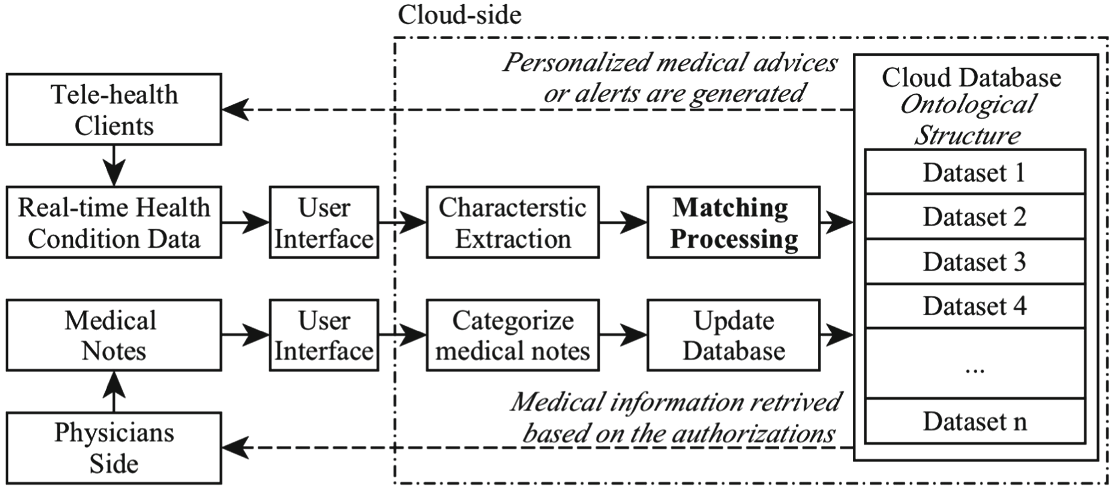 Figure 1: The framework of SCT-CPSS illustrating the dual-input stream from clients and physicians.
2. Key Algorithms
- RTM-DPA (Real-Time Matching with Dynamic Programming): This algorithm solves the Multiple-Layer Matching (MLM) problem. By using dynamic programming to filter records based on ontological features, it maintains a time complexity of roughly , making it viable for smartphones.
- MC-RTAA (Monte Carlo-based Analysis): When datasets become excessively large, this algorithm uses stochastic selection to maintain "real-time" responsiveness without sacrificing significant diagnostic accuracy.
Experiments & Results: Efficiency at Scale
The evaluation utilized the Disease Ontology Dataset (DOD) and compared SCT-CPSS (M1) against a traditional value-matching approach (M2) and a naive ontology search (M3).
Storage Breakthrough
By converting raw data into ontological labels, the storage requirement plummeted.
- Traditional: ~1.127 GB
- SCT-CPSS: ~21 KB This facilitates long-term health tracking on resource-constrained mobile devices.
Performance Comparison
The matching speed of RTM-DPA proved significantly faster than standard methods, as evidenced by the distribution of execution times.
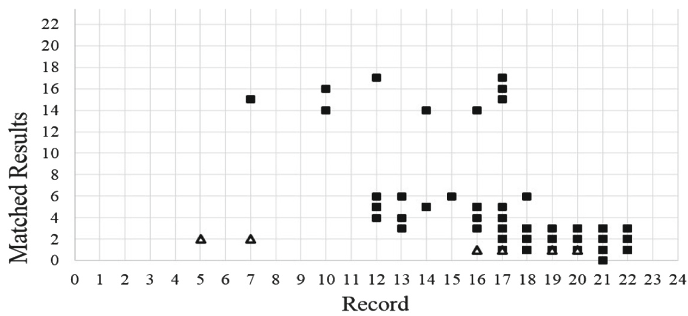 Figure 4: Time consumption comparison between M1 (Ontological) and M2 (Non-Ontological).
In terms of Accuracy, the ontological approach provided higher precision because it accounts for environmental context (e.g., why a temperature of 38°C is normal after exercise but an "alert" while sleeping).
Critical Insight & Conclusion
Takeaway
The shift from Cyber-Physical to Cyber-Physical-Social is crucial for healthcare. By treating physician expertise as a dynamic "social node" rather than a static database, SCT-CPSS ensures that medical advice evolves as fast as the data flows.
Limitations & Future Work
While the storage reduction is impressive, the reliance on a pre-defined ontology suggests that "Unknown" symptoms might still pose a challenge. Future research should look into Automated Ontology Evolution, where the system learns new symptom-disease patterns on the fly using Machine Learning, further reducing the need for manual taxonomies.