
From Static PDFs to Semantic Graphs: The Dawn of Ontology-Based Scientific Publishing
An Ontology-Based Platform for Scientific Writing and Publishing
The paper proposes an ontology-based platform for scientific writing and publishing that utilizes Rhetorical Structure Theory (RST) to decompose traditional linear papers into semantic "rhetorical chunks." The system features an Editor for lifecycle management and an Online Portal for faceted navigation, achieving semi-automatic metadata generation and improved knowledge reuse.
TL;DR
The academic world is drowning in information but starving for knowledge. This paper introduces a transformative platform that moves beyond the "indivisible linear" nature of traditional PDFs. By using Ontology-based Rhetorical Structures, the authors break papers into manageable, semantically-linked "chunks," allowing for strategic reading, robust version tracking, and granular metadata management.
The Problem: The "Black Box" of Linear Documents
For decades, scientific publishing has relied on the linear document—a sequence of sections (Abstract, Intro, Methods...) bundled into a single file. This creates three major friction points:
- Information Overload: Readers must wade through "noisy" sections to find the specific data or methodology they need.
- Weak Linkability: Supplemental data, reviews, and different versions of a manuscript are often disconnected.
- Metadata Blindness: Search engines often treat the paper as a single entry, missing the rich context hidden within specific subsections.
Methodology: The Ontology-Driven Architecture
The core innovation lies in the transition from Linearity to Semantics. The authors utilize Rhetorical Structure Theory (RST) to define the logical patterns of a paper.
The Two-Pillar System
- The Semantic Editor: Unlike a standard word processor, this editor manages the "lifecycle" of a manuscript. It encodes semantic links that track versioning and associate specific reviews or comments with the relevant drafts.
- The Online Portal: A navigation hub that uses the generated metadata for "faceted search," allowing users to query specific rhetorical chunks (e.g., finding all experimental procedures for a specific compound across multiple papers).
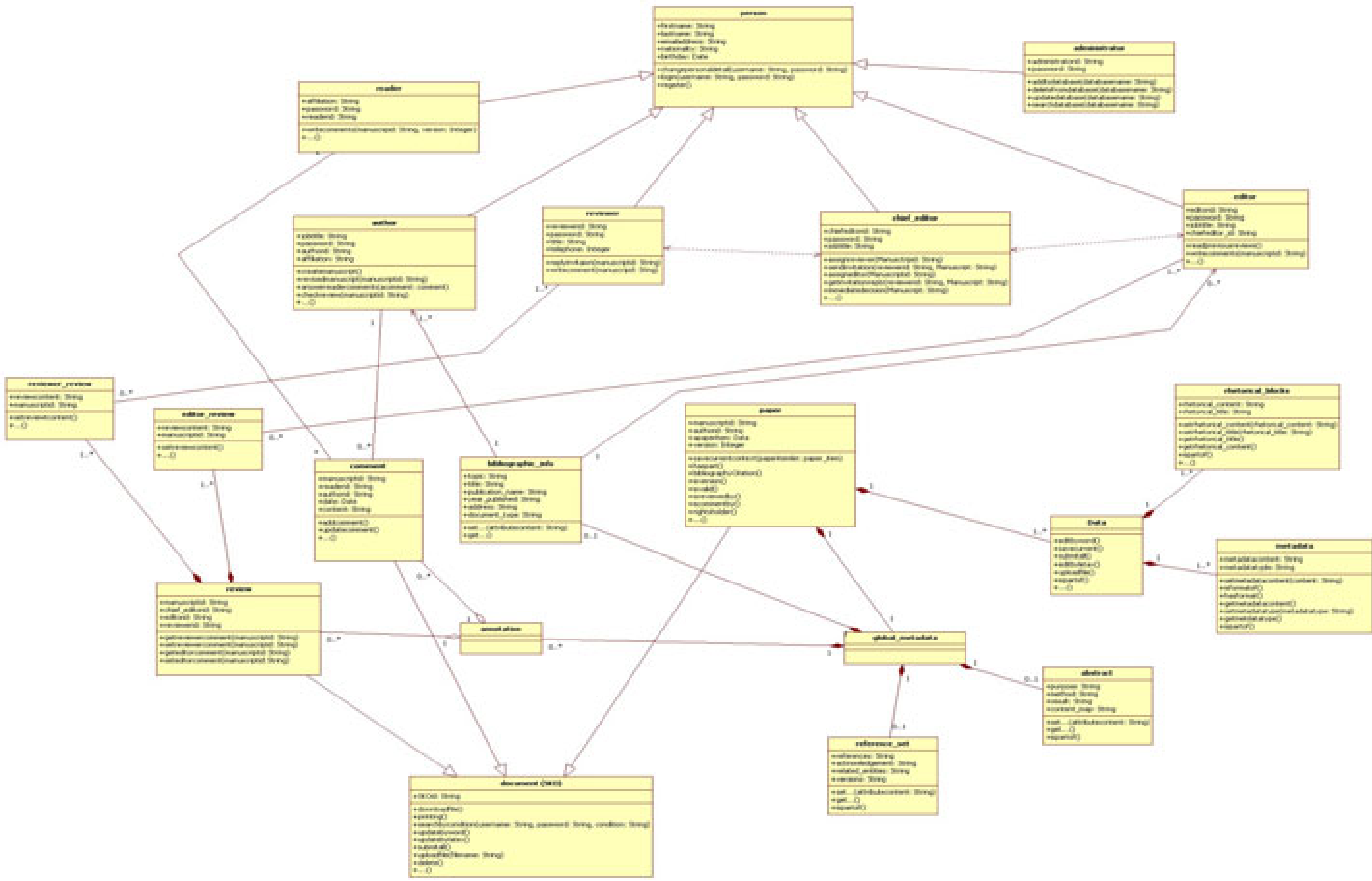 Figure 1: The core ontology development, showcasing the relationships between Documents (Paper, Review, Comment) and Persons (Author, Reader, Editor).
Key Innovations in Data Representation
The platform significantly upgrades how we interact with scientific data. Instead of just embedding a figure in a PDF, the ontology-based approach treats it as an independent entity with its own metadata and semantic conceptual links.
| Feature | Traditional Article | Article of the Future | Ontology-Based Platform |
|---|---|---|---|
| Structure | Indivisible Linear | Divisible Linear | Divisible Rhetorical |
| References | Whole paper focus | Section focus (PDF) | Semantic Grid (XML/URI) |
| Comments | None/External | Whole paper focus | Granular (per chunk) |
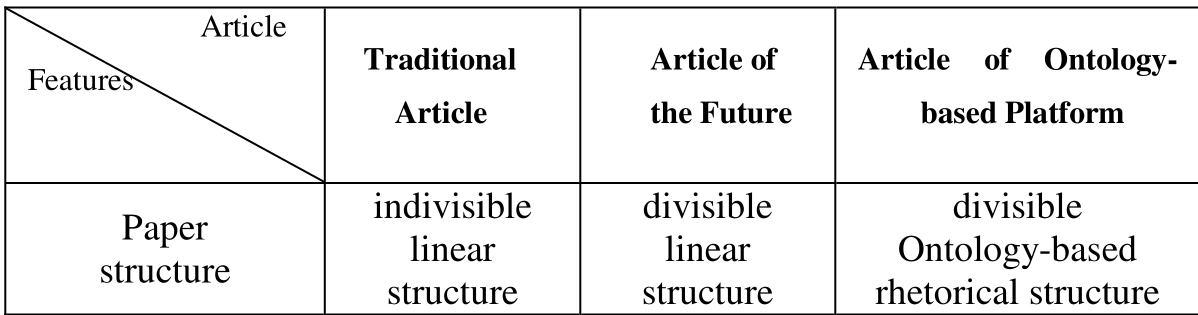 Figure 2: Evolution of paper structures from static to ontology-driven.
Experiments and Results: A Revolution in Retrieval
By moving to an XML-based metadata scheme for every "rhetorical block," the authors demonstrate that:
- Strategic Reading is Enabled: Readers can jump directly to conclusions or methods, supported by specialized metadata that highlights the "logical intent" of that section.
- Enhanced Interoperability: The use of semantic web techniques allows these papers to "talk" to other domain ontologies, facilitating cross-disciplinary data mining.
- Multimedia Integration: Audio, video, and code are no longer "attachments" but are semantically linked to the specific rhetorical chunks they support.
Depth Insight: Why This Matters for the Future of AI
While this paper focuses on human-centric "Strategic Writing and Reading," its implications for AI and Machine Learning are profound. Current LLMs often struggle with the "Long Context" problem and the extraction of precise relationships from messy PDFs.
If the industry adopts this ontology-based structure, we move toward a "Self-Describing Document." AI agents wouldn't need to guess the structure; the metadata would explicitly tell them: "This chunk describes the experimental procedure for Step 1, and it is supported by this XML data file."
Conclusion & Limitations
The project is an "ongoing effort," and the primary challenge remains the author incentive. Writing a semantically-enriched paper requires more effort than a standard LaTeX or Word document. However, as the ecosystem for "Semantic Search" and "Faceted Navigation" grows, the benefits of higher visibility and easier reuse will likely drive adoption.
The future of Science isn't just "Online"—it's Semantic.