
TIPHYS: Architecture for a Smarter Workforce in the Era of Industry 4.0
Ontology-Based Platform for Sharing Knowledge on Industry 4.0
The paper presents the TIPHYS platform, an ontology-driven educational framework designed to bridge the knowledge gap in Industry 4.0. It integrates Social Network-Based Education (SNE) and Constructive Alignment (CA) to provide a modular, collaborative learning environment for university students and industrial technicians.
TL;DR
The industrial world is shifting toward Cyber-Physical Systems (CPS), but the workforce is lagging. The TIPHYS project introduces an ontology-based platform that semantically maps Industry 4.0 concepts to learning outcomes. By aligning what to learn (Industry 4.0 Ontology) with how to learn (Learning Ontology), it creates a collaborative, social-network-style environment that automates personalized educational paths.
The "Knowledge Gap" in the Smart Factory
Industry 4.0 is not just a single technology; it is a convergence of nine distinct pillars, including Big Data, Autonomous Robots, and Cloud Computing. The problem identified by Bruno and Antonelli is a pedagogical mismatch. Many industrial technicians are experts in traditional manufacturing but lack the ICT background to manage connected systems, or vice versa.
Current learning methods often fail because:
- Lack of Precedence: Students often attempt complex tasks (like G-code programming) without understanding prerequisite physical constraints (like cutting parameters).
- Siloed Knowledge: Resources for industrial automation and data science are rarely integrated into a single roadmap.
Methodology: The Power of Dual Ontologies
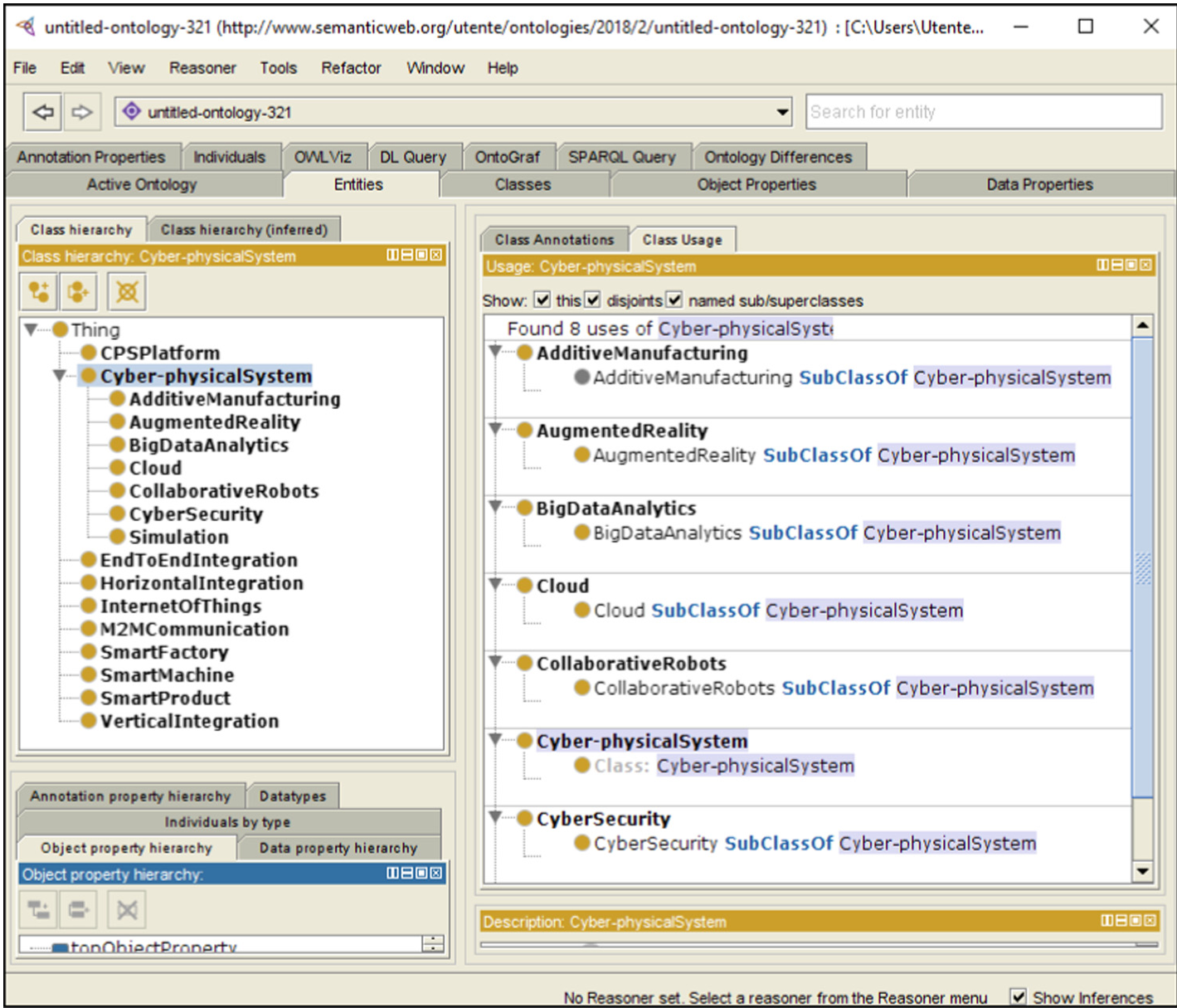
The core innovation of the TIPHYS project is the use of formal ontologies to manage knowledge. Rather than presenting a static list of courses, the system uses two interconnected semantic models:
1. The Industry 4.0 Ontology
This model maps the "What." It categorizes technologies into vertical and horizontal integration, identifying the specific "Enabling Technologies" required for a Smart Factory.
2. The Learning Ontology (CONALI)
Based on the principle of Constructive Alignment, this ontology focuses on the "How." It connects Intended Learning Outcomes (ILO) with Teaching Activities (TA) and Assessment Tasks (AT). Crucially, the authors added Precedence Constraints, ensuring the platform knows that Outcome A must be mastered before attempting Outcome B.
From Theory to Practice: The CPS Case Study
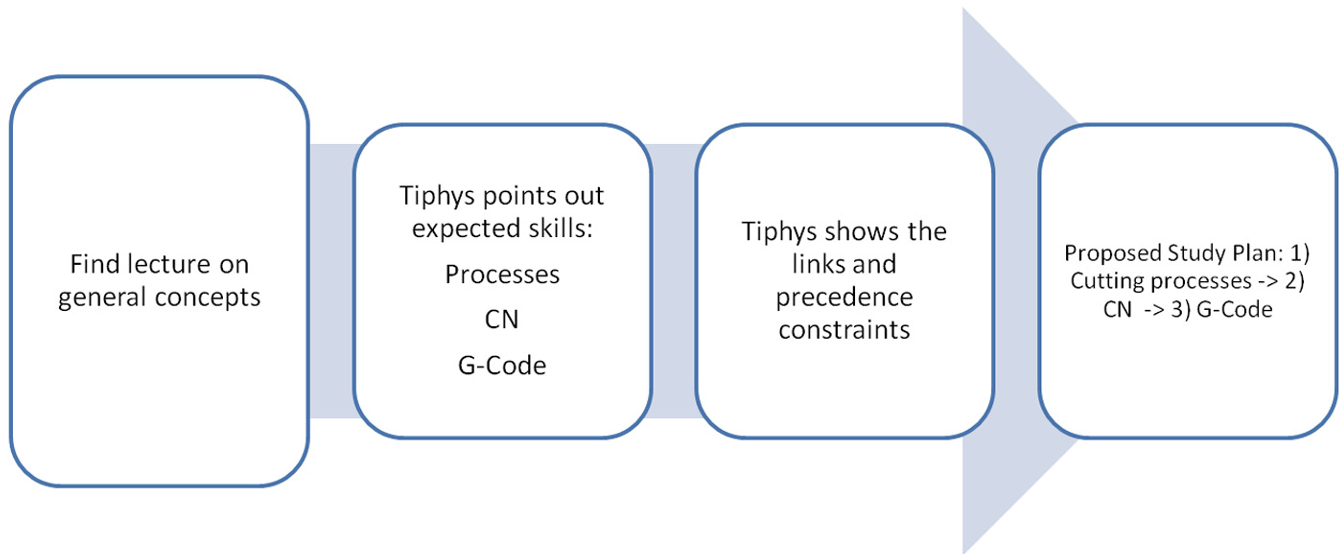
To validate the approach, the authors presented a scenario involving a technician setting up a CPS for predictive maintenance. Without the platform, the technician might find a G-code lesson first, only to realize they don't understand the underlying cutting processes.
Using the TIPHYS platform, the system generates a logical sequence based on the following populated data:
| # ILO | Kind of Knowledge | Level (Verb) | Content | Precedent |
|---|---|---|---|---|
| 1 | Declarative | Assess | Cutting Processes | - |
| 2 | Declarative | Select | CNC | 1 |
| 3 | Functional | Program | G-code | 2 |
This ensures the learner builds a "Mental Model" that mirrors the physical and digital dependencies of the actual industrial process.
Critical Insight & Future Outlook
TIPHYS moves beyond traditional MOOCs by introducing Social Network-Based Education (SNE). It envisions a platform where the learning content is not just consumed but "co-created" by the community of students and experts.
Key Takeaways:
- Semantic Mapping is Essential: As industrial systems become more complex, we cannot rely on linear curricula. We need semantic graphs to navigate dependencies.
- Constructive Alignment: Aligning the verb (e.g., "Program" vs. "Assess") with the task ensures that the learner's skill level matches the industrial requirement.
- Collaborative Evolution: The repository is designed to be dynamic, enriched by the contributions of the students themselves, reflecting the rapid evolution of Industry 4.0.
Limitations: While the ontology provides a robust structure, the initial "population" of the ontology (inputting all content and links) is labor-intensive. Future iterations may need to explore AI-driven automated ontology extraction to scale across broader engineering sectors.
Conclusion
The TIPHYS project serves as a blueprint for specialized education in the digital age. By treating "Knowledge" as a structured, interrelated network rather than a collection of files, it paves the way for a more agile and competent industrial workforce.