
Bridging Data Silos: An Ontology-Based Revolution for China's Environmental Impact Assessment
Ontology-based project level environmental impact assessment database design research and practice in China
The paper introduces an ontology-based approach for designing a Project-level Environmental Impact Assessment (PEIA) database in China. It details the creation of the National PEIA (NPEIA) database, which integrates over 100,000 records across 13 industries using a structured mapping from ontology to Entity-Relationship (ER) models.
TL;DR
Managing environmental data for tens of thousands of construction projects annually is a Herculean task. This paper presents a specialized Ontology-based design for China's National Project-level Environmental Impact Assessment (PEIA) database. By moving beyond traditional Entity-Relationship (ER) models, the researchers have created a semantically rich system that integrates over 100,000 records, facilitating smarter environmental decision-making.
The Motivation: Why Traditional Databases Fail PEIA
Project-level Environmental Impact Assessment (PEIA) is intrinsically data-intensive. It consumes diverse datasets (geospatial, meteorological, socio-economic) and produces massive volumes of reports and approval files.
The authors argue that traditional ER and Object-Oriented (OO) models suffer from two fatal flaws in this domain:
- Knowledge Abstraction Gaps: Designers often lack the synthesize domain knowledge required to capture all relevant entities.
- Semantic Weakness: Traditional models struggle to represent complex "bidirectional" relationships—for instance, a project "consuming" a resource vs. an environment "providing" it.
Methodology: The OBAC Approach
The core contribution is the OBAC methodology (Objective, Business-driven, Architecture, Classes), a five-step approach to bridge the gap between human knowledge and database schema.
1. Business Flow Analysis
The system mirrors the four real-world stages of China's PEIA process:
- EIA Implementation: Licensed agencies compile Environmental Impact Reports (EIR).
- Technical Review: Independent institutions and experts verify the EIR.
- EIA Approval: Government administration makes a final decision.
- Project Completion: Investigation into the actual implementation of protection measures.
2. Conceptual Architecture
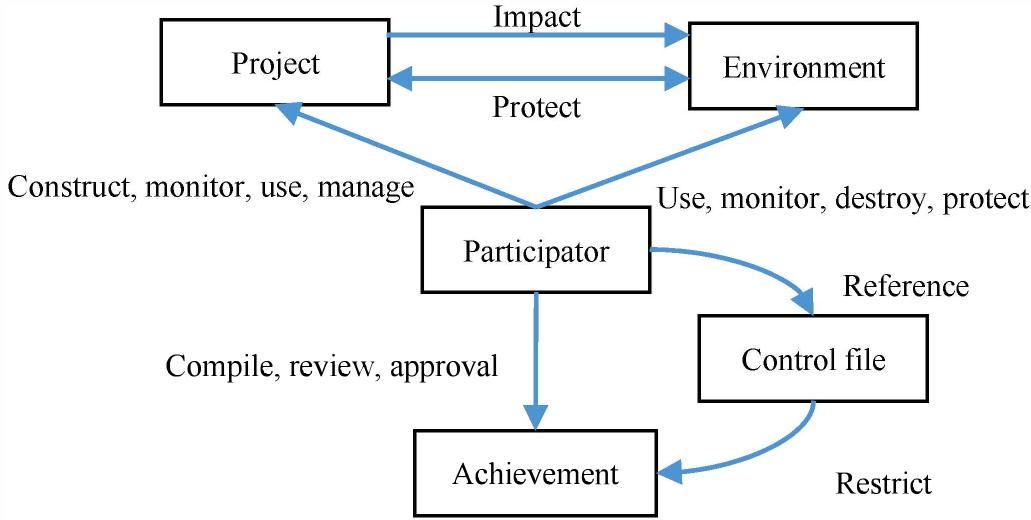
The ontology is structured into five top-level classes: Project, Environment, Participant, Control File, and EIA Achievement.
3. Mapping Ontology to ER Model
To make the ontology functional in a standard database, the authors developed specific transformation rules:
- Leaf Classes to Entities: Directly mapping specific classes (e.g., "Licensed EIA Agency") to database tables.
- Objects to Foreign Keys: Complex attributes are separated into reference entities linked via foreign keys.
- Enumerations to Dictionaries: Fixed lists (like "Industry Domain") are handled as dictionary entities to ensure data normalization.
Results: A National-Scale Implementation
The methodology was put into practice to build the National PEIA Database of China (NPEIA).
Key Achievements:
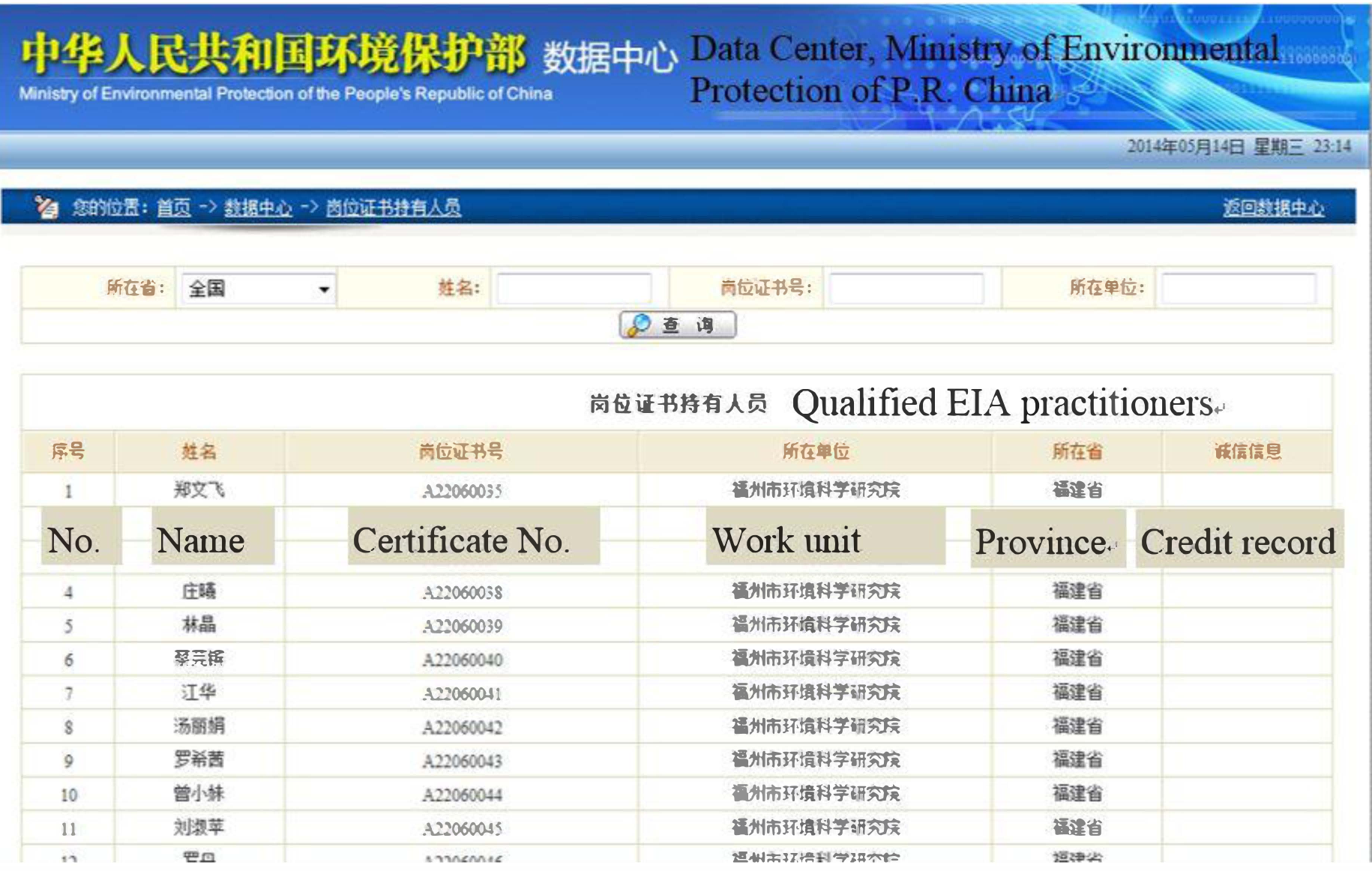
- Participators Database: Records for 1,158 agencies, 10,683 engineers, and 36,745 qualified employees.
- Indicator Database: Deep data for projects across 13 industries (Thermal Power, Rail, Petrochemical, etc.).
- Spatial Integration: 26 layers of environmental sensitive areas, including nature reserves and wetlands.
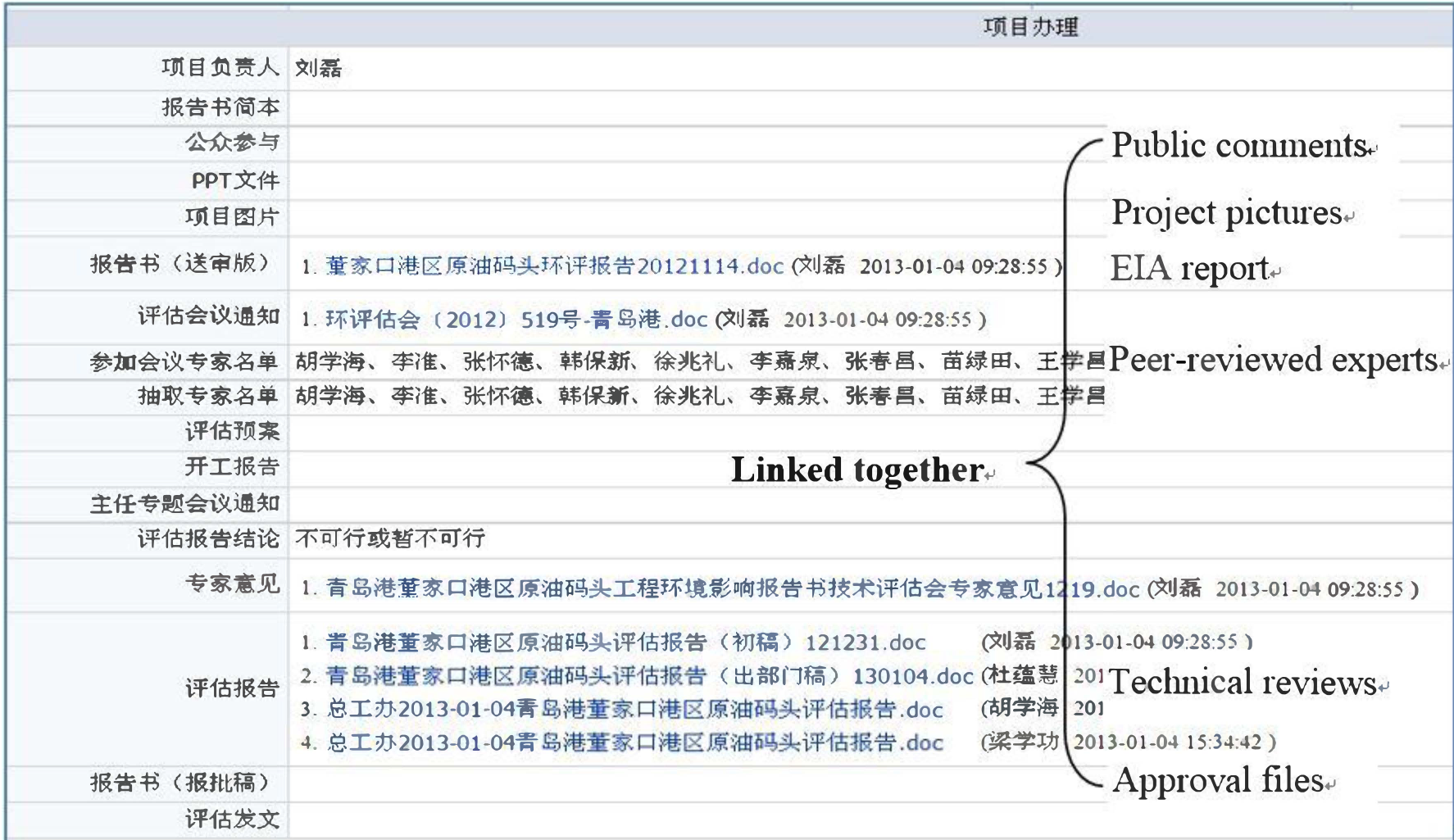
One of the most valuable outcomes is the Linked Data capability, where an EIA report is digitally tied to its specific technical reviews and final administrative approval files, providing a full audit trail.
Critical Insights & Future Outlook
The transition to an ontology-based system represents a shift from data storage to knowledge management.
Strengths:
- Normalization: Dramatically reduces semantic heterogeneity when integrating data from different departments.
- Scalability: The modular nature of the ontology allows for the easy addition of new project types or environmental standards.
Limitations & Future Work: While the database is robust, the authors acknowledge that Big Data mining is the next frontier. Future efforts will focus on real-time simulation of environmental impacts and linking the PEIA with Strategic Environmental Assessment (SEA) to prevent "regional overload"—scenarios where multiple qualified projects together exceed a region's environmental carrying capacity.
Conclusion
This work provides a blueprint for how large-scale, state-level environmental data can be managed. By leveraging ontology, China is not just archiving reports, but building a structured knowledge base to support its "Ecological Civilization" strategy.