
SMART-ASD: Bridging the Gap Between Autism and Assistive Technology via Ontology-Based Recommendations
An ontology-based recommendation system for people with autism and technology apps: Ontology application for helping persons with autism
The paper presents SMART-ASD, a hybrid recommendation system that utilizes an extended ontology based on the Cloud4All project to suggest mobile apps and technological tools for individuals with Autism Spectrum Disorder (ASD). The system integrates data from interviews, user performance tests, and web-scraped expert reports to provide personalized technology matches.
TL;DR
Selecting the "right" app for a child with Autism Spectrum Disorder (ASD) is a daunting task for parents and therapists. The SMART-ASD project introduces an ontology-based hybrid recommendation system that analyzes the skills of both the person with ASD and their caregivers. By extending the Cloud4All framework, the system achieves an 80% professional approval rate for its technology suggestions.
Background & Motivation: The Paradox of Choice in ASD Tech
Since 2008, the volume of mobile applications targeting educational and therapeutic interventions for ASD has exploded. While this variety is a boon, it creates a "curse of choice." Choosing the wrong technology can lead to frustration, wasted resources, or negative developmental consequences.
The authors identify a critical flaw in prior work: most systems focus only on the End User (the person with ASD). In reality, the success of these tools depends on Support Users—the parents and practitioners who must configure, maintain, and model the use of these apps. If a caregiver has a negative attitude toward technology or lacks the skills to update a digital communicator, the intervention will likely fail.
Methodology: Beyond Simple Search
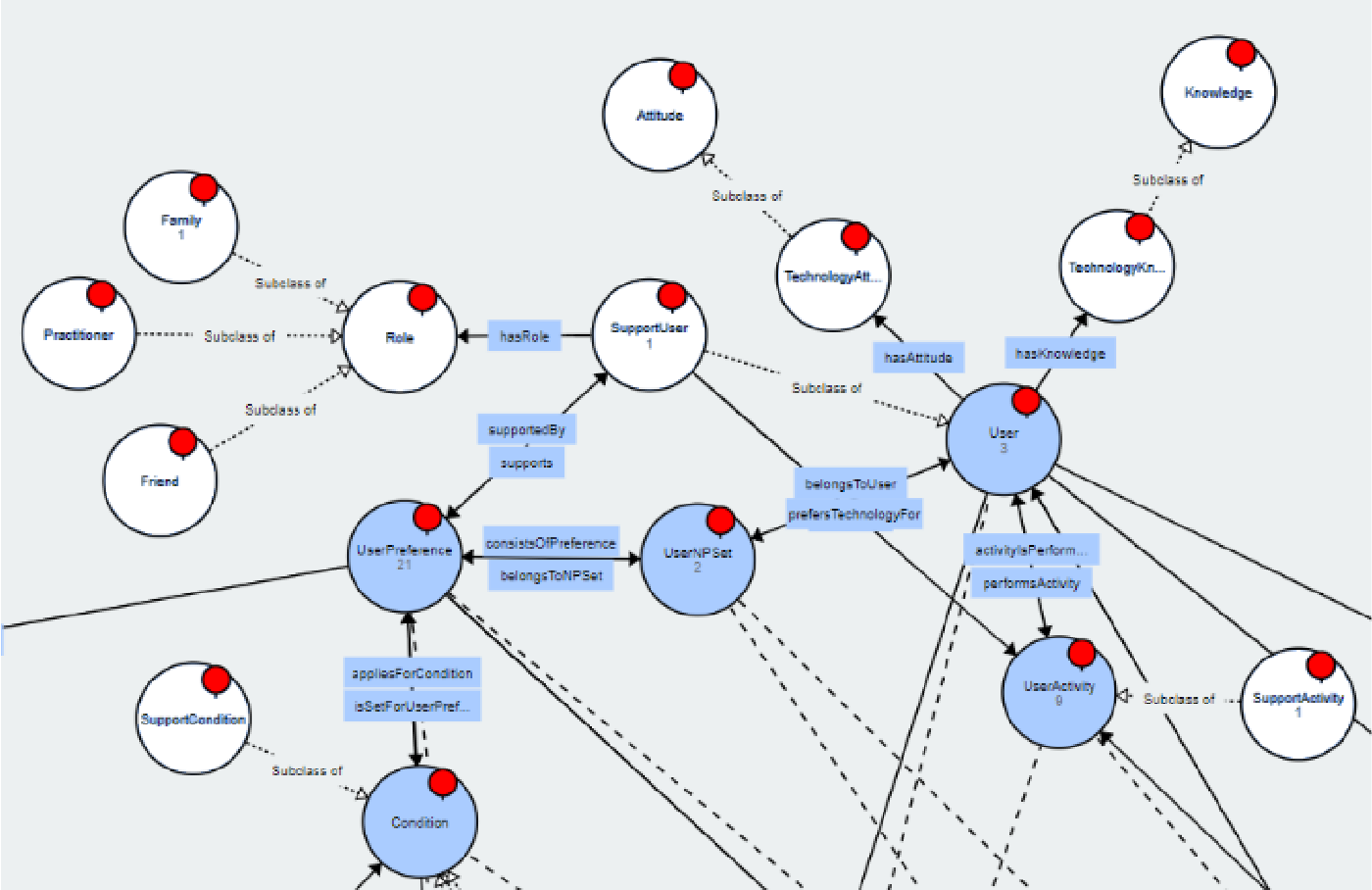
The core of SMART-ASD is its sophisticated SMART-ASD Ontology, a semantic model that maps the relationship between Person, Activity, and Technology within specific contexts (Home, School, Community).
1. Extending Cloud4All
The researchers didn't reinvent the wheel; they started with the Cloud4All ontology (part of the Global Public Inclusive Infrastructure). However, they added crucial entities:
- SupportUser: Defines family or practitioners.
- TechnologyAttitude & TechnologyKnowledge: Quantifies the support network's ability to sustain the technology use.
- SupportActivity: Models the maintenance and configuration tasks required.
2. The Recommendation Engine
The system utilizes a Hybrid Recommender approach:
- Content-Based: Uses data from expert reports and web repositories (scraped via Apache Lucene).
- Collaborative Filtering: Looks at what worked for "similar" user profiles within the ontology.
- Vector Space Model: Instead of a "Yes/No" result, it ranks technologies based on a semantic distance, allowing for a nuanced "Top N" list of recommendations.
Experimental Results
The system was evaluated through an Erasmus+ project involving multi-disciplinary centers.
- Professional Validation: In a study with 40 participants, practitioners validated over 80% of the system’s suggestions as highly appropriate.
- Data Accuracy: While basic app meta-data (OS, price) was extracted with 100% precision, the system struggled with qualitative expert reports, capturing only 48% of available nuanced information.
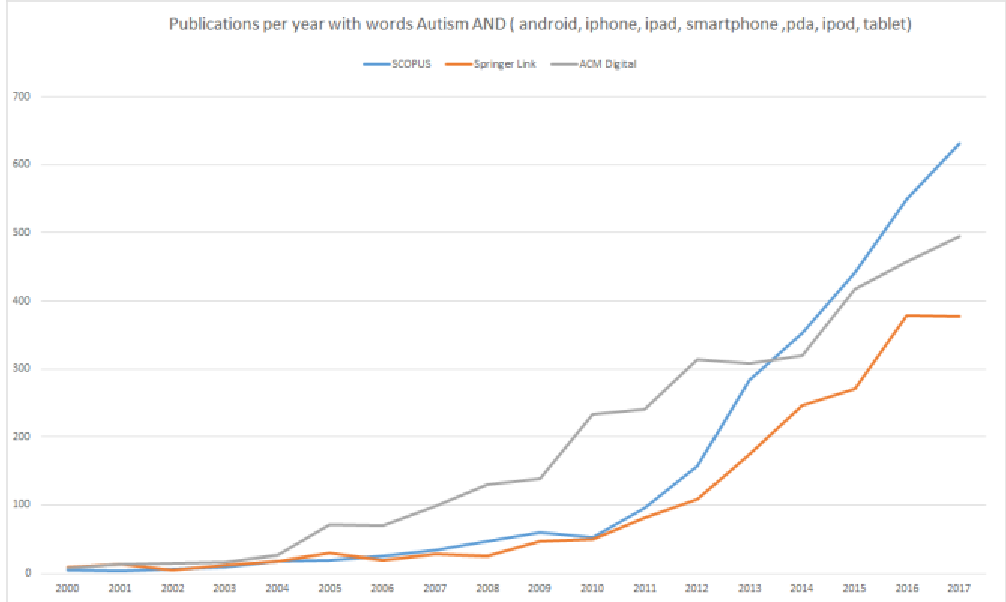 Figure 1: The exponential growth of ASD-tech literature justifying the need for automated recommendation.
Critical Insight: The "Support User" Factor
The most profound takeaway from this research is the formalization of the Support User. In the context of non-verbal individuals using "digital communicators," a hardware failure or a configuration error is not a minor inconvenience—it is a total loss of the person's voice. The SMART-ASD system recognizes that recommending a high-complexity app to a low-tech-literacy household is a recipe for failure, a dimension often missing from standard "accessibility" research.
Conclusion and Future Work
The SMART-ASD project successfully demonstrates that ontologies are not just academic exercises but practical tools for clinical decision support. Future iterations aim to:
- Refine NLP: Using more advanced language models to better parse expert reviews.
- Longitudinal Study: Tracking the actual developmental progress of users who follow the system's "Plan" over a year.
- Crowdsourcing: Encouraging the ASD community to feed back into the ontology to improve collaborative filtering.
Ultimately, this work moves us closer to a world where technology for special needs is not just "available," but "appropriately matched."