
Job-Onto: Bridge the Gap Between IT Talent and Recruiters via Semantic Skill Graphs
Ontology-Based Resume Searching System for Job Applicants in Information Technology
The paper introduces "Job-Onto," an ontology-based resume searching system designed to automate and optimize the IT recruitment process. By extracting skill graphs from both Curriculum Vitae (CV) and Job Descriptions (JD), the system utilizes NLP, Word2Vec embeddings, and Graph Edit Distance (GED) to rank candidates with high semantic accuracy.
TL;DR
Recruitment in the IT sector is often hindered by the "language barrier" between HR generalists and technical requirements. This paper presents an automated resume screening system that uses Job-Onto, a specialized ontology, to transform unstructured resumes and job descriptions into Skill Graphs. By comparing these graphs using Graph Edit Distance (GED), the system provides a weighted ranking of candidates based on technical prowess, education, and soft skills.
The Core Friction: Why Simple Search Fails
Most current recruitment tools rely on keyword matching (e.g., searching for "Python"). However, this ignores the semantic hierarchy—a candidate listing "PyTorch" implicitly knows "Python" and "Machine Learning." Traditional parsers also break down when faced with complex, multi-column PDF layouts common in creative IT resumes. The authors identified that without a semantic backbone (Ontology), the system cannot truly "understand" if a candidate's experience fits a specific JD.
Methodology: From Unstructured Text to Structured Knowledge
The researchers built a pipeline that moves from raw pixels to semantic scores:
1. Robust Prototyping and OCR
Recognizing that standard libraries like PyPDF2 often scramble text positions, the authors implemented an OCR-based extraction pipeline using OpenCV and Tesseract. This ensures that the spatial context of skills is preserved before being fed into the NLP engine.
2. The Job-Onto Framework
The system relies on a triple structure representing Applicants, Job Descriptions, and their Relations.
- CSO Classifier: An unsupervised module that uses a Syntactic Module (Levenshtein distance for near-matches) and a Semantic Module (Word2Vec word embeddings) to identify topics not explicitly named in the text.
- Skill Graph Generation: Extracted skills are not just a list; they are nodes in a tree where the root is the IT domain (e.g., "Frontend") and leaves are specific libraries or tools.
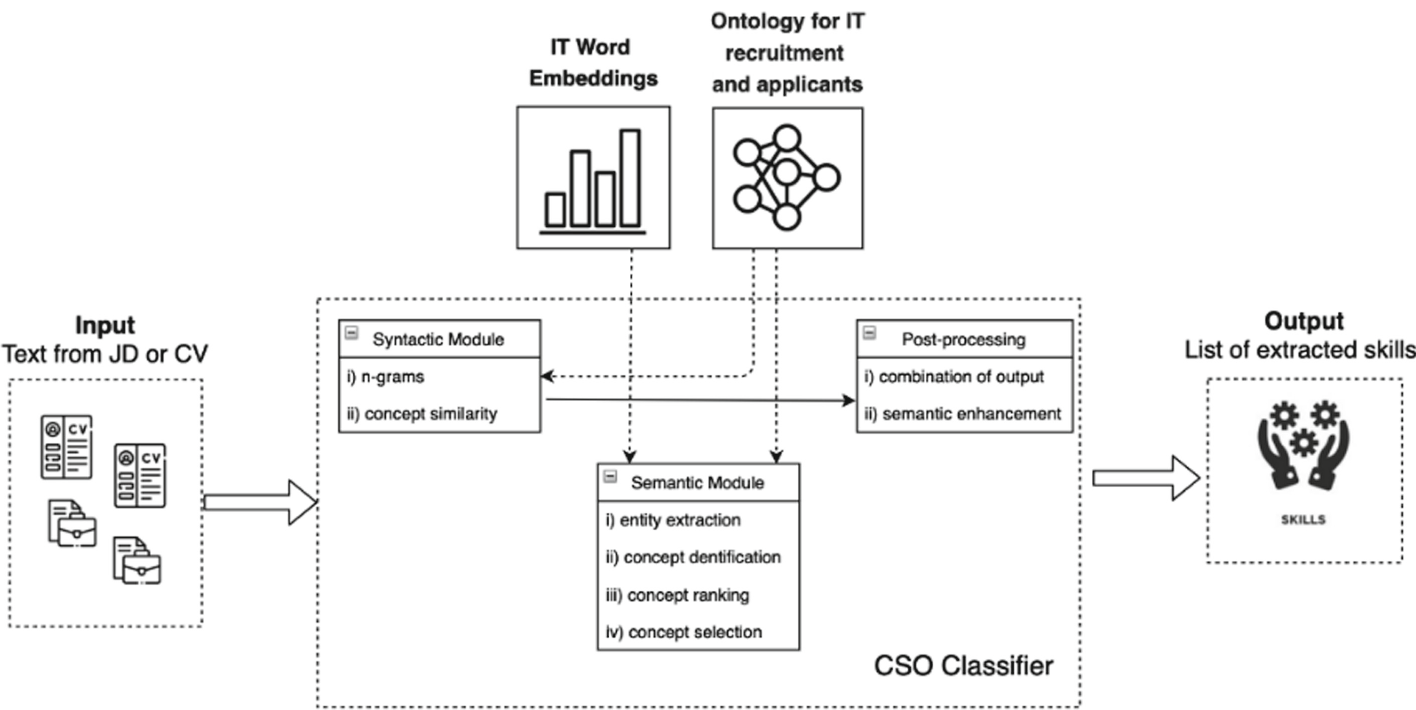 Figure 1: The overall architecture showing the flow from Resume/JD to the matching module.
3. Matching via Graph Edit Distance (GED)
Instead of a simple overlap score, the system calculates the "cost" to transform the candidate's skill graph into the JD's required graph. This approach accounts for the structural importance of certain skills over others.
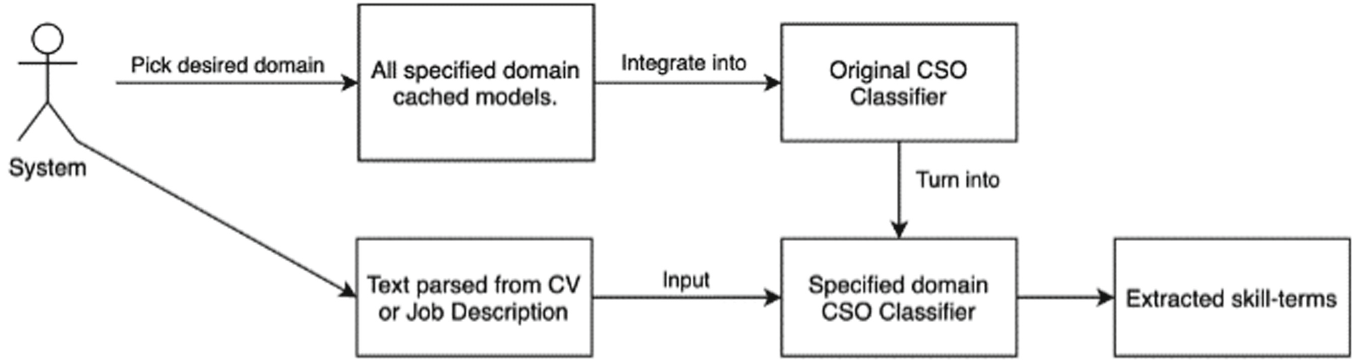 Figure 2: Visual mapping of how CV skills are aligned against JD requirements.
Experimental Validation
The system was tested using a dataset of 200 CVs and 160 JDs across diverse fields including iOS, Android, AI, and Data Science.
Key Metrics:
- Customizable Weighting: Recruiters can manually adjust the importance of "Domain Score," "General Score," and "Soft Skill Score."
- Ranking Performance: As shown in the results, the system successfully distinguishes between "High Fit" (Overall Score > 5.0) and "Lower Fit" (Overall Score < 3.8) candidates for complex roles like Front-end Engineering.
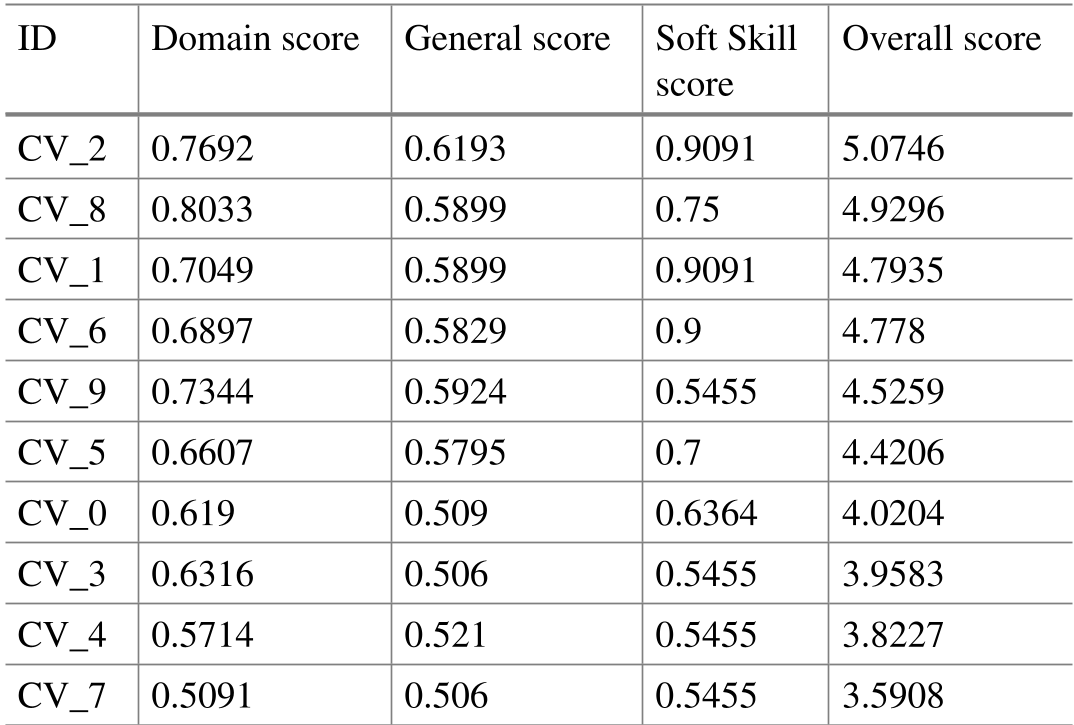 Figure 3: Sample output ranking for a Front-end Engineer position.
Critical Insight & Conclusion
The true value of this work lies in its Inductive Bias—the assumption that IT skills are hierarchically organized. By encoding this knowledge into an ontology rather than relying on black-box LLMs alone, the system remains interpretable and controllable. Recruiters can see why a candidate is ranked highly because they can inspect the skill graph overlap.
Limitations: The current system's reliance on OCR makes it slower than direct text parsing, and the ontology requires manual curation (via Protégé) to stay updated with the rapidly evolving IT landscape (e.g., new frameworks like Mojo or JAX).
Future Outlook: Integrating LLMs for "Ontology Enrichment" could automate the evolution of Job-Onto, ensuring the system learns new technologies in real-time without manual intervention.