
Informed Disclosure: Bridging the Risk Gap in User-Centric Identity Management
Ontology-Based Risk Evaluation in User-Centric Identity Management
The paper introduces an ontology-based risk evaluation framework for user-centric identity management (IdM), specifically targeting Online Social Networks (OSNs). It utilizes an Identity Attribute Ontology (IAO) and a privacy preference engine to quantify the risks—financial and personality-related—of disclosing digital identity attributes to service providers.
TL;DR
While modern identity management has moved toward "user-centricity," giving us control over our data, it hasn't given us the wisdom to use that control safely. This paper presents an Ontology-based Risk Evaluation framework that quantifies the hazards of identity disclosure. By categorizing risks into Financial and Personality impacts, it helps users understand exactly what they are "paying" in privacy when they click "Accept."
The "Responsibility" Paradox in Identity Management
In the era of OpenID and CardSpace, the industry shifted toward a distributed model where the user (via an Identity Provider) manages their own attributes. However, this creates a Responsibility Paradox: users have total control but zero guidance. Most users cannot distinguish between a low-risk attribute (a nickname) and a high-risk combination (SSN + Mother’s Maiden Name) when prompted by a Service Provider (SP).
The authors argue that "control" without "awareness" is not true empowerment. Their goal is to build an intelligent User Agent (UA) that acts as a risk consultant.
Methodology: The Identity Attribute Ontology (IAO)
The core innovation is the Identity Attribute Ontology (IAO). Using Web Ontology Language (OWL), the authors modeled identity attributes not just as strings of data, but as hierarchical concepts with inherited risks.
1. The Notion of Dual Risks
Instead of a single "privacy score," the paper splits risk into two buckets:
- Financial Risk (f-risk): Potential for monetary loss (e.g., Credit Card numbers, SSN).
- Personality Risk (p-risk): Potential for social reputation damage or emotional pain (e.g., private photos, social affiliations).
These are combined using a logarithmic function to provide a Combined Risk Value on a scale of 1.0 to 5.0.
2. Semantic Matching
When a Service Provider requests a set of attributes, the system doesn't just look for a text match. It uses the IAO to find "Releasing Classes" (RC) that satisfy the request with the minimum risk.
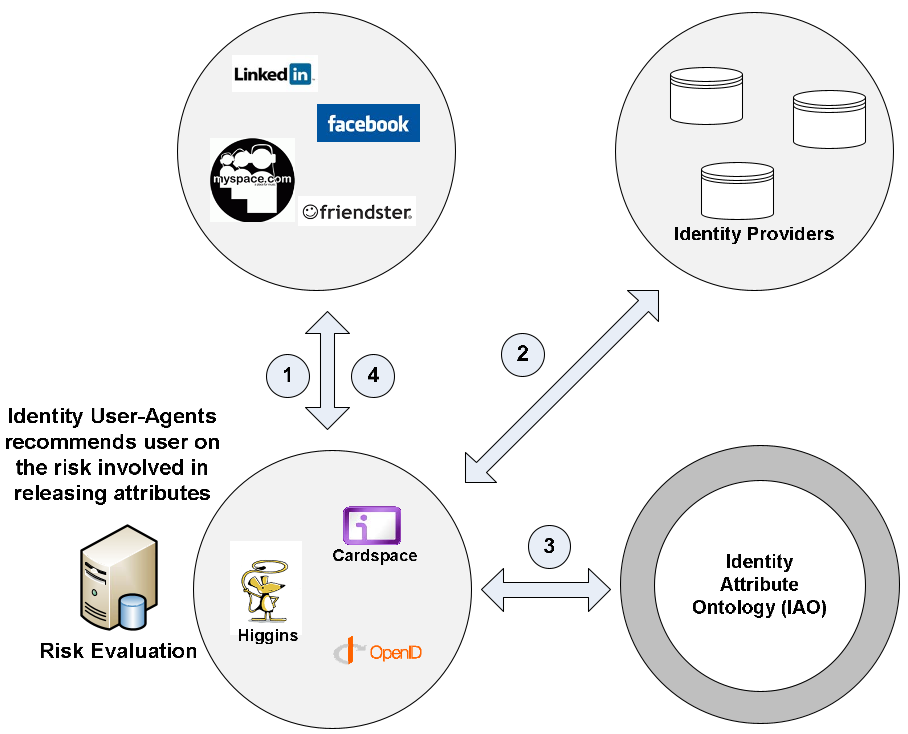 Fig 1: The UA serves as the intermediary, evaluating the SP's request against the IAO's risk parameters.
Implementation: Color-Coded Risk Awareness
The authors integrated this logic into a Java-based identity selector. To solve the usability problem, they translated complex mathematical risks into a simple visual Risk Bar. If a user tries to disclose a high-risk combination, the bar turns Red, providing an immediate intuitive warning.
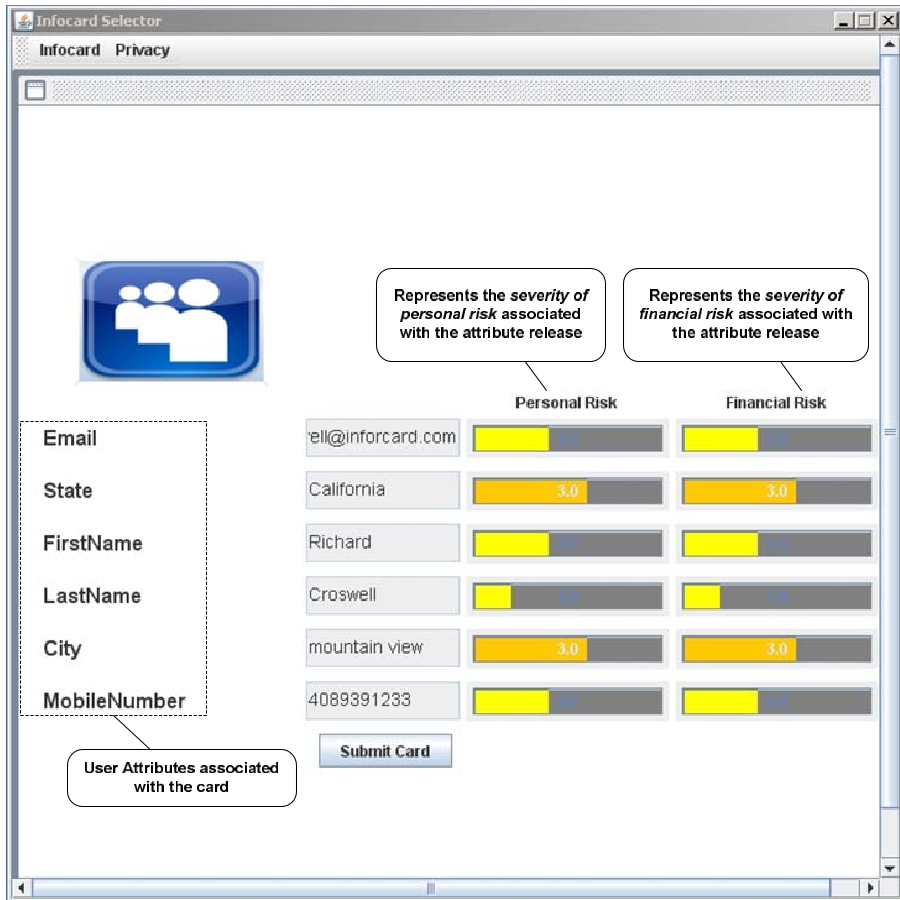 Fig 2: The visual risk representation allows users to see the severity of disclosure before finalizing a transaction.
Experiments & Performance
Testing the system against common attributes from LinkedIn, Facebook, and MySpace, the researchers measured the latency of the ontology service. While initial loading of the ontology classes is the primary bottleneck, the matching (x ms) and searching (y ms) functions remain highly efficient.
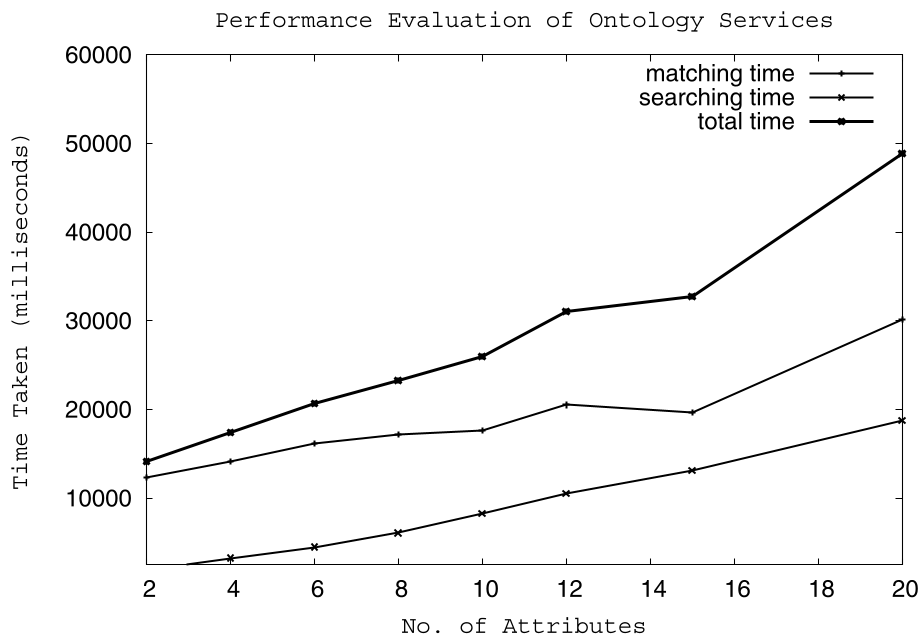 Fig 3: Performance results show a linear increase in processing time, suggesting scalability for real-world web services.
Critical Insight: The Power of Combination Risk
The most profound part of this research is the concept of Combination Risk. Releasing Attribute A might be safe, and Attribute B might be safe, but releasing A + B simultaneously could explicitly identify a person (an "Identity Linkage" attack). The IAO explicitly models these "composite classes" to prevent users from accidentally deanonymizing themselves.
Conclusion
This work moves us closer to an "Intelligent Privacy Agent." By quantifying risk through an ontological lens, we move away from binary "Yes/No" sharing toward a nuanced, risk-aware negotiation. Future work involving SP reputation systems and machine learning could make these risk values even more dynamic and personalized.