
Securing the Heartbeat: An Ontology-Based Guide to IoMT Security Recommendations
Ontology based Security Recommendation for the Internet of Medical Things
The paper introduces an ontology-based security recommendation tool for the Internet of Medical Things (IoMT). By utilizing a semantically enriched ontology and context-aware reasoning, the tool identifies scenario-specific security threats and recommends actionable security controls for stakeholders including patients, medical professionals, and system administrators.
TL;DR
As the Internet of Medical Things (IoMT) becomes a backbone of modern healthcare, the complexity of its security landscape has left many stakeholders—from patients to admins—in the dark. This paper presents an Ontology-Based Recommendation Tool that maps specific IoMT usage scenarios to potential threats and suggests robust countermeasures. By shifting from generic checklists to context-aware reasoning, the tool achieves 94.7% accuracy in identifying critical security measures for medical devices.
Problem & Motivation: The Heterogeneity Nightmare
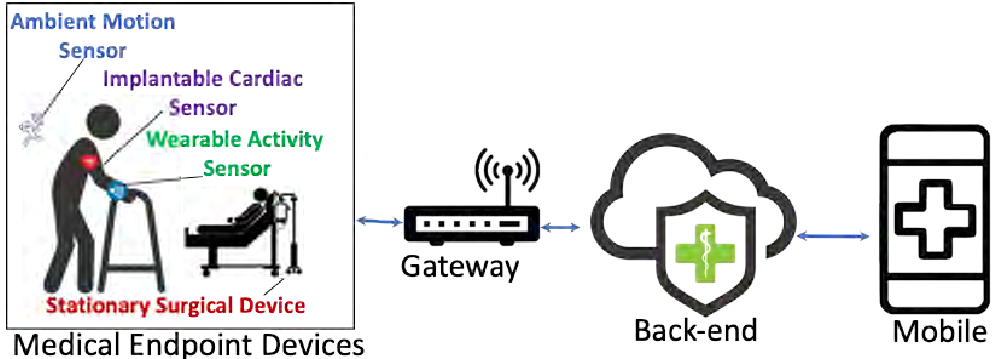
The IoMT isn't just one thing; it's a sprawling ecosystem of wearables, implantables, stationary scanners, and cloud back-ends. The authors identify two primary "barriers to entry":
- Boundless Diversity: A lack of standardization allows for proprietary security measures that are often incompatible or overlooked during rapid manufacturing.
- The Multi-Stakeholder Dilemma: A patient cares about data privacy, a doctor about operational availability, and a system admin about network integrity.
Current guidelines (like those from the FDA or OWASP) are often too high-level. There is a desperate need for a tool that can translate a specific setup (e.g., a patient using a mobile-controlled wearable) into a concrete security action plan.
Methodology: Reasoning with Ontologies
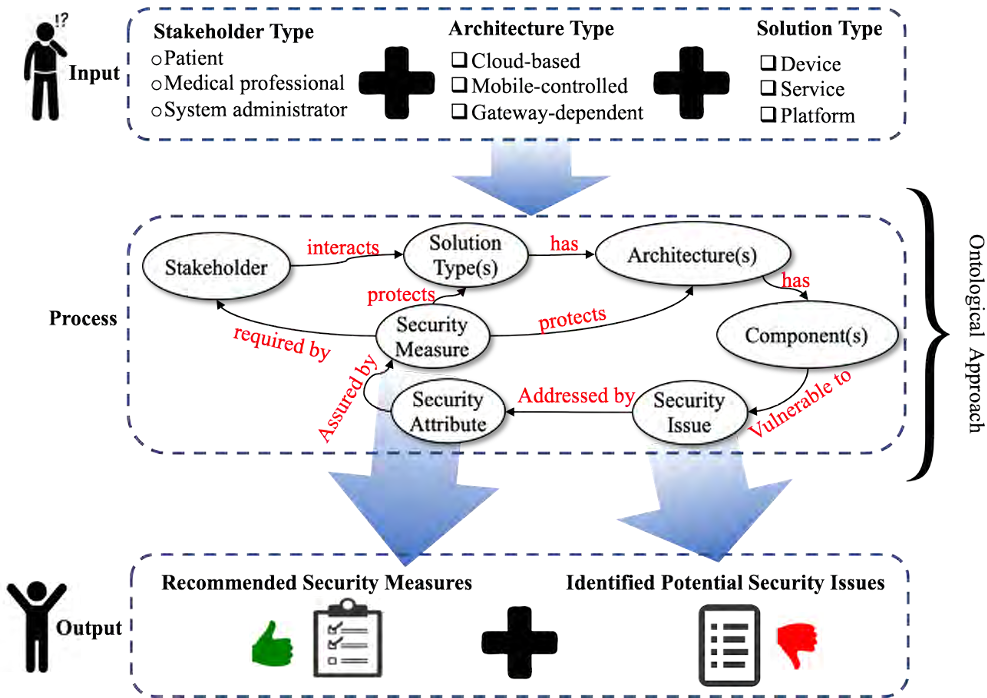
The heart of this research lies in its semantic ontology. Instead of a static database, the authors built a structured knowledge graph that defines relationships between:
- Stakeholders: Patient, Medical Professional, Admin.
- Architecture: Cloud-based, Mobile-controlled, Gateway-dependent.
- Components: Endpoints, Back-end, Gateway, Mobile.
Architecture Overview
The tool uses a logic-based engine to traverse these relationships. When a user defines a scenario, the engine applies axioms (rules) to extract only the relevant threats and measures.
The process concludes by generating Security Attributes—specific, binary "yes/no" questions (e.g., "Do medical devices ensure that default or hard-coded passwords are not used?") that allow non-experts to audit their medical solutions.
Experiments: Validating Against Real-World Vulnerabilities
To prove the tool isn't just theoretical, the authors tested it against 40 real-life CVE vulnerabilities from NIST’s database, including high-profile failures in infusion pumps from Smiths Medical and Hospira.
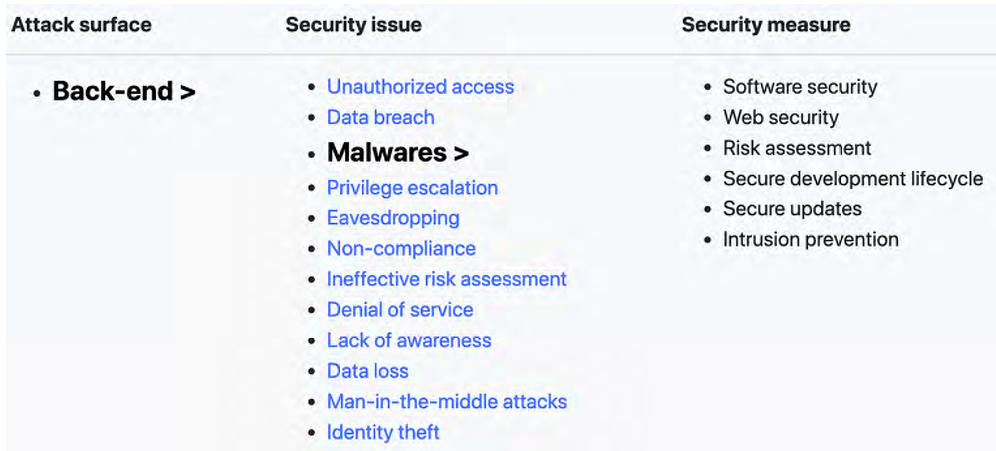
- Results: The tool successfully mapped vulnerabilities (like unauthorized access and malware injection) to the correct mitigation measures in every case.
- Quantitative Metrics: In a "Expert-Based" evaluation, where cybersecurity graduates manually suggested measures for scenarios, the tool matched or exceeded their performance with an average Recall of 97.1%.
Critical Insight & Future Outlook
The true value of this work is expandability. Because it is ontology-based, new device types (like AI-driven diagnostics) or new threats (like quantum-resistant attacks) can be added as new "instances" or "axioms" without rewriting the entire software.
Limitations: The study acknowledges that some attributes might still be too technical for patients. Future iterations could benefit from a more "natural language" interface.
Conclusion
By moving away from "one-size-fits-all" security, this ontology-based approach empowers medical professionals and patients to take command of their digital safety. It forces transparency onto manufacturers and provides a rigorous, automated framework for the ever-evolving world of connected health.