
Bridging the Gap: How Ontologies Transform Covert Social Network Analysis
7999_An ontology-based Social Network Analysis prototype.
This paper presents a prototype for Social Network Analysis (SNA) tailored for intelligence operations in covert networks. It introduces an ontology-driven framework that automates data extraction from unstructured text, semantically organizes heterogeneous graphs, and orchestrates complex SNA algorithms based on specific intelligence requirements.
TL;DR
Analyzing "covert networks"—terrorist cells, insurgent groups, or criminal organizations—is an uphill battle against data scarcity and noise. This paper introduces an Ontology-based SNA Prototype that uses semantic structures to automate the journey from messy, unstructured field reports to actionable intelligence. By using ontologies as a "steering wheel," the system filters out irrelevant noise and automatically selects the right math for the mission.
The Intelligence Bottleneck: Beyond Traditional SNA
In a Counter-Insurgency (COIN) context, analysts aren't just looking for "who knows whom." They are fighting three major technical demons:
- The Extraction Gap: Valuable data is trapped in terabytes of unstructured text.
- The Information Overload: Once data is gathered, it forms massive, cluttered "hairball" graphs that are computationally expensive and visually uninterpretable.
- The Methodological Trap: Most analysts are intelligence experts, not graph theorists; choosing the wrong algorithm (e.g., using Closeness Centrality where a Random Walk is needed) can lead to catastrophic mission failures.
Methodology: Ontologies as the Universal Translator
The core innovation of this prototype is the use of Web Ontology Language (OWL) across four distinct stages of the SNA lifecycle.
1. Automated Fact Extraction
Instead of manual entry, the system uses a Semantic Annotation of Text Documents (SATD) service. It scans unstructured reports for instances of classes defined in the domain ontology (e.g., "Person," "Event," "Kinship").
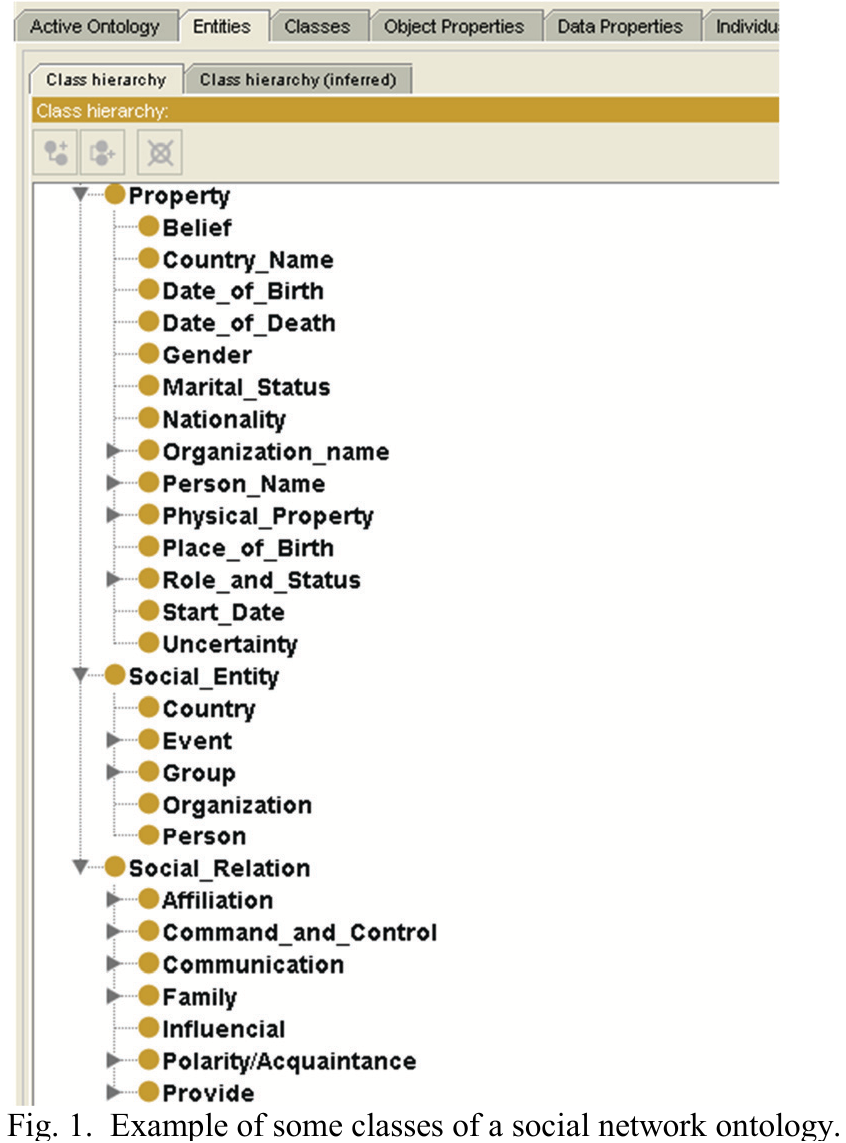 Fig 1: A Social Network Ontology sample used for semantic tagging.
These annotations are converted into Triples (Subject-Predicate-Object). For example, "Robert communicated with Julian" is stored as a raw fact, avoiding early interpretation biases until higher-level reasoning is applied.
2. Semantic Filtering (Pruning the Noise)
To prevent graph explosion, the system applies Filter Characterization. If an analyst asks about "economic ties in a specific region," the ontology identifies the concept of "Economy" and automatically includes all related children concepts and properties (like "Trading" or "Providing goods") while discarding unrelated military or kinship data.
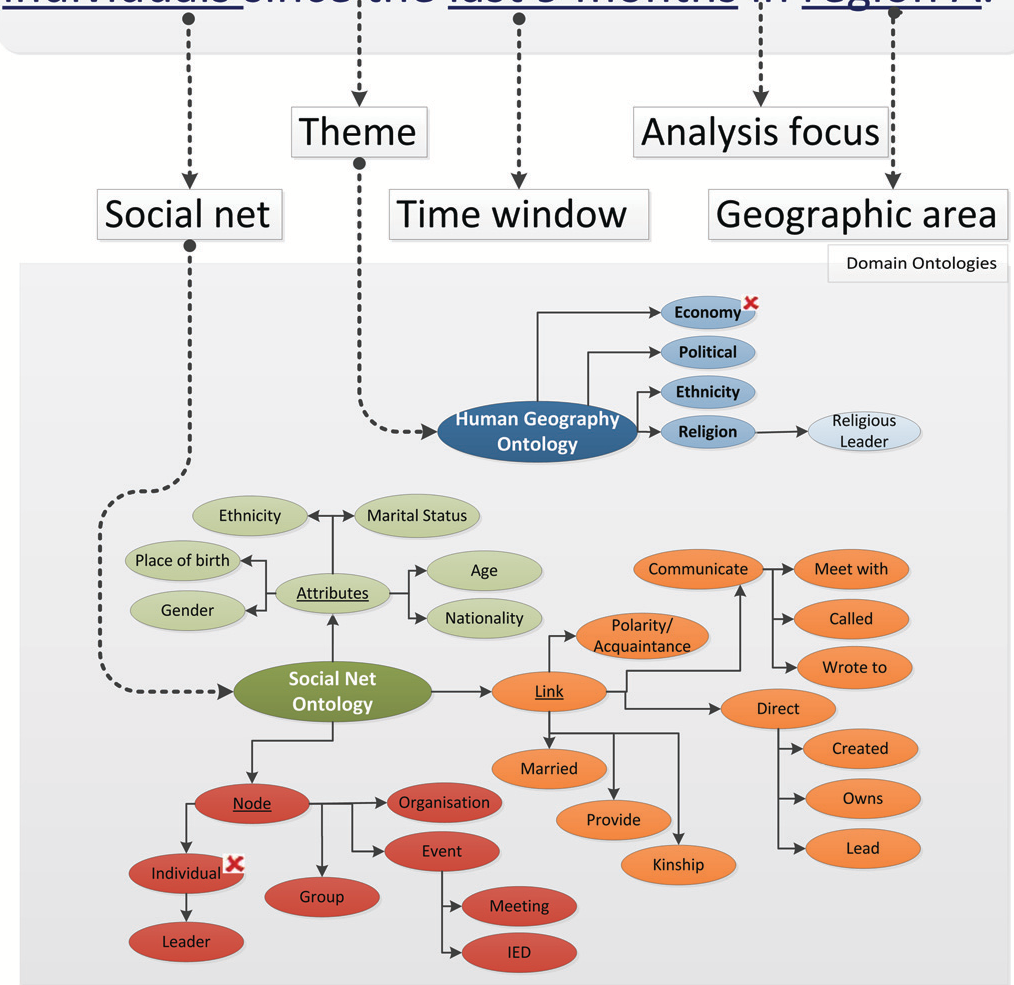 Fig 3: Using contextual inputs to activate specific domain ontologies for filtering.
3. Algorithm Orchestration
Perhaps the most "senior" feature is the Network Analysis Orchestration (NAnOr). It maps an high-level Request for Information (RFI)—such as "Who is the most influential person?"—to the correct mathematical operation. This ensures that the user doesn't need to be a PhD in Mathematics to get the right answer.
Experimental Insight: From Raw Graphs to Intelligence
By utilizing a NoSQL graph database (Neo4j), the prototype allows the data to take different "semantic shapes." A single "Drug Deal" event can be viewed as a criminal affiliation in one perspective or a financial flow in another, depending on the ontology applied.
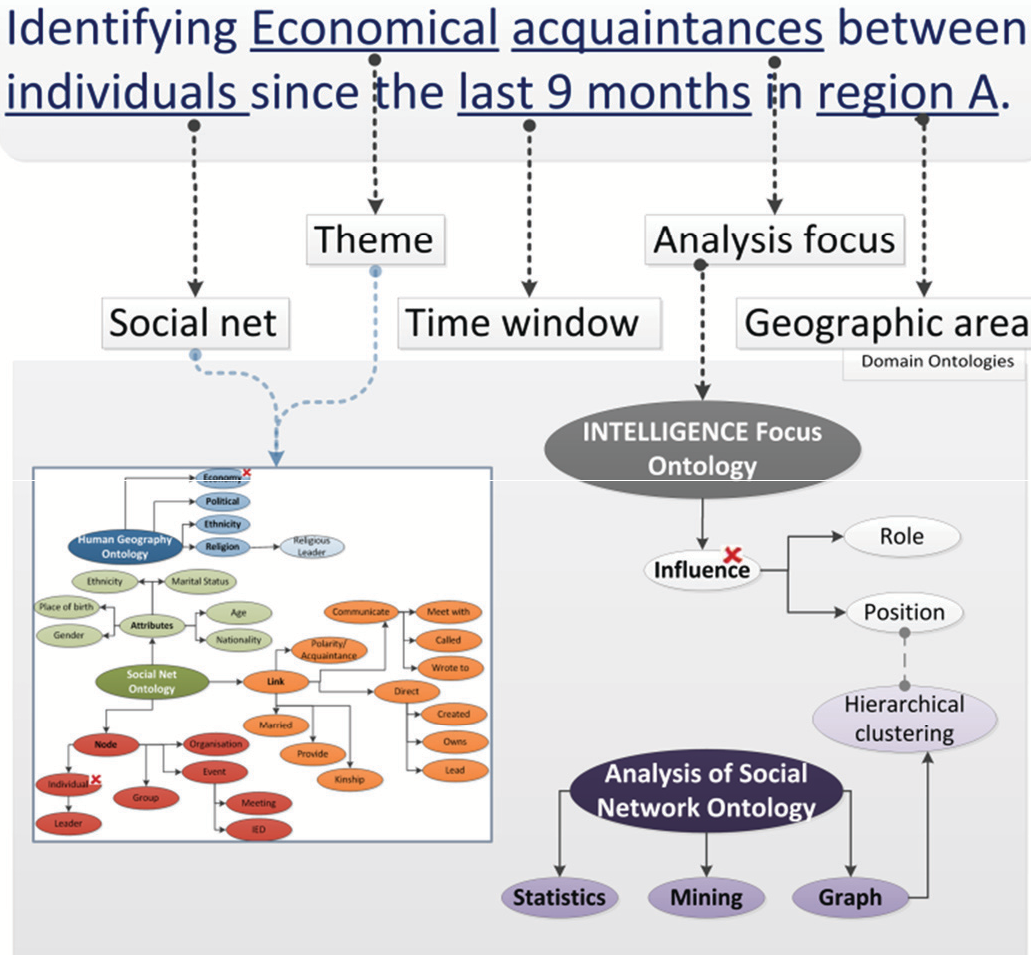 Fig 5: The mapping between Intelligence Focus and SNA Algorithms.
The researchers are currently moving toward large-scale testing on historical Canadian Forces data. The ultimate goal is to prove that an ontology-driven approach reduces the "analysis time-to-insight" ratio significantly compared to manual graph exploration.
Critical Perspective & Summary
The Takeaway: This research successfully argues that SNA in high-stakes environments cannot rely on "pure math" alone. The logic of the domain (the Ontology) must guide the processing of the data.
Limitations:
- Ontology Maintenance: The system's flexibility depends on the quality of the ontologies. If the underlying "Terrorist Network Ontology" is outdated or biased, the filters will fail.
- Scalability: While Neo4j is robust, the real-time semantic enhancement of terabytes of data remains a significant computational hurdle.
In conclusion, this prototype represents a shift from Data-Centric SNA to Knowledge-Centric SNA, making social network science accessible and reliable for the front-line intelligence analyst.