
Beyond Keywords: Using Ontologies to Solve the Silence of Speech Clustering
Ontology-based structured cosine similarity in document summarization: with applications to mobile audio-based knowledge management
The paper introduces Structured Cosine Similarity (SCS), a novel document summarization and clustering method that incorporates task-oriented ontologies. By mapping ASR-generated speech documents to ontological structures, it significantly enhances the Spherical K-means Clustering (SKC) algorithm for mobile audio-based knowledge management.
TL;DR
Knowledge management in mobile environments often relies on oral sharing, but ASR-generated "speech documents" are notoriously difficult to categorize due to their brevity and lack of structure. This paper introduces Structured Cosine Similarity (SCS), a method that uses domain-specific ontologies to "reconstruct" the missing context in speech. By using a new vectorization approach called s-txn, the authors achieved a massive leap in clustering quality (NSMI) and stability over standard TF-IDF methods.
The "Ill-Structured" Document Dilemma
In the world of B2E (Business-to-Employee) mobile commerce, a technician might record a quick audio note: "Paper jam in laser printer caused by UPS connection problem."
Traditional clustering algorithms like Spherical K-means (SKC) would treat this as a flat bag-of-words. If another note mentions "unstable electricity" but not "UPS," the system might fail to see the connection. Unlike web pages, these speech documents lack metadata, tags, or hyperlinks. The authors identify this as the "feature-poor" problem of mobile audio KM.
Methodology: Injecting Intelligence via Ontologies
The core innovation is the transition from flat TF-IDF vectors to Structured Imposition.
1. The Task-Oriented Ontology
The system uses a hierarchy representing causal relationships (e.g., UPS Problem -> Unstable Electricity -> Paper Jam). This provides the Inductive Bias necessary to understand that even if two terms aren't the same, they may share a common causal ancestor.
2. The s-txn Formula
Instead of just counting terms, the s-txn method performs a "upward crawl" in the ontology. When a leaf node is identified:
- The leaf node's value is incremented.
- All ancestor nodes are also incremented, effectively "spreading" the activation across the semantic path.
- Normalization is applied to ensure the vector remains on a unit sphere for efficient cosine similarity calculation.
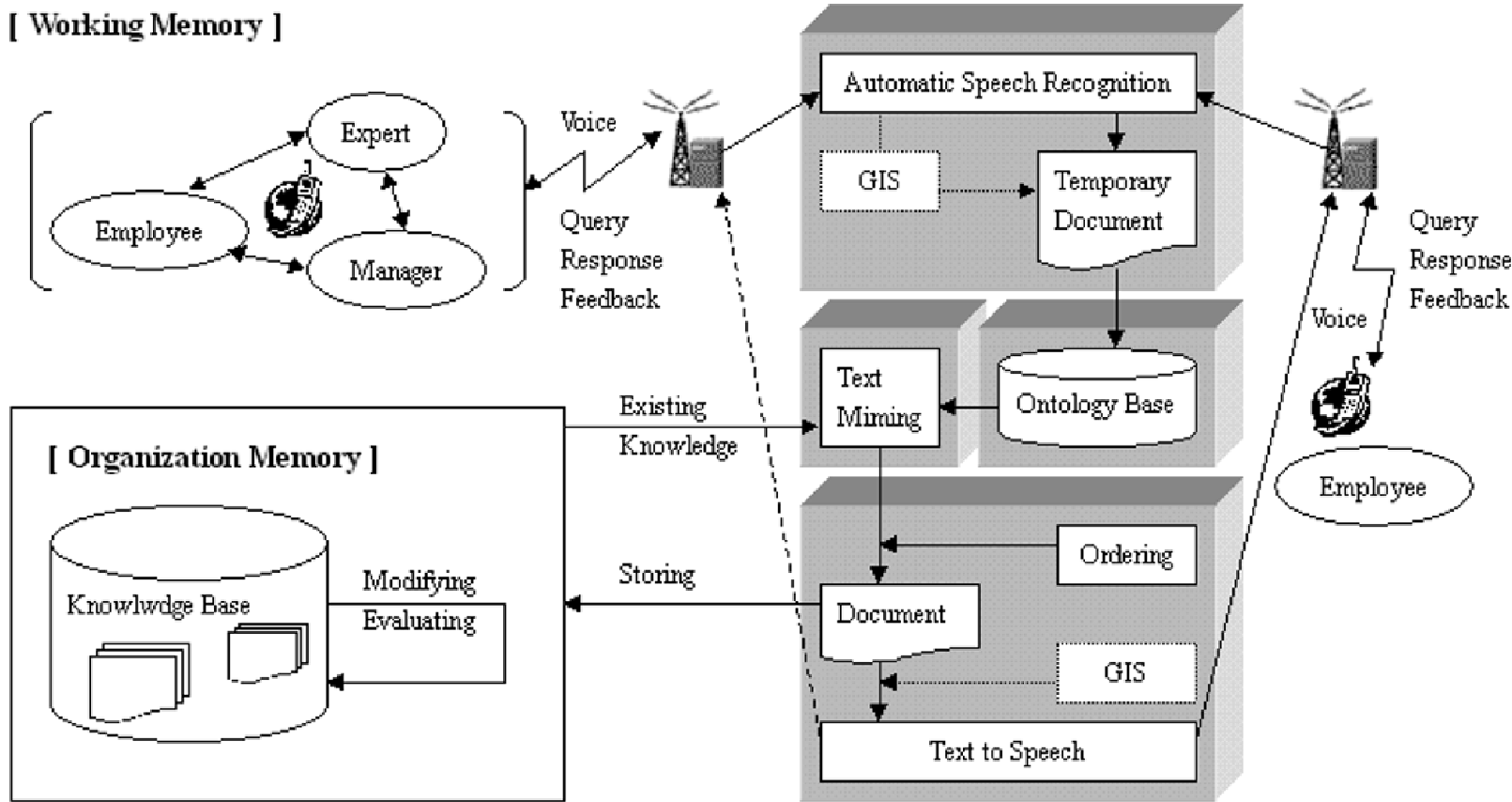 Fig 1: The architecture of audio-based knowledge management, from speech to structured categorization.
Why It Works: Semantic Accordance
The authors prove that SCS respects Casual Proximity. In a standard vector space, sibling nodes (like "Digital Camera" and "PDA") might seem as distant as unrelated nodes. In SCS, because they share an ancestor (like "Hardware"), their similarity score is mathematically guaranteed to be higher than totally unrelated terms, yet lower than nodes on the exact same causal path.
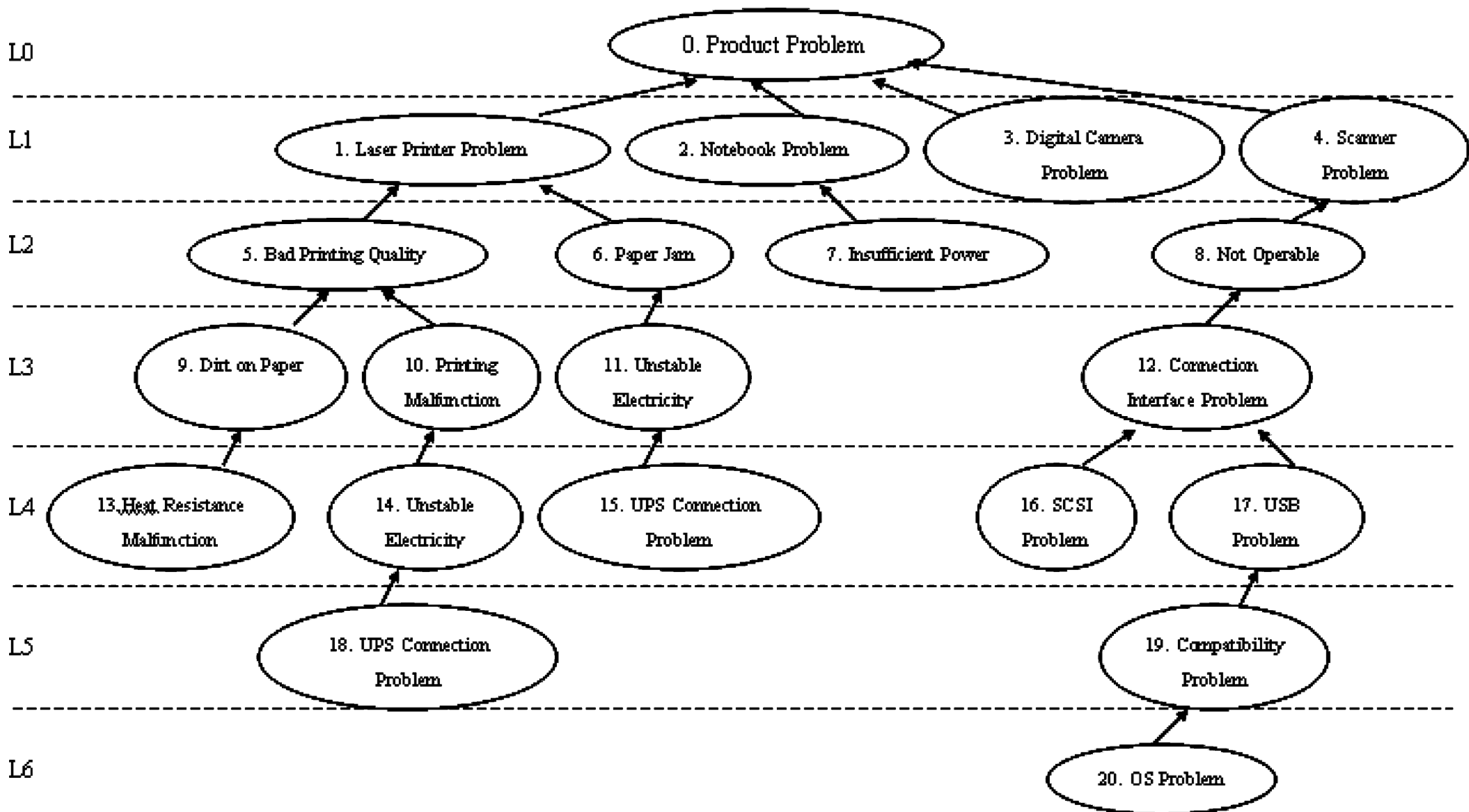 Fig 2: A fragment of the troubleshooting ontology used to "structure" the speech vectors.
Experimental Showdown: s-txn vs. TF-IDF
The researchers tested the system on 554 FAQs across 8 categories (Printers, Scanners, PDAs, etc.).
- Quality & Stability: In scenarios where categories were unevenly distributed—a common real-world occurrence—TF-IDF failed miserably (NSMI near 0), while s-txn maintained a high NSMI of 0.55.
- Efficiency: The structured approach reached convergence faster. As shown in the "Unit Operations" charts, SCS requires significantly fewer iterations of the Expectation-Maximization process than TF-IDF.
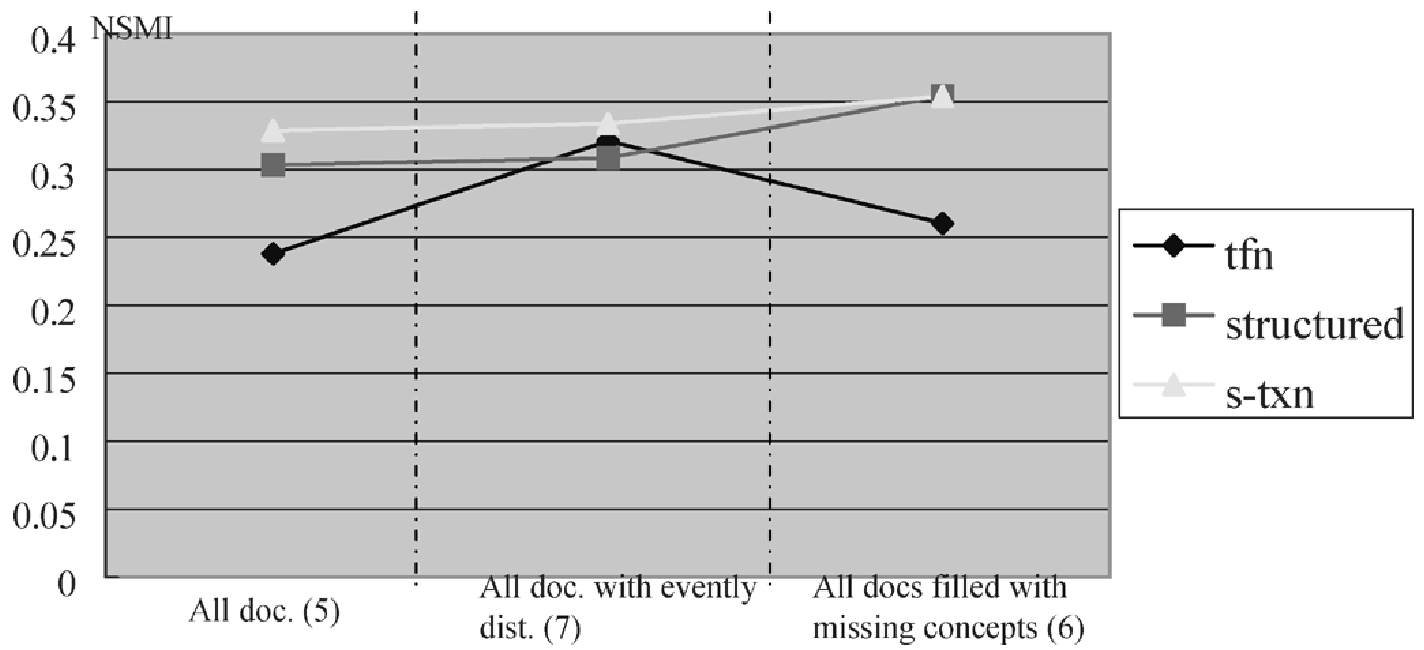 Fig 3: Results showing s-txn's superior performance in balancing document distribution compared to traditional TF-IDF.
Critical Analysis & Future Outlook
Takeaway: This work demonstrates that for niche, professional domains (like electronics troubleshooting), a small, well-defined ontology is more valuable than a massive, generic language model when processing noisy data.
Limitations:
- Ontology Maintenance: The method requires a manually curated or semi-automatically expanded ontology. It is not a "plug-and-play" solution for open-domain web text.
- Cluster Size: As the authors noted, SKC can struggle with very small clusters (under 25 documents), and while SCS helps, it doesn't entirely eliminate the "local optima" risk inherent in K-means.
Future Work: Integrating this structured approach with Graph Neural Networks (GNNs) or using LLMs to auto-generate the task-oriented ontologies could be the next logical step for scalable audio knowledge management.
Conclusion
By moving the "similarity" calculation from a flat word-matching exercise to a structural traversal of domain knowledge, SCS allows mobile workers to share knowledge naturally via voice without losing the organizational rigor required for effective retrieval.