
UKG: Bridging the Gap Between Distributed Data and Universal Knowledge
Ontology-based universal knowledge grid:enabling knowledge discovery and integration on the grid
The paper introduces the Universal Knowledge Grid (UKG), an ontology-based architectural model designed to facilitate large-scale distributed knowledge discovery and integration. It leverages Grid computing and Semantic Web technologies to provide a high-performance infrastructure for analyzing geographically dispersed hetero-data sources.
TL;DR
The Universal Knowledge Grid (UKG) is an ambitious architectural framework that transforms traditional Grid computing into a semantic-aware environment. By using ontologies as the "glue" between disparate data sources, UKG enables automated data mining and knowledge integration across geographically distributed systems, specifically optimized for complex domains like Foreign Exchange Management (FEM).
Problem & Motivation: The Heterogeneity Trap
In large-scale scientific and business environments, data is rarely uniform. It is often trapped in silos—partitioned horizontally (different records, same attributes) or vertically (different attributes, same records) across various institutions.
The authors identify a critical gap:
- Standard Grids (like Globus) focus on raw computational power.
- Semantic Web efforts focus on data description but lack robust data mining integration.
- Prior Knowledge Grids were often "ignorant of developing high-level knowledge integration services."
The UKG was born from the need to not just process data, but to discover and synthesize knowledge in a way that is machine-understandable and human-accessible.
Methodology: The Five Pillars of UKG
The core innovation of UKG lies in its modular, ontology-driven architecture. Unlike a static database, it acts as a living "Grid" of intelligence.
1. The Intelligent Composer
Moving beyond simple HTML, this UI layer uses an embedded inference engine. It offers Automatic Suggestion Services and Advanced Navigation, allowing users to query the grid using natural language or visual maps rather than complex SQL or grid-specific code.
2. The Ontology Server (The Brain)
This is the command center of UKG. It manages three specific types of ontologies:
- Data Integration Ontology: Bridges the gap between semi-structured and structured databases.
- Data Mining Ontology: A reference model that organizes algorithms (Clustering, Classification, etc.) as seen in the hierarchy below.
- Knowledge Integration Ontology: Facilitates communication between different knowledge bases and scores discovered patterns.
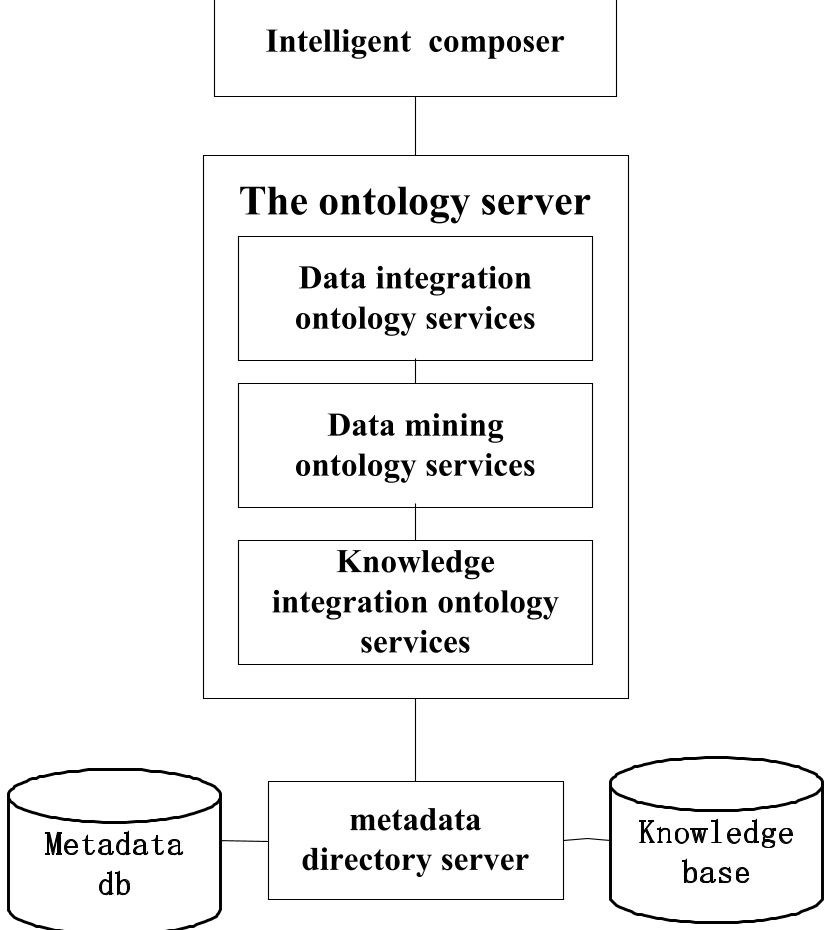 Figure 1: The architecture of the UKG, showing the flow from user interface to the Grid service layer.
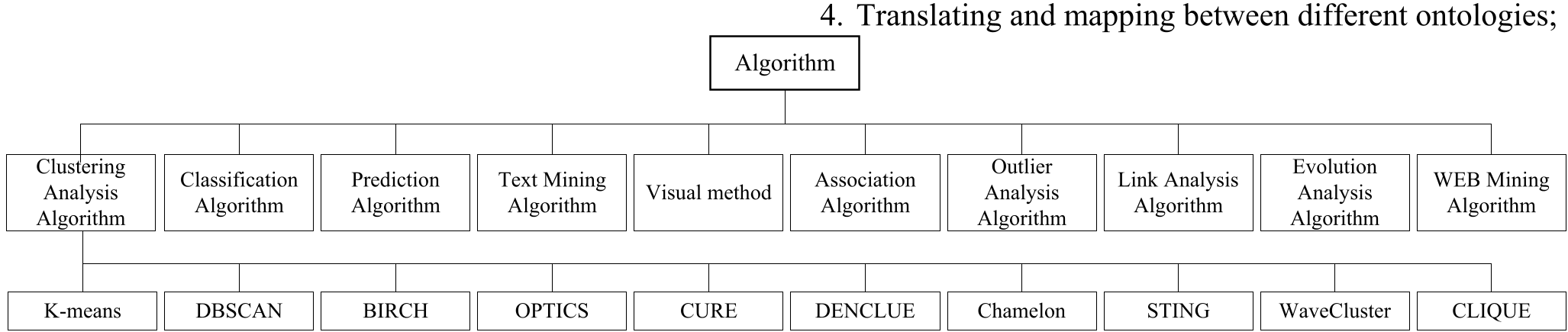 Figure 2: Part of the algorithm class hierarchy for the data mining ontology.
Experiments & Results: Fighting Money Laundering
The researchers applied UKG to Foreign Exchange Management (FEM). In this scenario, investigators needed to find patterns of money laundering across finance organizations, customs, and law enforcement databases.
The Workflow:
- A user creates a "Money Laundering Detection" task in the Intelligent Composer.
- The Ontology Server decodes the semantics and instructs the Metadata Directory Server to locate relevant distributed crime databases.
- The grid executes a BIRCH clustering algorithm.
- Successful "modes" or patterns are integrated back into the Knowledge Base for future decision-making.
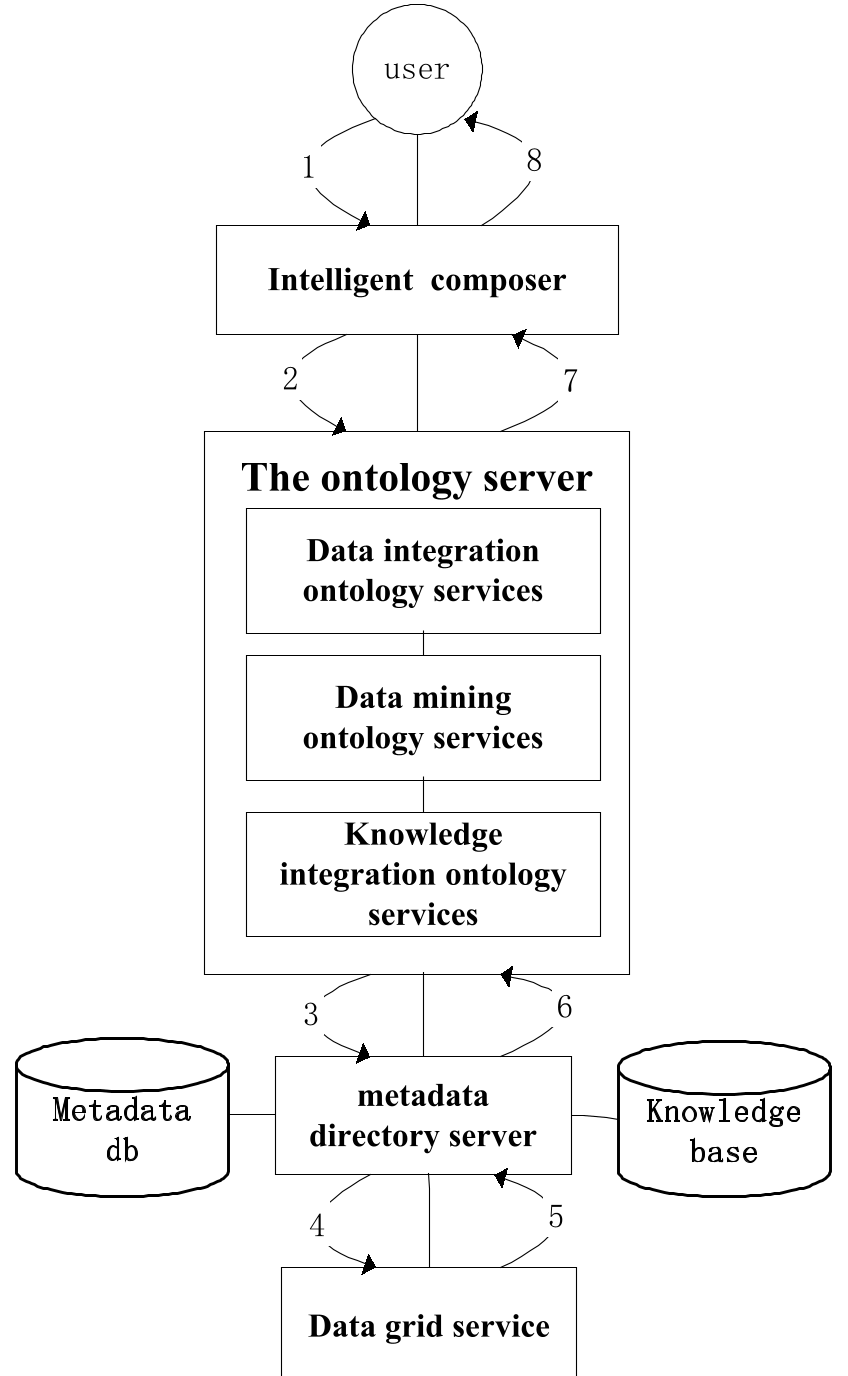 Figure 3: The step-by-step problem-solving cycle in the FEM domain.
The paper emphasizes that by shielding the user from the physical location of the data, UKG allows experts to focus on the logic of crime detection rather than the mechanics of data retrieval.
Critical Analysis & Conclusion
UKG represents a significant step toward the Semantic Grid. Its primary strength is the explicit separation of "Data" and "Knowledge" through the use of an Ontology Server. This allows the system to remain flexible even when underlying data sources change.
Limitations: While the architecture is robust, the paper leaves questions regarding the latency of ontology reasoning on massive grids and the scalability of the Metadata Directory Server in a truly global context.
Future Outlook: This work sets the stage for "Knowledge-on-Demand." As we move into the era of AI-driven analytics, the principles of UKG—structured metadata, semantic interoperability, and integrated discovery—are more relevant than ever for building reliable distributed intelligence.