
Bridging the Utility Gap: Ontology-Based Web Mining for Intelligent Information Gathering
Ontology Based Web Mining for Information Gathering
This paper introduces an ontology-based Web mining framework for effective information gathering, featuring two primary models: the Pattern Taxonomy Model (PTM) and the Ontology Mining Model. By integrating association mining with granule mining and rough set theory, the authors bridge the gap between raw Web data and high-level knowledge representation to overcome the issues of information mismatch and overload.
TL;DR
This research addresses the fundamental "mismatch and overload" problem in Web information gathering. By moving beyond simple keyword matching to Ontology-Based Web Mining, the authors introduce the Pattern Taxonomy Model (PTM) and Granule Mining. These methods use closed patterns to prune noise and Rough Set theory to model uncertainty, effectively creating a "Top Backbone" ontology that mirrors a user's internal conceptual model.
Background: Why "More Data" Isn't "More Knowledge"
The digital era has moved from a scarcity of information to a debilitating surplus. Web Mining was supposed to solve this, yet it stalled due to three technical bottlenecks:
- Volume: Too many patterns are discovered for manual or traditional KB maintenance.
- Noise: A high percentage of discovered patterns are redundant or irrelevant.
- Uncertainty: Even useful patterns carry fuzzy semantic boundaries.
The authors argue that a "Wisdom Web" requires systems that don't just find data, but understand the Information Diagram—the underlying topics and interests of a user.
Methodology: The Architecture of Intelligence
The paper proposes a cyclical architecture focused on the evolution of knowledge.
1. The Pattern Taxonomy Model (PTM)
Instead of treating words as independent entities, PTM looks at patterns. However, patterns often have poor statistical properties. To fix this, the authors utilize Closed Patterns. A pattern is "closed" if none of its super-patterns have the same support. This drastically reduces the search space without losing semantic integrity.
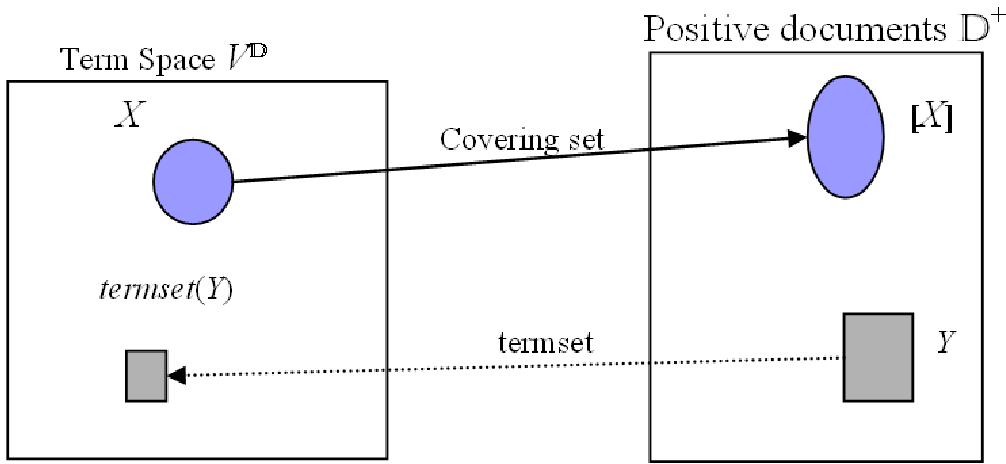 Figure 1: The four-phase cycle: Mining, Representation, Reasoning, and Evolution.
2. Granule Mining & Rough Associations
This is the mathematical heart of the paper. Unlike traditional association mining, Granule Mining treats a pattern as a representation of a group of objects. By using a Decision Table, the system distinguishes between:
- Condition Attributes: The terms/features found in documents.
- Decision Attributes: Whether the document satisfies the user (Positive/Negative).
Through Rough Association Rules, the model assigns weight distributions to terms, allowing the system to reason about how "specific" or "exhaustive" a topic is relative to the user's need.
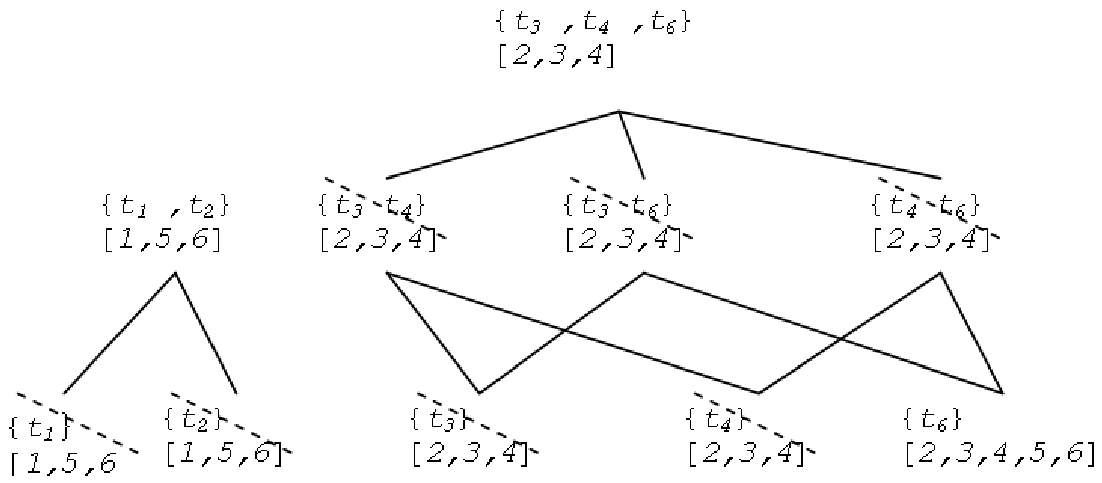 Figure 2: The "Top Backbone" structure illustrating the 'is-a' and composition relationships between granules.
Experiments & Evolution: Refining the Search Intent
One of the most powerful aspects of this model is Knowledge Evolution. When a system returns an irrelevant document (an "offender"), the model doesn't just ignore it. It performs a Reshuffle Operation:
- It identifies which positive rules shared terms with the negative result.
- It shifts weights away from those conflicting terms to "evaporate" the uncertainty.
The authors' deployment of these algorithms (Algorithm 1 and 2) showed that while initial mining provides the "raw" ontology, the feedback loop provides the "intelligence" to prune generalized, low-specificity patterns in favor of high-precision user interests.
Critical Insight: The Physical Intuition of "Granules"
From a PhD perspective, the beauty of this work lies in its use of Rough Set Theory to handle the ambiguity of human language. By viewing documents as "granules," the authors acknowledge that terms are not just discrete labels but part of a multi-dimensional feature space where boundaries are naturally "rough" and overlapping. The "Composition Operation" () is effectively a way to perform semantic algebra, merging patterns to build a more robust representation of a concept.
Summary & Future Outlook
This paper sets a rigorous foundation for Web Intelligence. By combining the statistical power of data mining with the structural logic of ontologies, it moves us closer to systems that can "act like users."
Key Takeaways for Future Research:
- Pruning is as important as mining: Closed pattern extraction is vital for efficiency.
- Uncertainty is a feature, not a bug: Using Rough Sets allows the model to quantify and eventually reduce ambiguity through feedback.
- The Future: The integration of domain-specific ontologies (like the Dewey Decimal Code mentioned in the conclusion) could provide the "world knowledge" needed to make these systems context-aware across specialized fields.
Editor's Note: While this paper was written before the LLM revolution, the principles of Granule Mining and Rough Set theory remain highly relevant for grounding Large Language Models and improving the efficiency of Retrieval-Augmented Generation (RAG) systems.