
Bridging the Knowledge Gap: Integrating Discipline Ontologies via Social Network Intelligence
Ontology Combined Based on the Social Network Information
The paper introduces a novel framework for integrating Single-Discipline Ontologies (SDOs) into a Multi-Discipline Ontology (MDO) by leveraging academic social network data from Scholat.com. It utilizes DBpedia for initial hierarchical structuring and employs a relationship matrix to map interdisciplinary connections based on real-world academic entities like papers and books.
TL;DR
In the era of hyper-specialization, the most groundbreaking discoveries happen at the intersection of fields. This paper proposes a method to move beyond isolated "Single-Discipline Ontologies" (SDO) by using the latent connections found in academic social networks (like papers, co-authors, and shared keywords) to build a unified "Multi-Discipline Ontology" (MDO). By combining DBpedia's structured hierarchy with real-world interaction data, the authors enable more accurate interdisciplinary information retrieval.
The Motivation: Why Static Ontologies Fail
Standard discipline classifications are often "silos." In a traditional system, a paper about Educational Technology might be indexed under "Education" OR "Computer Science," but rarely captures the semantic synergy between them. The core problem is twofold:
- Static Definitions: Traditional ontologies cannot keep up with the rapid evolution of new research niches.
- Disconnected Entities: Existing matching algorithms rely on lexical similarity (text matching), which often misses the structural or functional relationship between concepts that don't share similar names.
The authors' insight is simple yet powerful: Follow the researchers. If scholars from two different fields are consistently co-authoring papers or using the same keywords, a semantic "bridge" exists between those disciplines.
Methodology: From Matrices to Multi-Discipline Graphs
1. Building the Foundation with DBpedia
The process begins by extracting discipline hierarchies from DBpedia. Since DBpedia is derived from Wikipedia’s structured data (InfoBoxes), it provides a robust tree-like structure of concepts. The authors use semi-automated semantic annotation to define the basic levels of each discipline.
2. The Relationship Matrix (E)
To find the "glue" between disciplines, the authors analyze academic entities (papers, books, project summaries) within social networks. They construct a matrix to track shared attributes:
- Keywords: If a keyword appears in both Discipline A and Discipline B, a link is established.
- Entity Affiliation: If an academic entity (like a paper) belongs to more than two disciplines, the system updates the relationship matrix to reflect this overlap.
3. Flexible Integration
Instead of a rigid merger, the authors use a formal set-theoretic approach to combine ontologies. An MDO is defined as: where represents the bridging knowledge and 'Intersect_with' defines the new cross-disciplinary relationship.
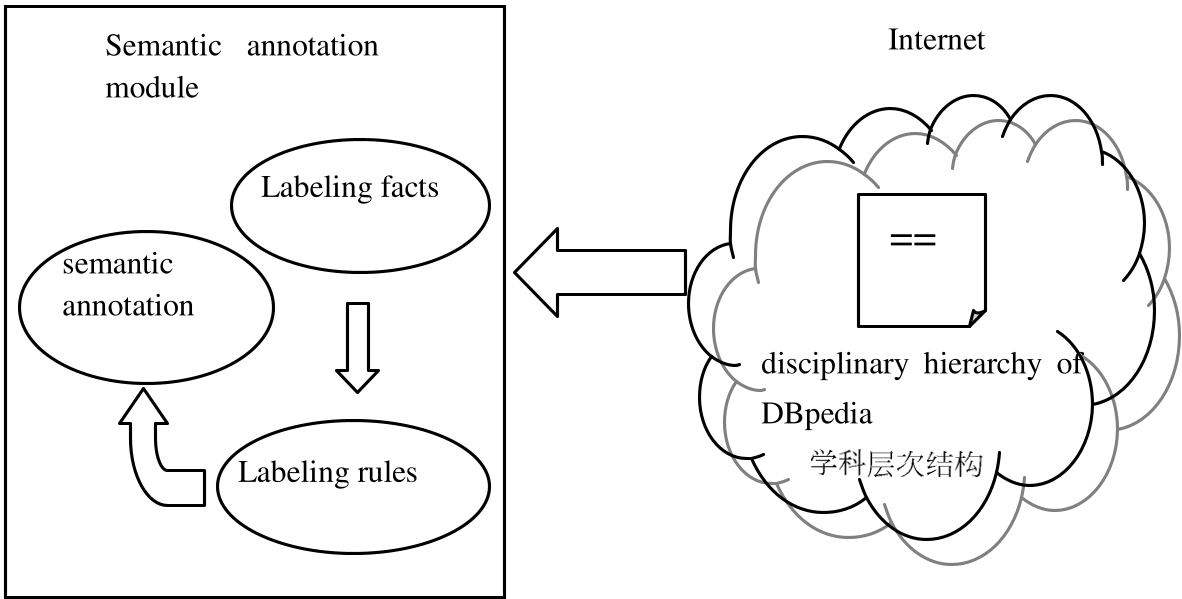 Figure 1: The process of semantic annotation and discipline hierarchy division.
Experimental Results: The Scholat.com Case Study
The authors tested their algorithm on Scholat.com, a social network for scholars. They successfully integrated the "Computer Science" and "Education" ontologies.
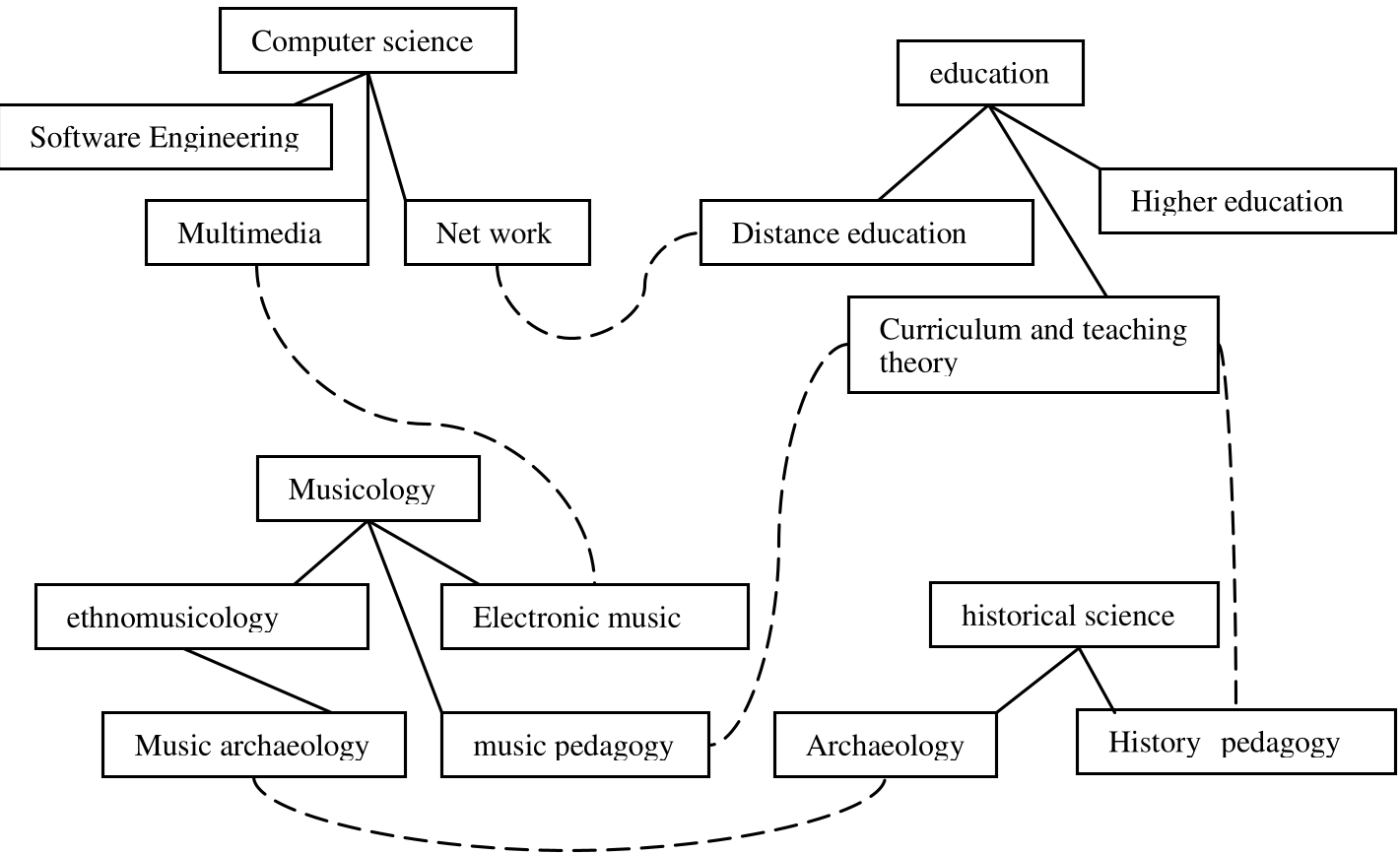 Figure 2: Visualizing the links discovered between seemingly disparate discipline nodes.
Key Findings:
- Simplicity: Unlike traditional Falcon-AO systems, this method doesn't require massive mapping libraries. It uses the relationship matrix to drive the evolution.
- Retrieval Accuracy: By navigating the "Intersect_with" links, a search for "Pedagogy" can now intelligently surface relevant "Computer Science" nodes (like E-learning modules) that were previously hidden by discipline silos.
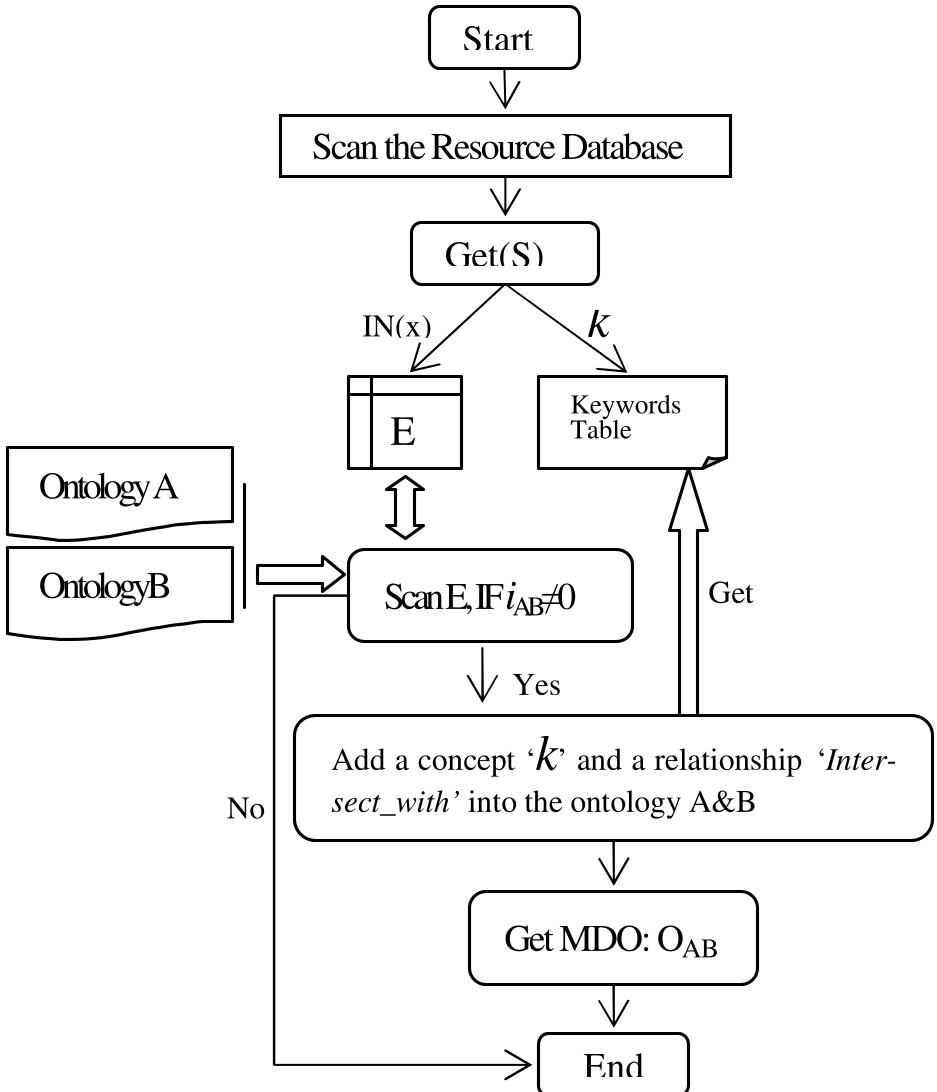 Figure 3: The algorithmic workflow for generating the Multi-Discipline Ontology (MDO).
Critical Analysis & Future Outlook
The strength of this approach lies in its social grounding. By using real-world interaction data (co-authorship, common keywords), the resulting ontology reflects how science is actually practiced, not just how it is theoretically classified.
Limitations:
- Data Quality: The method is highly dependent on the "cleanliness" of the social network data. Incorrectly tagged papers could lead to "phantom" links between unrelated disciplines.
- Scalability: While the paper discusses combining two ontologies, the computational complexity of the relationship matrix might grow significantly as more disciplines are added.
Future Work: The authors intend to refine the matching algorithms to improve robustness and build a full-scale recommendation engine based on these MDOs. This could revolutionize how we discover collaborators across different university departments.
Conclusion
This research provides a pragmatic path for academic platforms to break down information silos. By treating social network interactions as a primary signal for knowledge mapping, we can build a more interconnected and discoverable academic world.