
SciVi-Middle: Democratizing IoT-Based HMI Through Ontology Engineering
Ontology-Driven Automation of IoT-Based Human-Machine Interfaces Development
This paper introduces SciVi-Middle, an ontology-driven platform designed to automate the development of IoT-based Human-Machine Interfaces (HMI). It leverages semantic engineering to automatically generate device firmware and application middleware, enabling the creation of tangible, human-centric interfaces like gesture-based controllers with minimal manual programming.
TL;DR
Researchers have developed SciVi-Middle, a smart system that automates the creation of Human-Machine Interfaces (HMI). By using "ontologies" (formal maps of knowledge) and a visual data-flow editor, the system automatically writes the code (firmware and middleware) required to turn custom IoT sensors into powerful controllers for software. In a real-world test, it reduced the time to perform complex data filtering from 11 seconds to just 1 second using gesture control.
Background: The Interoperability Nightmare
In the modern IoT landscape, we are surrounded by sensors but trapped by keyboards and mice. Creating a custom "tangible" interface—like a glove that controls a 3D model—usually requires a developer who understands hardware (C/C++, registers, sensors) and software (API integration, UI design, data processing). This "talent gap" prevents experts in other fields (like psychology or medicine) from building the tools they need.
The authors' insight is profound: Why code the "glue" between hardware and software every time when we can describe the relationship semantically?
Methodology: The "Brain" Behind the Automation
The core of SciVi-Middle is its internal knowledge base, consisting of six key ontologies. This is not just a library of code; it is a logical framework that understands what a "gyroscope" is, how a "quaternion" works, and how a "WiFi module" communicates.
The Workflow Architecture
Instead of writing lines of code, users interact with a Data Flow Diagram (DFD).
- Ontological Profiling: The system parses the source code of the target application to understand what data it needs.
- Visual Logic: The user drags and drops nodes (e.g., "Denoising Filter," "ESP8266 Board," "Gesture Logic") and connects them.
- Automated Synthesis: The system traverses the diagram, looks up the corresponding code snippets in the ontology, and generates human-readable C++ or Python code.
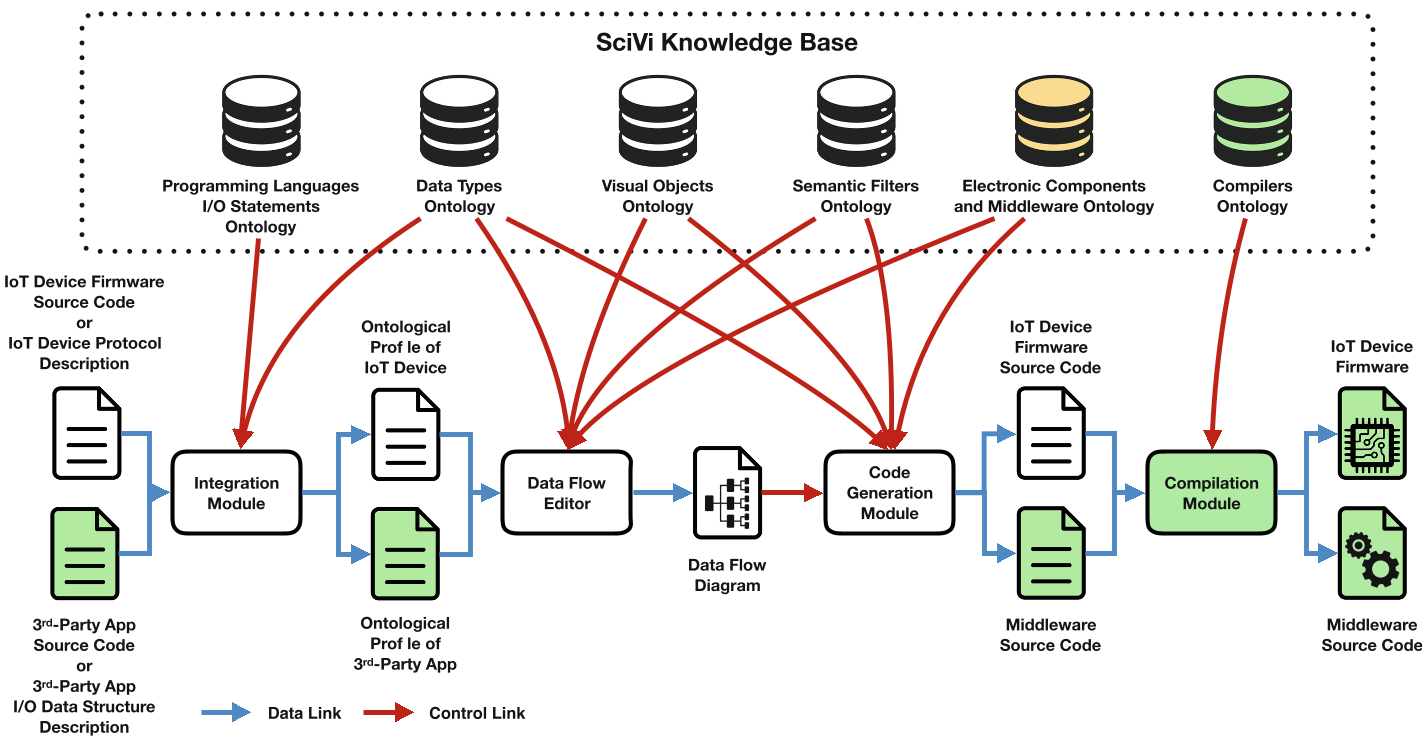 Figure 1: The architecture showing the flow from ontology knowledge to automatic code generation.
Case Study: Analyzing Social Media Behavior
The system was put to the test in a complex linguistic study. Researchers needed to filter social media replicas based on 144 different combinations of psychological and linguistic traits. Using 6 traditional sliders was tedious and interrupted the "flow" of scientific discovery.
Using SciVi-Middle, they assembled a gesture-control glove based on the ESP8266 chip.
- How it works: Moving the hand "Back" and "Forth" mappings to "Here" and "There" spatial semantics.
- The Efficiency Leap: What used to take 11 seconds of clicking and dragging now takes a single, natural hand gesture (1 second).
 Table 1: Mapping physical hand movements to complex linguistic deictic semantics.
Experiments & Real-World Impact
The study demonstrated that by using the gesture interface, the psychological impact of gender differences on communication patterns in social networks was identified much faster. The SciVi-Middle platform handled the "heavy lifting" of the electronic communication protocol, allowing the scientists to focus on the data, not the debugging.
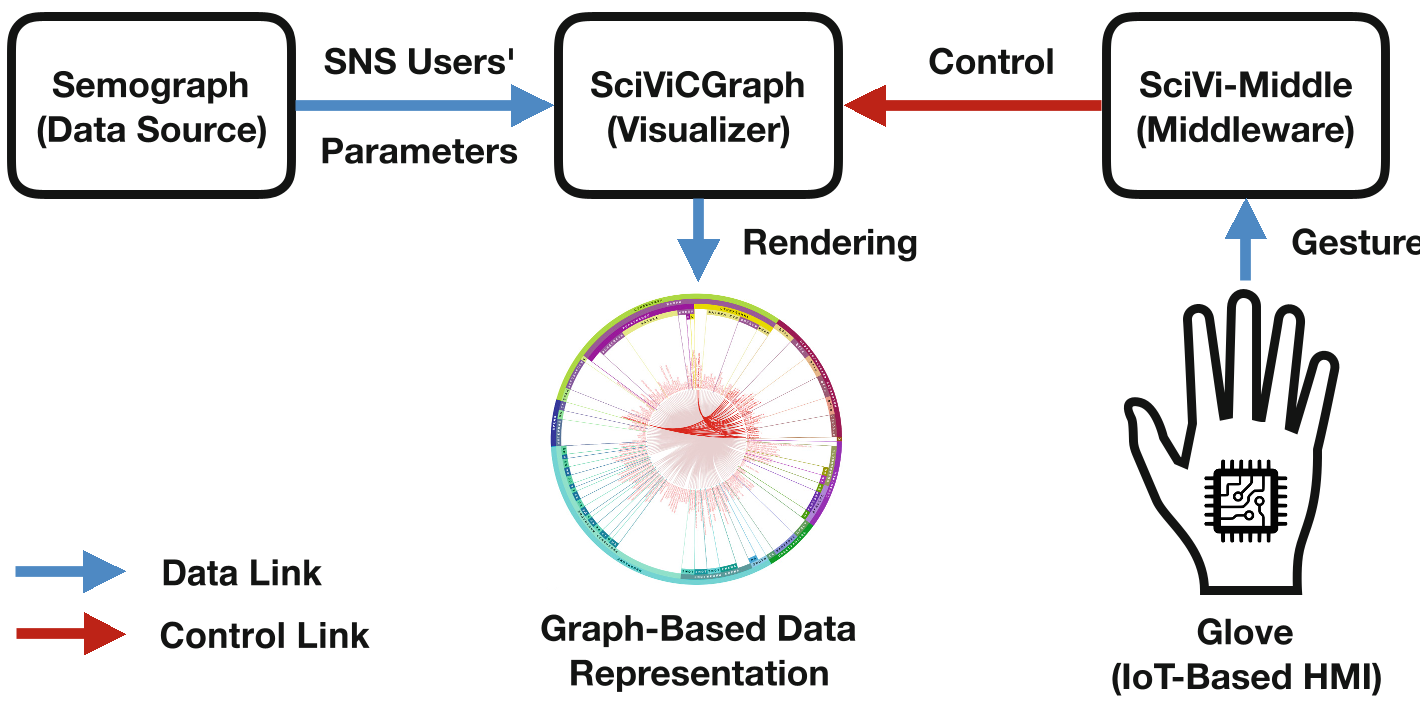 Figure 2: The hardware glove interface (left) versus the visual analysis result (right).
Critical Insight & Conclusion
Takeaway
SciVi-Middle proves that Ontology-Driven Automation is a viable path for the future of IoT. It moves the focus from "how to connect" to "what to achieve." By automating the firmware/middleware generation, the barrier to entry for custom HMI is significantly lowered.
Limitations & Future Work
The current implementation primarily supports the ESP8266 and limited communication protocols. While powerful, the system's "intelligence" is only as good as its underlying ontologies. The authors plan to expand this into healthcare monitoring and voice recognition, where the need for rapid, custom interface development is critical for patient care.
In the coming era of VR/AR and ubiquitous computing, tools like SciVi-Middle will be essential to turn our physical world into a seamless digital controller.