
OASIS: Bridging the Demographic Gap with Ontology-Driven Wearables
An Ontology-Driven Multisensorial Platform to Enable Unobtrusive Human Monitoring and Independent Living
The paper introduces an ontology-driven multisensorial platform developed under the EU-funded OASIS project, aimed at enabling independent living for the elderly. It combines a wireless wearable Lycra garment, surface Electromyography (sEMG), and a Predictive Dynamic Model (PDM) to monitor lower limb kinematics and muscular fatigue.
TL;DR
The OASIS project introduces a groundbreaking multisensorial platform that embeds healthcare into everyday clothing. By combining Lycra-based sensorized garments, wireless sEMG, and a predictive dynamic model, the system enables unobtrusive monitoring of the elderly. It moves healthcare from the clinic to the "living lab" via an open, ontology-driven architecture.
Contextualizing the Silver Tsunami
We are facing a global demographic shift: by 2030, the over-60 population will grow 3.5 times faster than the general population. The technical bottleneck isn't just "monitoring"—it's doing so without stripping individuals of their dignity and autonomy. Current SOTA methods often rely on cameras (privacy-invasive) or bulky medical braces (uncomfortable). The OASIS project seeks to solve this through Ecological Tracking: monitoring subjects in their natural environment using invisible technology.
Methodology: The Fusion of Textiles and Semantics
The core of the platform is a smart multisensorial suite designed for the lower limbs. Its innovation lies in two distinct layers:
1. The Physical Layer (Biomimetic Wearable Suits)
Using piezoresistive networks and strain-sensing fabrics, the platform reconstructs 3D motion without the need for optical markers.
- sEMG Integration: Wireless surface Electromyography (sEMG) captures alpha motor neuron activity, providing a direct window into the Central Nervous System's (CNS) commands.
- Unobtrusive Design: Wireless probes and screen-printed electric paths on Lycra ensure the user can wear the system throughout the day.
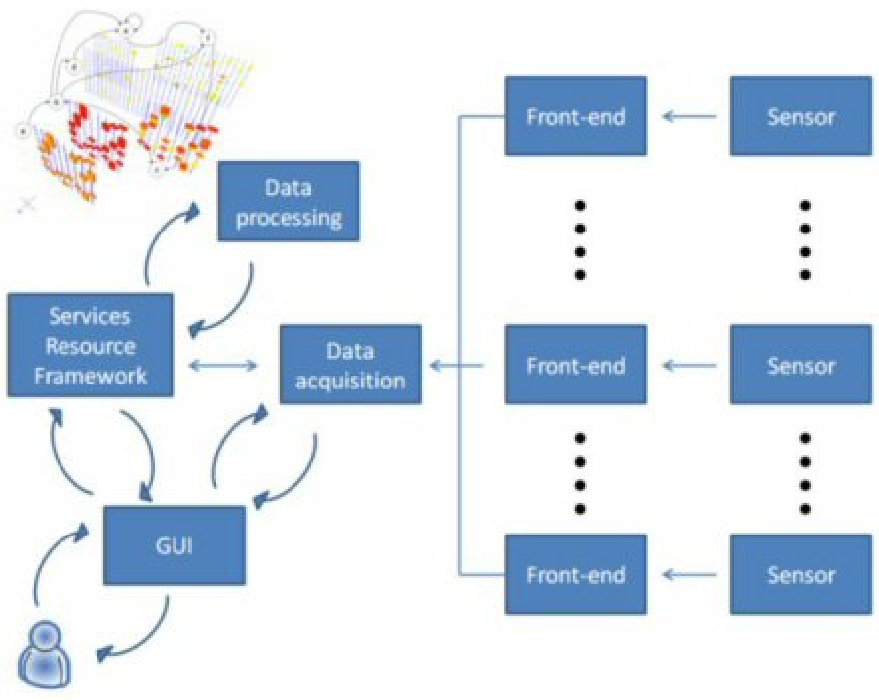 Figure 1: Position of sensors and the neuro-physiological muscular model used for activity planning assessment.
2. The Semantic Layer (OASIS Ontology)
Raw data is meaningless without context. The project utilizes an Ontology-driven Open Reference Architecture to ensure that kinematic data can "talk" to other services like nutritional advisors or transport guidance systems.
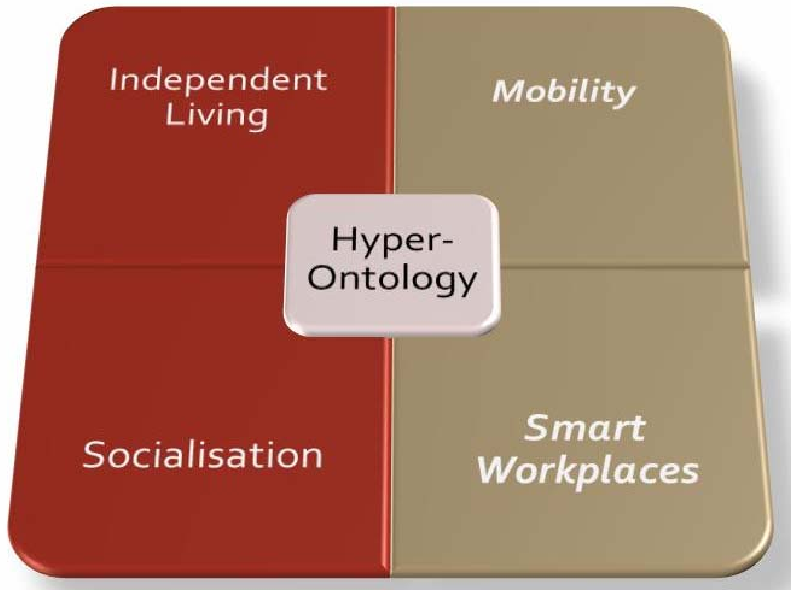 Figure 2: The OASIS reference architecture for multi-service integration.
Predictive Dynamic Modeling (PDM)
The paper emphasizes the use of Machine Learning to bridge the gap between "signal" and "intent." The PDM analyzes:
- Muscular Recruitment: Identifying which muscles are active and to what degree.
- Fatigue Analysis: Predicting physiological breakdown before it results in a fall.
- Classification Engines: Utilizing SVM, PNN, and Kohonen Self-Organizing Maps (KSOM) to categorize movement patterns in real-time.
Experimental Insights
The platform employs a fault-tolerant mechanism, allowing sensor "patches" to be hot-swapped or disconnected without crashing the monitoring service. By using a Service-Oriented Architecture (SOA), the complex signal processing is abstracted away from the end-user, who interacts only with a simplified GUI.
 Figure 3: Early prototype of the sensorized Lycra garment for 3D motion analysis.
Critical Insight & Conclusion
The true value of OASIS is not just in the sensors, but in the standardization. By creating a "Plug and Play" ecosystem for geriatric services, the authors have laid the groundwork for a distributed computing infrastructure in healthcare.
Limitations: While the hardware is "unobtrusive," the long-term comfort and washability of screen-printed electronics remain a hurdle for mass adoption. Furthermore, the reliance on classic ML (SVM/PCA) might benefit from modernization via Deep Learning architectures like LSTMs or Transformers to better handle the temporal dependencies of gait data.
Takeaway: This ontology-first approach ensures that as sensors evolve, the "brain" of the smart home remains compatible, making independent living a scalable reality.