
Scaling Knowledge: Solving the Ontology Issue in Multi-agent Distributed Learning
Ontology Issue in Multi-agent Distributed Learning
This paper introduces a comprehensive framework for "Multi-agent Distributed Learning" focused on Distributed Classification Systems (DCS). It proposes a multi-layered ontology architecture—comprising Problem, Task, and Application ontologies—to ensure data consistency and semantic integrity across heterogeneous and private distributed data sources.
TL;DR
Distributed learning is more than just moving gradients across a network; it is about ensuring that "Class A" in Source 1 means exactly the same thing as "Class A" in Source 2. This paper tackles the "Foundational Semantic Problem" in Multi-agent Distributed Learning by proposing a multi-tiered ontology framework. By standardizing Task, Problem, and Application structures, the authors provide a blueprint for building Distributed Classification Systems (DCS) that are consistent, private, and efficient.
Background: The Hidden Friction in Distributed Systems
When we move from centralized data mining to Multi-agent Distributed Learning, we hit a wall of heterogeneity. Different data sources (sensors, databases, humans) use different measurement scales, naming conventions, and data structures. Without a shared "brain"—or in technical terms, a Shared Ontology—agents cannot coordinate to form a coherent global classification model.
The authors identify that the main bottleneck isn't just the learning algorithm itself, but the interaction between distributed entities. If the learning data is private and distributed, how do we maintain integrity without centralizing the raw data?
Methodology: The Four Pillars of DCDL Ontology
The paper introduces a structured approach to knowledge representation through four distinct ontologies:
- DCDL Problem Ontology (The "What"): Defines meta-concepts like "Local Data Source," "Base Classifier," and "Meta-Classifier."
- Task Ontology (The "How"): Maps out the actual workflow of the system, defining roles for analysts, domain experts, and database administrators. This effectively dictates the software architecture.
- Application Ontology (The "Domain"): Contains the specific thesaurus for a particular field (e.g., disaster forecasting).
- Private Ontology (The "Local"): Handles the specific, often private nuances of individual data sources.
Architecture Overview
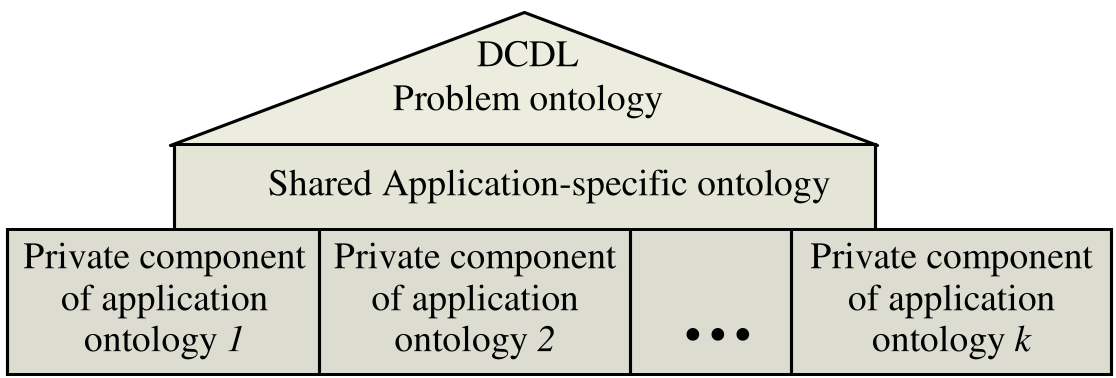 Figure 1: The hierarchical structure of the proposed DCS MAS ontology.
Solving Key Technical Challenges
The paper goes beyond theory to provide concrete engineering solutions for three major distributed learning hurdles:
1. Entity Instance Identification
If Source A has data on "Object 123" and Source B has different data on the same "Object 123," how does a meta-classifier know they refer to the same entity? The authors introduce an Entity Identifier (ID Entity). It acts as a primary key calculated via a shared rule, allowing agents to gather fragments of a single object from across the network without centralizing the database.
2. Scale Non-Coherency
If different sensors measure temperature in Celsius and Fahrenheit, the system fails. The Shared Application Ontology provides transformation algorithms at the meta-level. Data is transformed from the primary scale to a common scale before being used by classifiers.
3. The Gateway Problem: Ontology vs. SQL
Agents speak the language of "ontology notions," but databases speak SQL. To bridge this, the authors utilize Database VIEW objects.
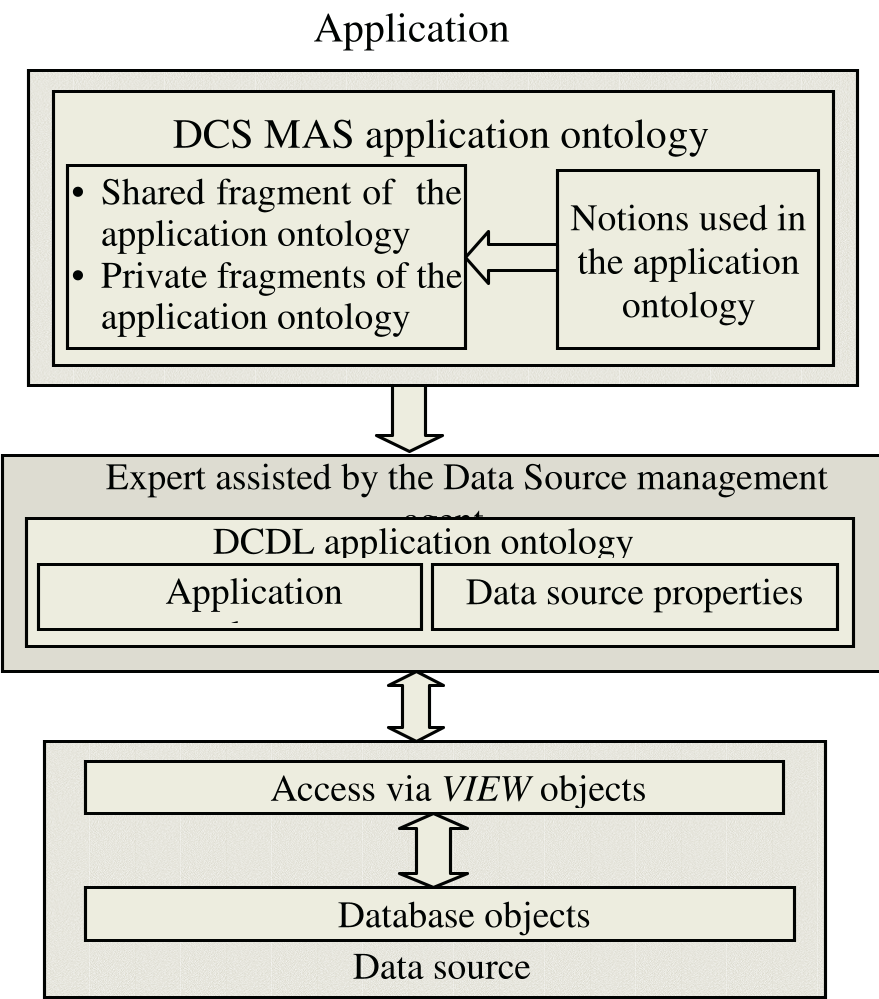 Figure 2: The three-level access mechanism using VIEW objects to provide a gateway from ontology to source data.
This approach is particularly elegant because:
- Performance: Transformations are handled by the DB server kernel.
- Security: VIEWs only expose what is necessary, preserving local data privacy.
Multi-Agent Architecture for Learning
The authors propose a dual-layer MAS architecture divided into Source-based agents (handling local data) and Meta-level agents (handling aggregation).
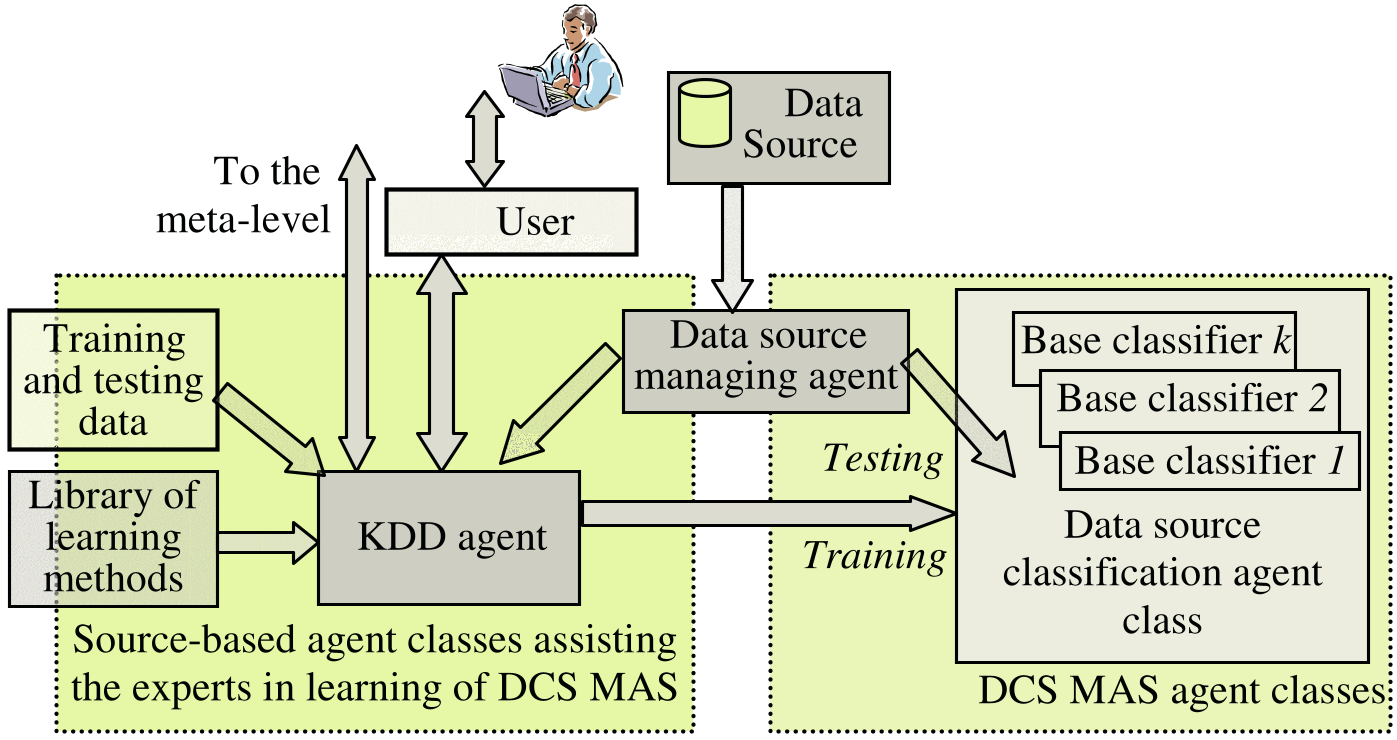 Figure 3: Roles of Meta-Learning agents (KDD Master) and Decision Combining agents in the architecture.
Critical Analysis & Conclusion
This paper serves as a bridge between Knowledge Engineering and Distributed Machine Learning. While many modern approaches focus on the mathematics of federated learning, Samoylov and Gorodetsky remind us that without a robust semantic infrastructure, the data itself remains "silent" or, worse, "misleading."
Takeaway: The "Agent-Mediated Software Engineering" approach discussed here is a precursor to modern "AI Agent" workflows. By formalizing the Task Ontology, developers can ensure that even as the scale of distributed data grows, the integrity of the decisions produced remains rock-solid.
Limitations: The paper primarily utilizes a "top-down" protocol for ontology design, which may limit flexibility in dynamic environments where data sources join and leave the network frequently. Future work should explore "bottom-up" or "emergent" ontologies for even more volatile distributed systems.