
Navigating the Semantic Web: A Knowledge Repository for Ontology Learning Tools
15555_Knowledge Repository of Ontology Learning Tools from Text.
This paper proposes a comprehensive knowledge repository for Ontology Learning (OL) tools from text. It integrates a comparative analysis of 22 distinct tools (such as ASIUM, Text-To-Onto, and OntoLearn) and implements an OWL-based reasoning mechanism to facilitate the selection of appropriate tools based on user-defined technical requirements.
TL;DR
The explosion of unstructured Web data has made manual ontology construction nearly impossible. This paper introduces a specialized knowledge repository that formalizes and categorizes 22 major Ontology Learning (OL) tools. By using an OWL-based reasoning engine, it allows researchers to find the perfect tool based on specific technical "profiles," such as learning techniques (ML vs. NLP) or desired outputs (Taxonomy vs. Axioms).
Background: The Knowledge Acquisition Bottleneck
As the Web transitions from a simple information space to a massive service repository, the need for interoperable semantics has never been higher. Ontologies provide the backbone for this "Semantic Web," yet they are costly and difficult to maintain. While "Ontology Learning" (OL) aims to automate this via text mining and machine learning, the field is currently a "Wild West" of fragmented tools, each with different inductive biases and requirements.
The "Layer Cake" of Ontology Learning
The author roots the methodology in the Ontology Learning Layer Cake, which structures the extraction process into a hierarchy:
- Terms: Identifying domain-specific vocabulary.
- Concepts: Grouping terms into abstract entities.
- Taxonomie Relations: Establishing "is-a" hierarchies.
- Non-Taxonomic Relations: Mapping complex domain interactions.
- Axioms: Formalizing logic and constraints.
Methodology: Formalizing the Toolbox
The core contribution is not a new extraction algorithm, but an Intelligent Knowledge Repository. The author uses set theory to formalize the relationship between tools () and features ():
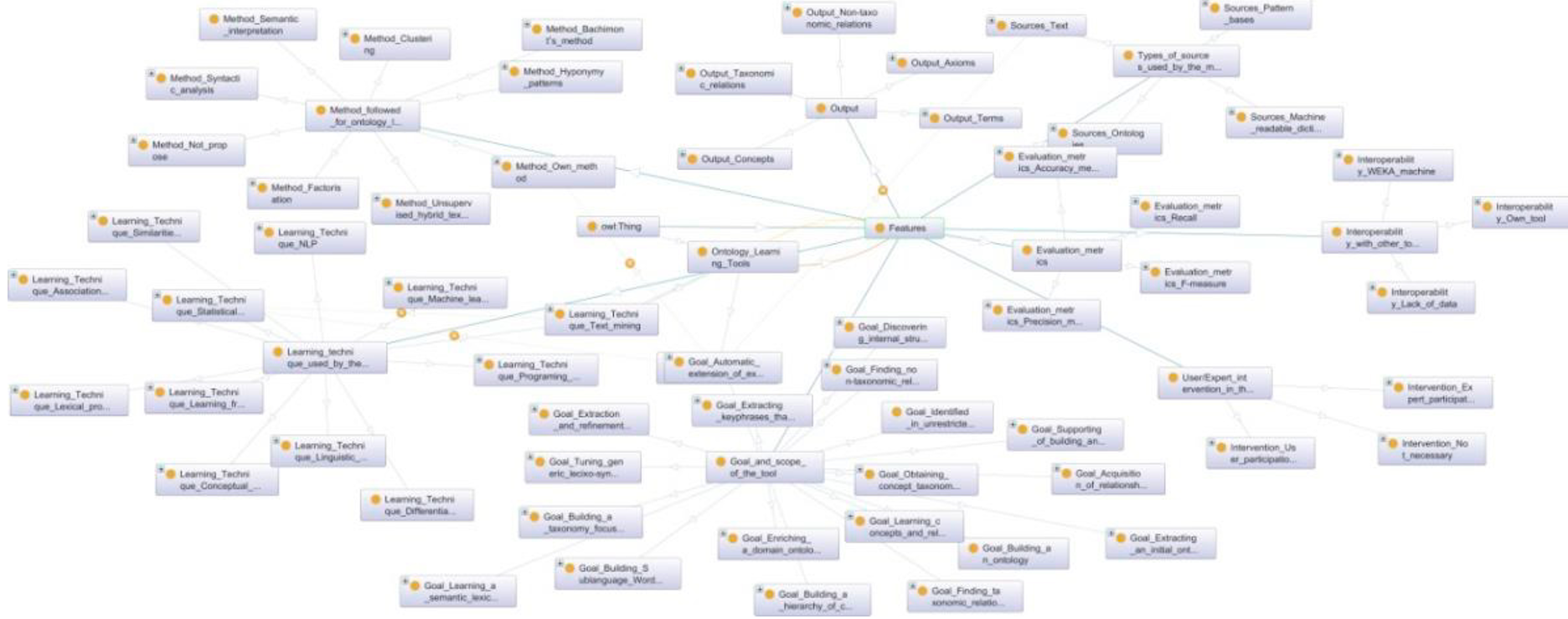 Figure 1: The conceptual hierarchy of the OL tool repository.
The repository was built in Protégé using the Web Ontology Language (OWL). It covers:
- Goal & Scope: Does the tool extract keyphrases or tune lexico-syntactic patterns?
- Learning Techniques: Is it based on conceptual clustering, association rules, or NLP?
- Human Factor: Is expert or user intervention necessary? (A critical distinction for scalability).
Results: Reasoning Over Tools
To prove the utility of the repository, the author posed Competency Questions using Description Logic (DL). For example, a user might ask: "Find me a tool that uses a statistical approach on raw text via its own proprietary method, but still allows for expert oversight."
Using the HermiT reasoner, the system filtered the 22 tools to find specific matches, effectively acting as a "search engine" for academic tools.
 Figure 2: Visualizing the results of a competency question using the OWLViz tool.
The study Highlights:
- ASIUM and Text-To-Onto remain benchmarks for taxonomic relations.
- OntoGain stands out for unsupervised acquisition from plain texts.
- There is a noticeable gap in tools that can effectively extract Axioms automatically, with only TextStorm and Clouds showing significant capability here.
Critical Insight: Why This Matters
The value of this paper lies in its systematization. For practitioners, it provides a roadmap to avoid "reinventing the wheel." However, the author honestly notes a limitation: the rapid pace of AI. Since the repository is built on classical ML and NLP tools (ASIUM, KEA, etc.), there is a massive opportunity to update this repository with LLM-based (Large Language Model) ontology learning agents, which are currently disrupting the "Layer Cake" by handling multiple layers simultaneously.
Conclusion
By integrating 22 tools and 65 features into a single interoperable model, this work provides a much-needed structural view of the ontology learning landscape. It successfully combines the computational speed of automated extraction with the logical precision of semantic modeling.
Editor's Note: For a detailed comparison of all 22 tools across all 57 features, refer to the extensive matrix provided in Appendix A of the original manuscript.