
OOLO: Beyond XML — Transforming Corporate Wikis into Semantic Learning Objects
Ontology for organizational learning objects based on LOM standard
This paper presents the Ontology for Organizational Learning Objects (OOLO), a semantic framework based on the IEEE LOM (Learning Object Metadata) standard. It aims to organize knowledge generated in collaborative workplace tools (like wikis) into reusable "learning objects" specifically tailored for software development and knowledge-intensive organizations.
TL;DR
Knowledge-intensive organizations often "leak" expertise because collaborative content in wikis and blogs is unstructured and hard to reuse. This paper introduces the Ontology for Organizational Learning Objects (OOLO), which moves beyond the limitations of the IEEE LOM standard and XML-Schema. By using OWL and FOAF, the authors create a semantic layer that understands not just what a document is, but who created it, which project it belongs to, and how it should be reused within a corporate lifecycle.
The Problem: The "Education Bias" in Metadata Standards
Current standards like LOM (Learning Object Metadata) and SCORM were born in the classroom. They are excellent for describing a "History 101" course but fail in a software Engineering firm. They cannot answer:
- Context: Was this wiki page created specifically for "Project X"?
- Trustworthiness: Was this "Requirement Document" reviewed by a Senior Architect or a Junior Developer?
- Scope: Is this technical snippet safe for external clients, or is it internal IP?
Furthermore, these standards rely on XML-Schema. In the world of AI and Knowledge Graphs, XML is "semantically thin"—it cannot handle inheritance (Is-a relations) effectively, nor can it use automated reasoners to check if the metadata actually makes sense.
Methodology: Building a Smarter Metadata Framework
The authors followed the Methontology framework to transition from a flat metadata list to a formal ontology.
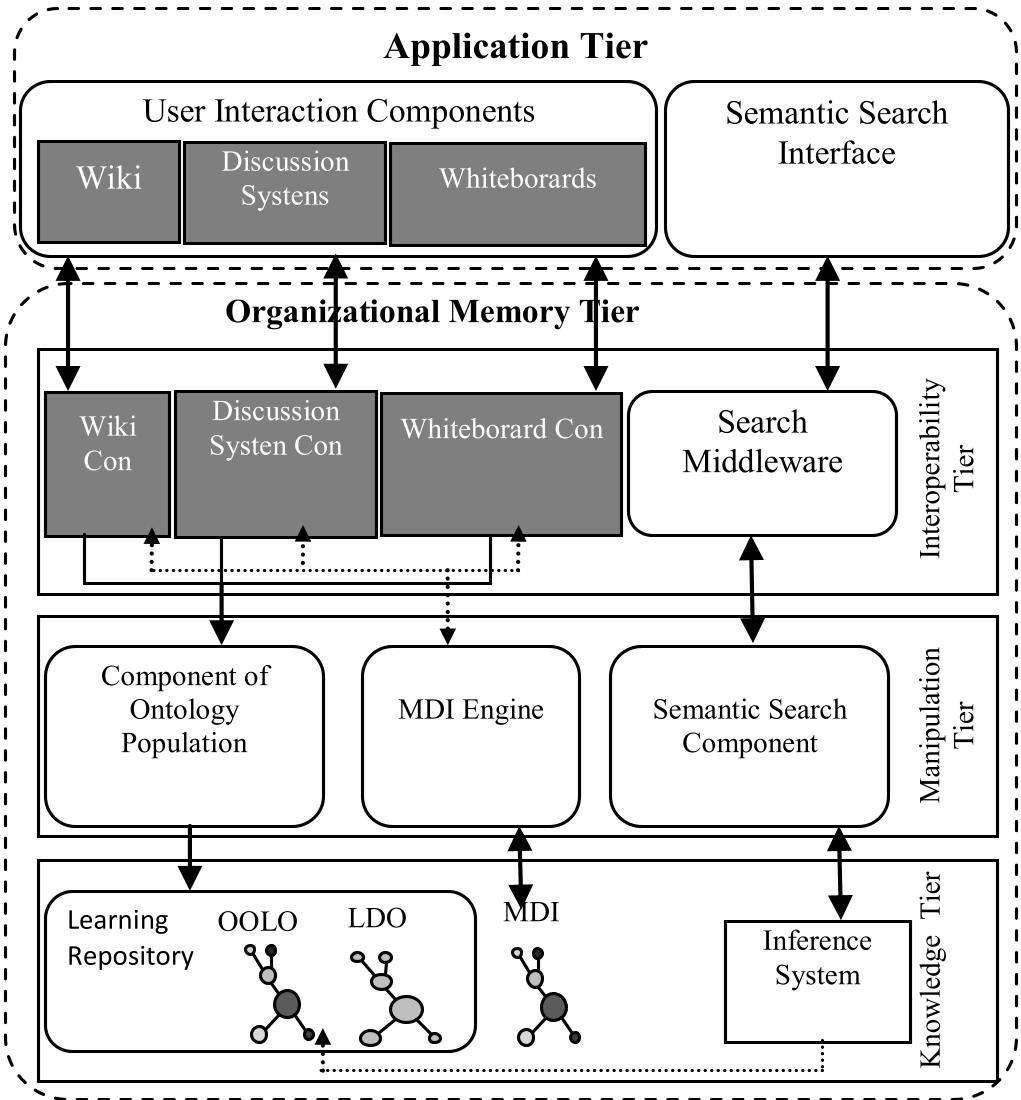
1. The Architectural Bridge
The OOLO acts as the "Knowledge Tier" in a larger semantic environment. It takes input from collaborative tools (Application Tier) and converts them into structured Learning Objects.
2. Extending LOM for Organizations
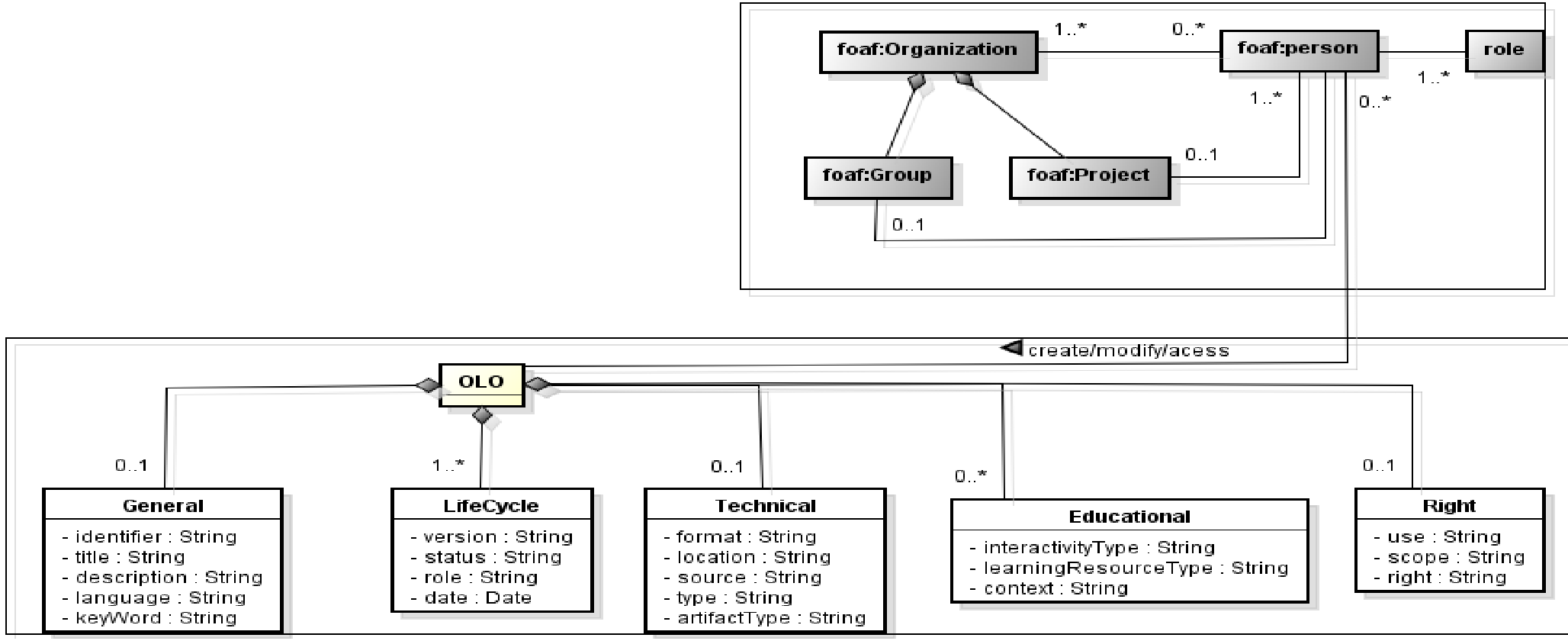
OOLO keeps the core of LOM (General, Technical, Educational) but injects mandatory organizational fields:
- Artifact Type: Is it a Stakeholder Request, a Software Architecture Document, or a Test Plan?
- Scope: Is the access level Group, Project, or Organization-wide?
- Social Connection (FOAF integration): It links objects to specific people and their roles (Author, Reviewer, Publisher).
3. Formal Axioms
Unlike a simple spreadsheet, OOLO uses first-order logic to define rules. For example:
"An object must have exactly one General, Technical, and Educational property, but can have multiple Life Cycle entries."
Experiments: Querying the Organizational Memory
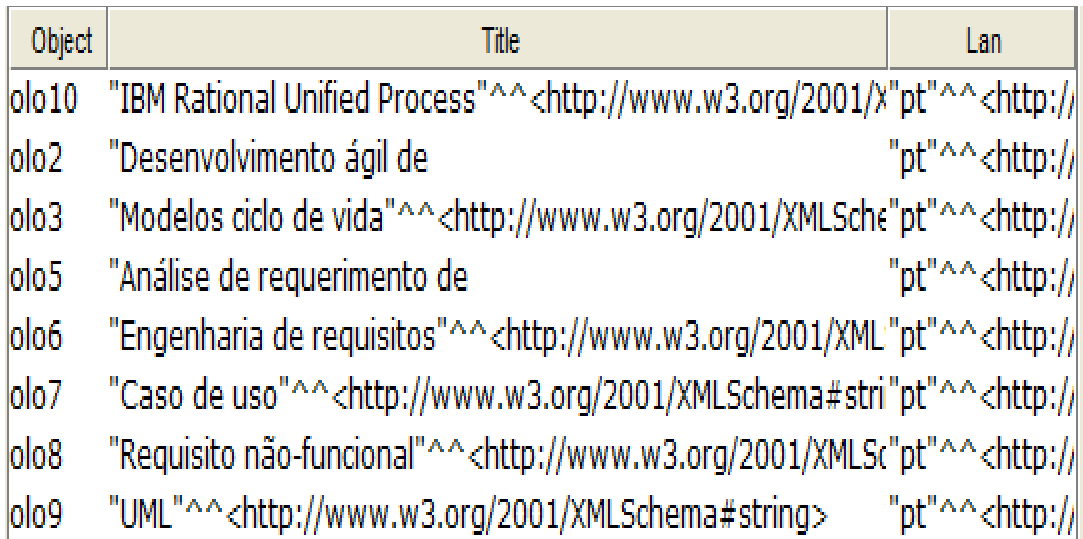
The authors implemented OOLO in Protégé and tested it using software engineering wiki pages as instances. By using SPARQL, they demonstrated that they could perform complex "hidden" queries that current LMS systems struggle with.
For example, they easily filtered for all Portuguese-language Learning Objects created for specific internal development cycles, something that would require manual tagging or fragile keyword searches in a traditional system.
Critical Insight: Why This Matters for the Future of Work
The real value of OOLO isn't just "better tagging." It is the ability to use Reasoners. In a large company with 100,000+ documents, human error in metadata is inevitable. A semantic reasoner can automatically flag a document if its "Status" is "Revised" but it lacks a "Reviewer" role—ensuring the high quality of Organizational Memory.
Limitations & Future Work
While OOLO is robust, it still requires manual or semi-automated population. The next logical step is using Natural Language Processing (NLP) to automatically map wiki text to OOLO concepts, reducing the overhead for developers who find manual metadata entry tedious.
Conclusion
OOLO successfully bridges the gap between academic learning standards and the messy, fast-paced reality of corporate knowledge management. By providing a formal semantic structure, organizations can finally turn their internal "knowledge silos" into a searchable, reusable, and logically consistent asset.