
Ontology Reconsidered: Embracing the "Kluge" for Broad-Domain AI
Ontology Reconsidered
This paper proposes a decentralized, biologically-inspired "Kluge" architecture for ontology-based reasoning. It introduces a multi-node "choir" system that utilizes parallel domain-specific ontologies and a fuzzy matching strength mechanism to handle ambiguity and cross-domain reasoning in AI systems.
TL;DR
Ontologies are the backbone of the Semantic Web and Knowledge Engineering, but they often break when forced into broad, cross-domain applications. This paper argues that instead of seeking a singular "Upper Ontology," we should mimic the human brain's evolutionary "kluge"—a collection of imperfect, specialized systems working in a parallel "choir" to resolve ambiguity through competition and fuzzy matching.
The Evolution Trap: Why Universal Ontologies Fail
The pursuit of a unified, elegant "Upper Ontology" has long been a goal in AI, yet it remains elusive. The author identifies three core barriers:
- Language Ambiguity: Human language is inherently imprecise; artificial languages that remove this ambiguity fail to interface effectively with human users.
- Mapping Complexity: Aligning or merging multiple ontologies is computationally expensive, often reaching time complexity.
- The Consistency Paradox: In a broad domain, maintaining global logical consistency is nearly impossible, as different domains project identical terms in contradictory ways.
The author draws a bold parallel to Evolutionary Biology. Evolution doesn't produce "elegant" engineering; it produces a "Kluge"—a hodgepodge of opportunistic solutions that work just well enough to survive.
Methodology: The "Choir" Architecture
The proposed "Kluge Solution" avoids the trap of a single world view. Instead, it employs a distributed architecture where multiple nodes operate in parallel.
1. The Anatomy of a Node
Each node in the "choir" is a self-contained unit consisting of:
- I/O Communications: Receives queries.
- Domain-Specific Ontology: Small, manageable knowledge bases (e.g., a FOAF ontology).
- Rule Engine & Memory: Processes matches using a "General" rule set (standard matching) and a "Specific" rule set (domain-specific logic).
2. The Matching Strength Model
To handle the transition from symbolic logic to human usage, the system uses WordNet synsets to precompile synonyms. Instead of a binary "True/False" match, it calculates a Match Strength:
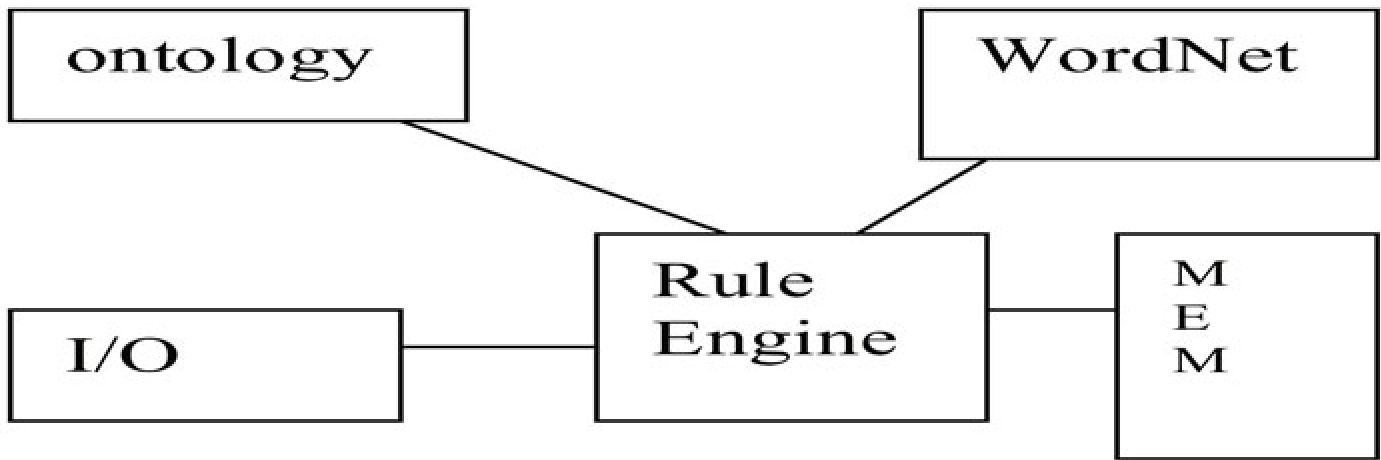 Figure 1: The architecture of the "choir" system, illustrating parallel nodes competing to interpret an input query.
Experiments and Insights
The system's efficiency comes from its parallel nature. When a query is entered, every node in the "choir" evaluates it simultaneously.
- Competitive Interpretation: Several domain nodes might respond to a query. The "strength" acts as a Fuzzy Confidence Level, allowing the system to either select the strongest domain or maintain multiple interpretations in parallel.
- Ontology Alignment: By observing which ontologies consistently co-occur in high-strength partitions for the same queries, the system can dynamically discover relationships between different ontologies without manual merging.
Critical Analysis: A Paradigm Shift
The core insight here is that intelligence is messy. By moving away from the "Upper Ontology" problem, the author suggests that AI can become more scalable and "human-like" by:
- Reducing the scope of individual ontologies to maintain local consistency.
- Utilizing the "Darwin Machine" approach to let different knowledge representations compete for relevance.
Limitations: Currently, the strength model is in its infancy. For the system to be truly robust, it needs a more precise way to rate similarity relative to specific domains and a mechanism to dynamically import and "trust-rank" external ontologies found on the web.
Conclusion
This paper serves as a reminder that the path to General AI might not lie in cleaner code or more rigid logic, but in an "engineered kluge" that accepts and manages the messy, ambiguous nature of human knowledge. As we look toward future product development in AI, moving from monolithic architectures to competitive, parallel "choirs" of agents may be the key to breaking the bottleneck of knowledge integration.