
CNN for Ontology Semantic Integration: Bridging the Gap Between Symbols and Intelligence
Ontology semantic integration based on convolutional neural network
This paper proposes a text-based ontology semantic integration framework utilizing Convolutional Neural Networks (CNN) to enhance information retrieval and sentiment analysis. By combining CHI-based feature extraction with deep learning, the method achieves superior classification results on Weibo and movie review datasets compared to traditional baselines like SVM and NB.
TL;DR
In the landscape of modern cyber intelligence, the ability to "understand" text rather than just "match" keywords is paramount. This paper presents a robust framework for Ontology Semantic Integration by leveraging Convolutional Neural Networks (CNN). By moving beyond traditional vector space models and incorporating X2 statistical feature selection, the authors achieved an impressive 97% F1-measure in classifying complex semantic data from social media.
The Core Challenge: Why Traditional NLP Fails
Most prior works in semantic analysis rely on the Bag-of-Words (BoW) or Continuous Bag-of-Words (CBOW) models. While effective for simple classification, they possess a fundamental flaw: they ignore word order.
In a sentence like "I do not hate this movie," a BoW model sees "hate" and "not" separately. Without capturing the local interaction between these words, the machine might classify a positive review as negative. While N-grams attempt to fix this, they suffer from a parameter explosion—doubling or tripling the vocabulary size for every additional word in the sequence, making them computationally unfeasible for large-scale ontology integration.
Methodology: The CNN Advantage
The authors argue that the convolution operation—originally designed for computer vision—is perfectly suited for text because it acts as a "sliding window" that captures local semantic patterns.
1. Preprocessing and Feature Squeezing
Before the neural network even sees the data, the paper employs X2 statistics (CHI). This is a crucial step for dimensionality reduction. By calculating the correlation between specific terms () and categories (), the system filters out noise and keeps only the most discriminative "informational anchors."
2. The CNN Architecture
The model uses a multi-layered approach:
- Convolution Layer: Captures local features of consecutive words (e.g., bi-grams or tri-grams).
- Pooling Layer: Performs down-sampling (Max-pooling or Mean-pooling) to extract spatial invariance and reduce computational load.
- Shared Weights: Unlike fully connected networks, CNNs share weights across different regions of the text, drastically reducing the number of parameters.
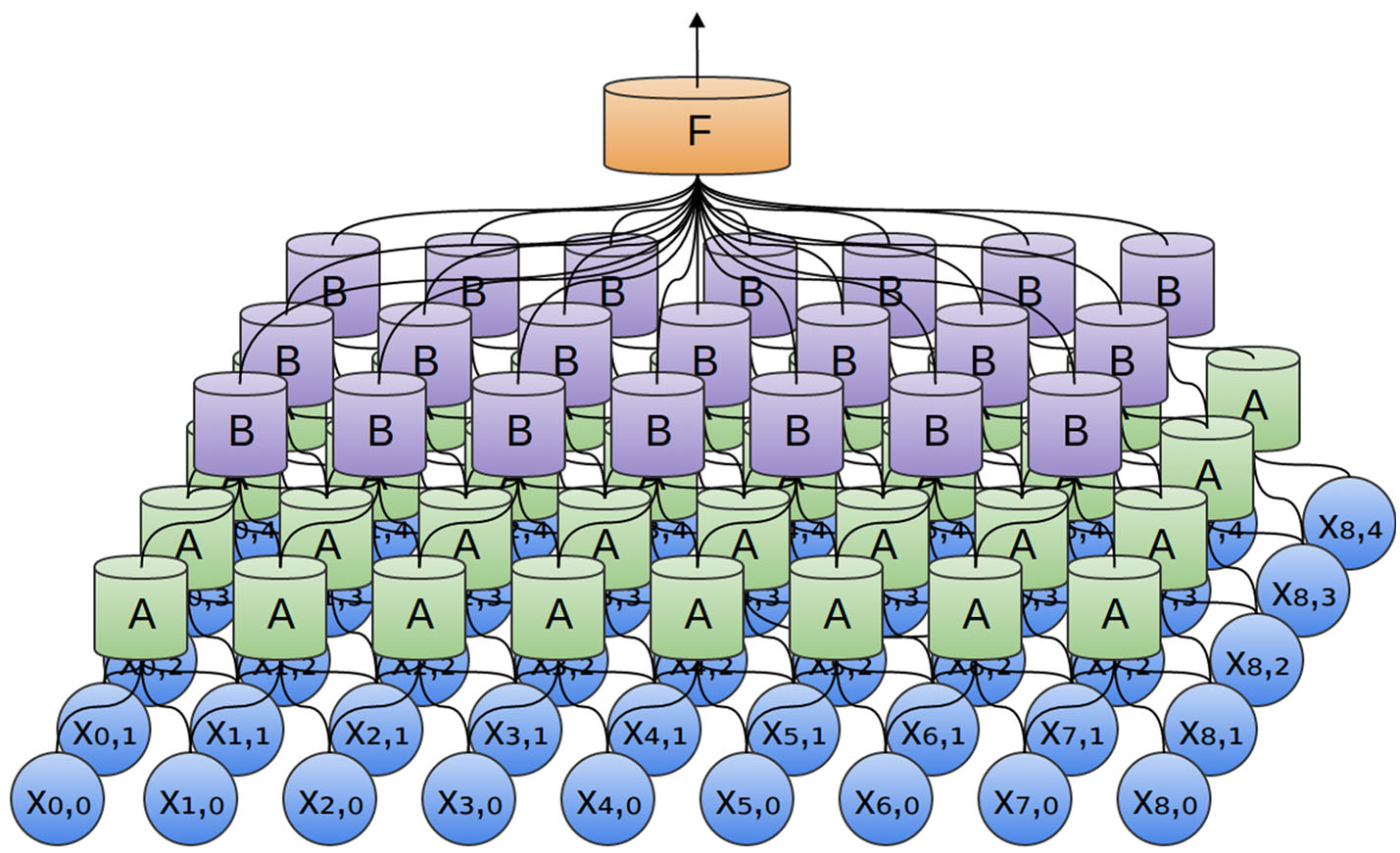 Figure 1: The CNN architecture used for text filtering and semantic feature mapping.
Experimental Performance: SOTA Results
The authors validated their method using MATLAB on diverse datasets, including Weibo (Chinese social media) and Movie Reviews (MR).
The results (Table 1) show a clear dominance of the CNN approach:
- Precision: 93.47% (vs. NB's 91.55%)
- Recall: 96.83% (vs. KNN's 94.74%)
- F1-Score: 97.35% (the unified metric for accuracy and recall)
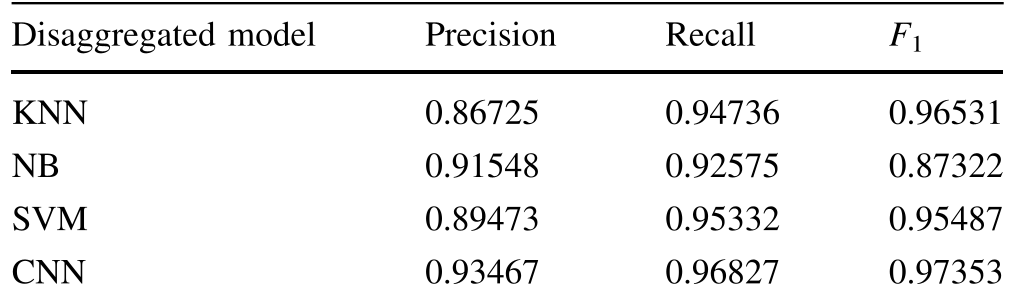 Table 1: Comparison between KNN, Naive Bayes (NB), SVM, and the proposed CNN model.
Robustness to Text Length
One of the most significant insights from the discussion is the model's performance on long-form text. While traditional models see a sharp decline in accuracy as sentences exceed 30-40 words, the study's DSM-CNN (Document Semantics Memory CNN) maintains high precision by effectively utilizing LSTM-like memory structures to handle long-distance semantic relations.
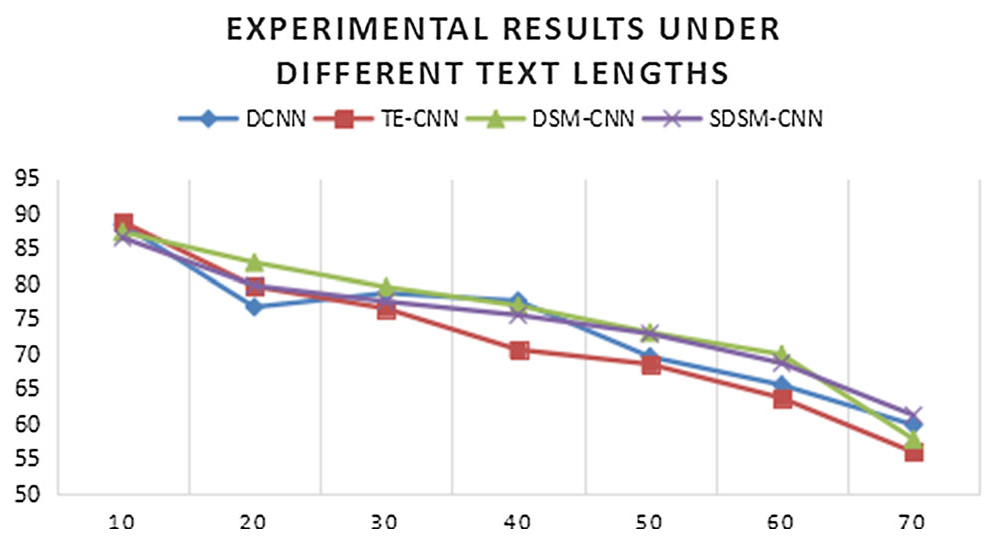 Figure 2: Analysis of accuracy versus text length, showing the stability of the proposed CNN variants.
Final Insight: The Future of Cyber Intelligence
This paper proves that "black box" models like CNN can be grounded with Ontology-based knowledge to provide more accurate public opinion monitoring and financial analysis. By combining statistical rigor (CHI) with the structural efficiency of CNNs, the authors have provided a blueprint for systems that don't just "see" data—they "interpret" it.
Limitations: The model still struggles with extremely rare "unregistered" words and requires significant labeled data for supervised training. Future shifts toward unsupervised CNN learning and Transformer-based attention mechanisms will likely be the next frontier in solving these remaining hurdles.