
ONTOMSN: Bridging the Semantic Gap in Medical Social Networks
ONTOMSN: Medical social network ONTOlogy
The paper introduces ONTOMSN, a formalized ontology specifically designed for the Medical Social Network (MSN) domain. By adhering to the Noy and McGuinness methodology, it establishes a structured hierarchy of medical entities like Doctors, Diseases, and Discussions to facilitate shared understanding and data interoperability.
TL;DR
Current social media analysis lacks the rigorous semantic structure required for the medical field. ONTOMSN is a new dedicated ontology that formalizes concepts like doctors, diseases, and medical discussions into a cohesive hierarchy. Validated by the Fact++ reasoner, it provides a scalable blueprint for sharing and reusing medical social knowledge.
Problem & Motivation: The Need for Medical Semantics
Social networks have revolutionized how information is exchanged, but in the medical domain, "information" is high-stakes and highly structured. General-purpose social network ontologies (like FOAF) are too generic to capture the nuances of a clinical discussion or a physician's specialization.
The authors identified a critical "drawback" in existing research: a lack of common understanding regarding the specific entities that define a Medical Social Network (MSN). Without a formalized ontology, data remains siloed, inconsistent, and difficult for automated agents to process for tasks like expert discovery or disease trend analysis.
Methodology: The Seven-Step Engineering Approach
The development of ONTOMSN follows the classic Noy and McGuinness 101 methodology, ensuring the ontology is both robust and practical.
- Scope Definition: Targeting complex social rule discovery (e.g., identifying which doctor discusses which disease in which location).
- De Novo Construction: Because existing medical ontologies didn't satisfy MSN interaction requirements, the authors opted for a "from scratch" design.
- Class Hierarchy: The core of the work involves a Top-Down approach, establishing general concepts before specializing them.
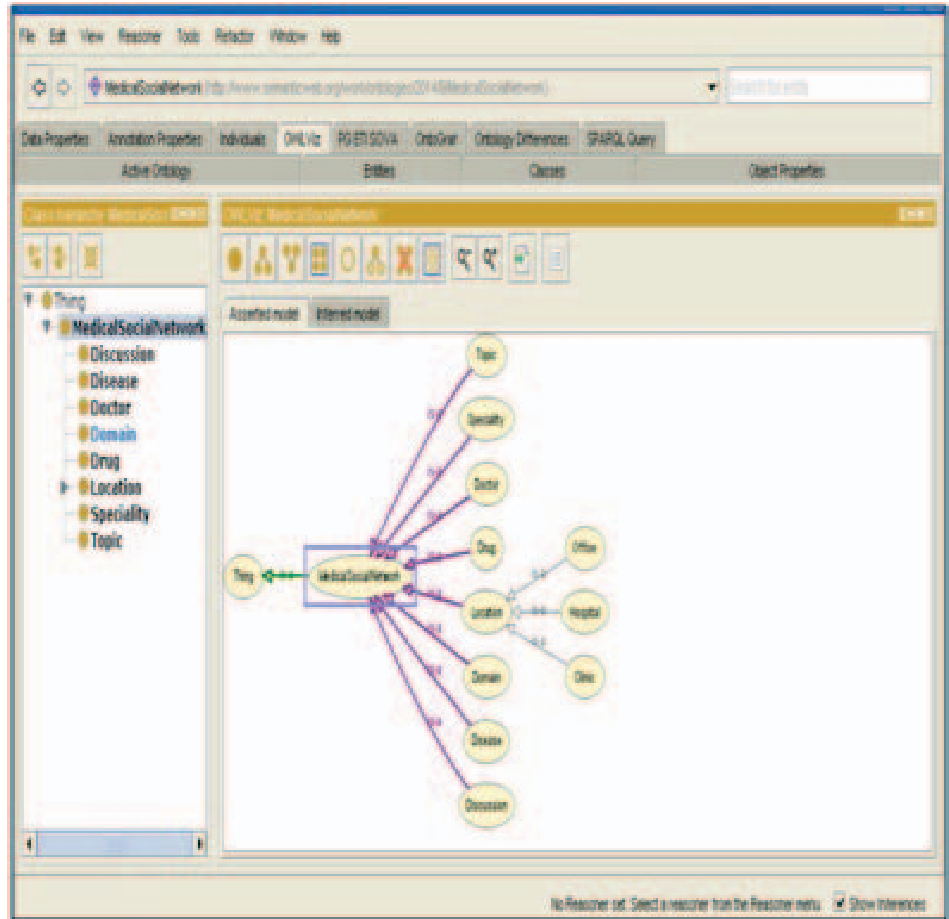
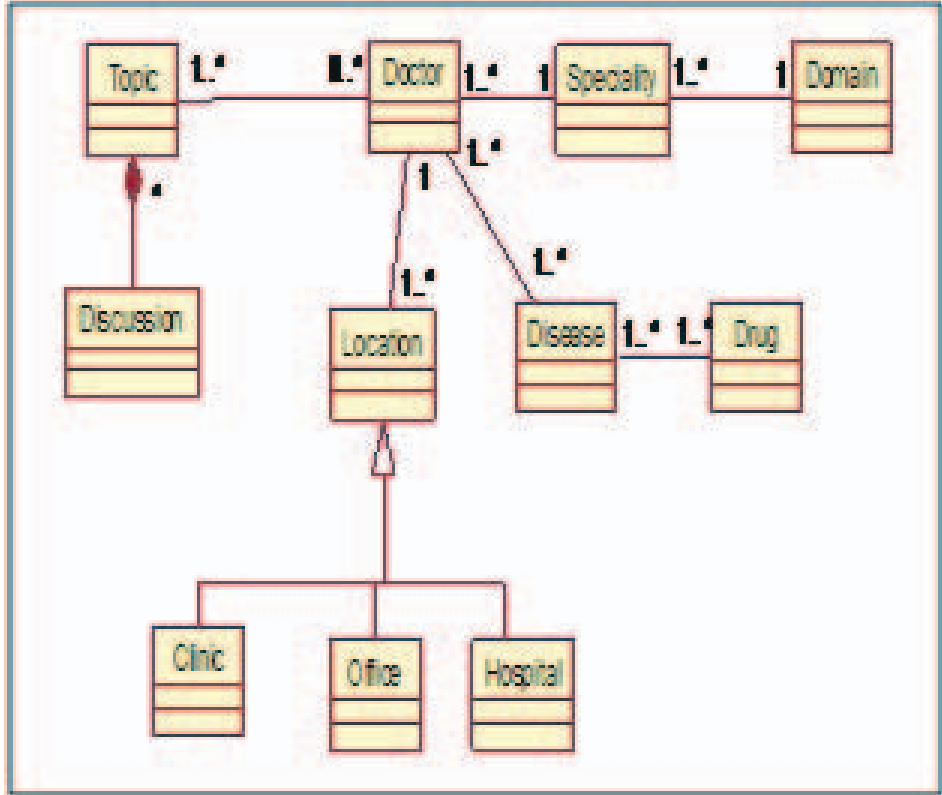
Key classes include:
- Doctor: Defined by attributes like name, specialty, and birth date.
- Location: Specialized into sub-classes such as Clinic, Hospital, and Office.
- Discussion: Capturing the actual interaction between actors in the network.
Experiments & Validation: Fact++ Reasoner
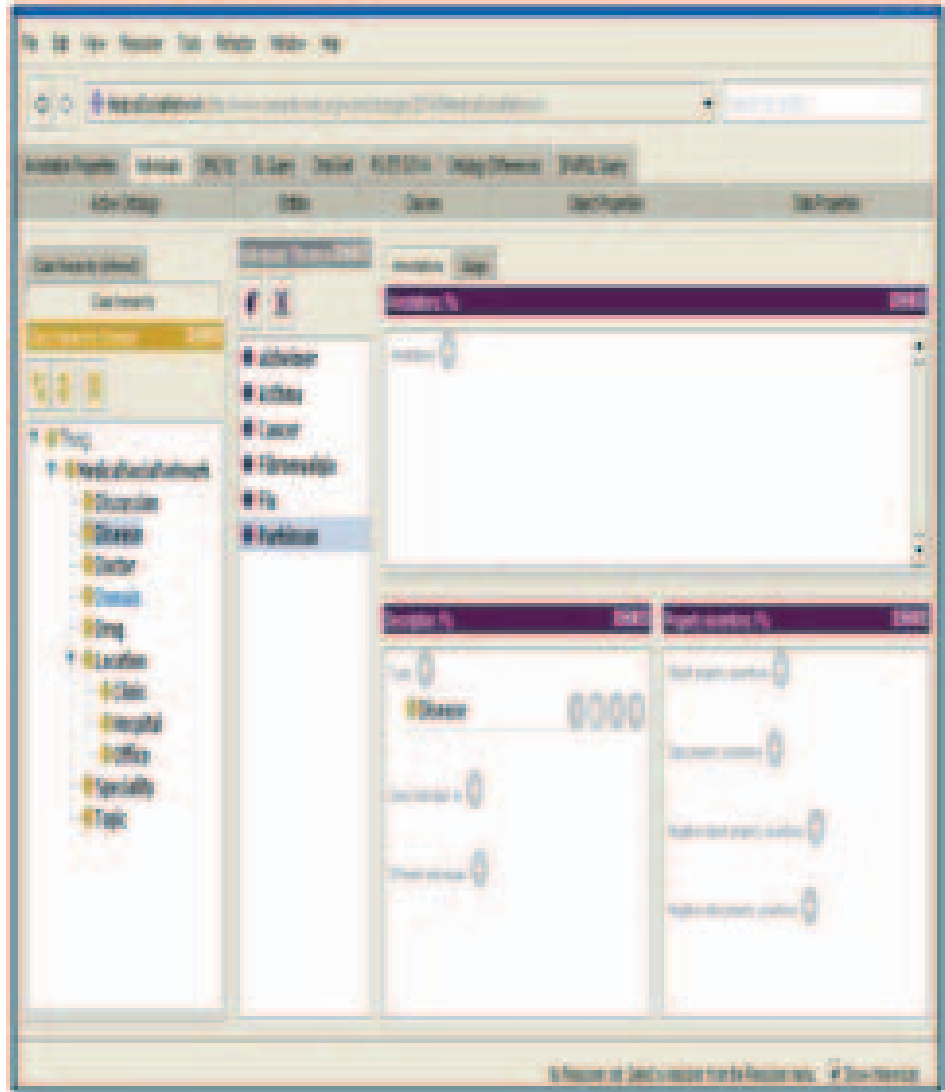
To move beyond theoretical modeling, the authors implemented ONTOMSN in Protégé and performed individual instance creation (e.g., a "Parkinson" instance).
The most critical phase was the Validation of Consistency. Using the Fact++ reasoner and Furst criteria, the authors tested the model for:
- Clarity: Definitions are unambiguous.
- Non-redundancy: Relationships and concepts do not overlap unnecessarily.
- Scalability: The structure allows for the future addition of new medical parameters without breaking the logic.
Critical Analysis & Conclusion
ONTOMSN represents a significant step toward "Semantic MSNs." By separating domain knowledge (what a doctor is) from operational knowledge (how a specific social app functions), the authors enable a future where medical data can be analyzed across different platforms.
Limitations: While the ontology is structurally sound, its current version is relatively "lean." In a real-world setting, integrating this with massive external knowledge bases like UMLS (Unified Medical Language System) would be necessary to handle the millions of specific medical terms and drug interactions that exist.
Future Outlook: The next logical step is applying this ontology to Big Data analysis. By mapping unstructured social media text to the ONTOMSN framework, researchers could build highly accurate recommendation engines for patients or real-time epidemic tracking systems.