
OntoWEDSS: Bridging Microbiological Intuition and Automated Decision-Support
OntoWEDSS: augmenting environmental decision-support systems with ontologies
The paper introduces OntoWEDSS, an augmented Environmental Decision-Support System (EDSS) for wastewater management. It integrates a domain-specific ontology (WaWO) with traditional Rule-Based Reasoning (RBR) and Case-Based Reasoning (CBR) to improve fault diagnosis and knowledge reuse in Wastewater Treatment Plants (WWTP).
TL;DR
OntoWEDSS is a sophisticated decision-support system designed for wastewater treatment plants (WWTP). By augmenting traditional AI reasoning (Rules and Cases) with a formal Domain Ontology (WaWO), it solves the "reasoning impasse" problem. It transforms raw sensor data and microbiological observations into actionable engineering decisions, boosting diagnostic accuracy up to 100% in specific scenarios.
Background: The Complexity of "Living" Systems
Managing a wastewater treatment plant is not merely a chemical engineering task; it is a biological balancing act. The "activated sludge" process relies on complex microbial communities. Traditional systems often fail because:
- Incomplete Knowledge: Rules cannot cover every anomalous biological state.
- Data Sparsity: Novel problems (cases) lack historical precedents.
- Semantic Confusion: Different plants use different terms for the same biological phenomena.
Methodology: The Hybrid Architecture
The core innovation of OntoWEDSS is its three-pillar reasoning strategy. While most systems rely on Rule-Based (RBR) or Case-Based Reasoning (CBR), OntoWEDSS introduces an Ontology-Based Reasoning layer.
1. The Integrated Logic
The system follows a prioritized workflow:
- First, it runs RBR and CBR in parallel.
- If they agree, the diagnosis is confirmed.
- If they disagree, a similarity threshold determines the winner.
- The Safety Net: If neither can reach a conclusion (an impasse), the ontology is invoked to reason through taxonomic relationships.
2. The WaWO Ontology
The Wastewater Ontology (WaWO) models the "Deep Knowledge" of the domain. It doesn't just list terms; it defines cause-effect relations such as Micro-organisms ↔ Problematic Situations.
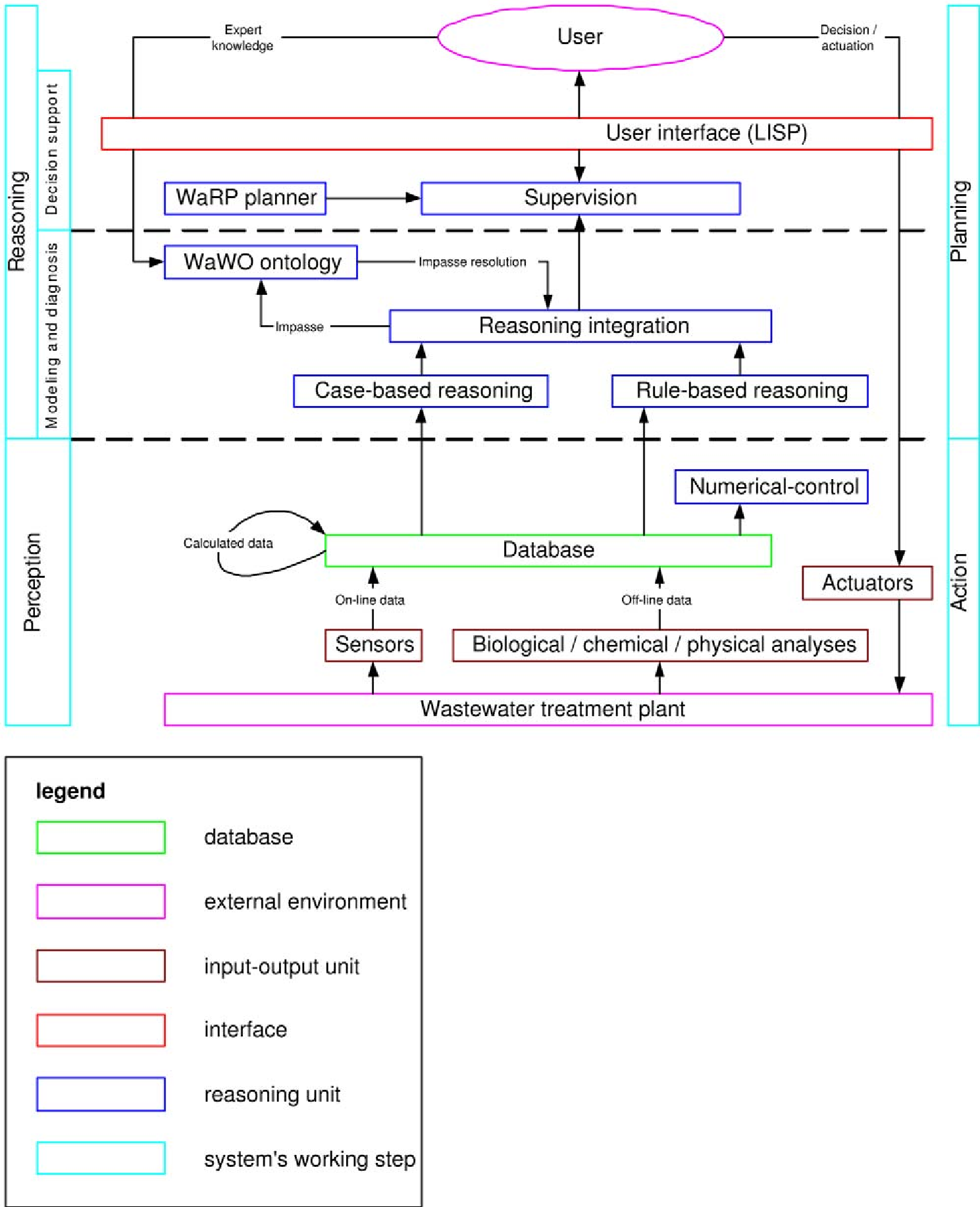 Figure 1: The layered architecture of OntoWEDSS showing the integration of RBR, CBR, and Ontology components.
Resolving Impasses: From Bacteria to Action
Consider a scenario where a plant operator observes an "excessive proliferation of filamentous bacteria." A traditional rule might look for a specific chemical trigger. If that trigger is missing from the data, the rule fails.
OntoWEDSS, however, uses the ontology to recognize that a specific bacterium (e.g., Microthrix parvicella) is a subclass of Filamentous-Bacteria. The ontology contains an axiom stating that an excess of this class results in a Bulking-Sludge state. Even without a direct rule, the system can "infer" the problem and suggest a non-specific solution, such as the addition of chlorine or coagulants.
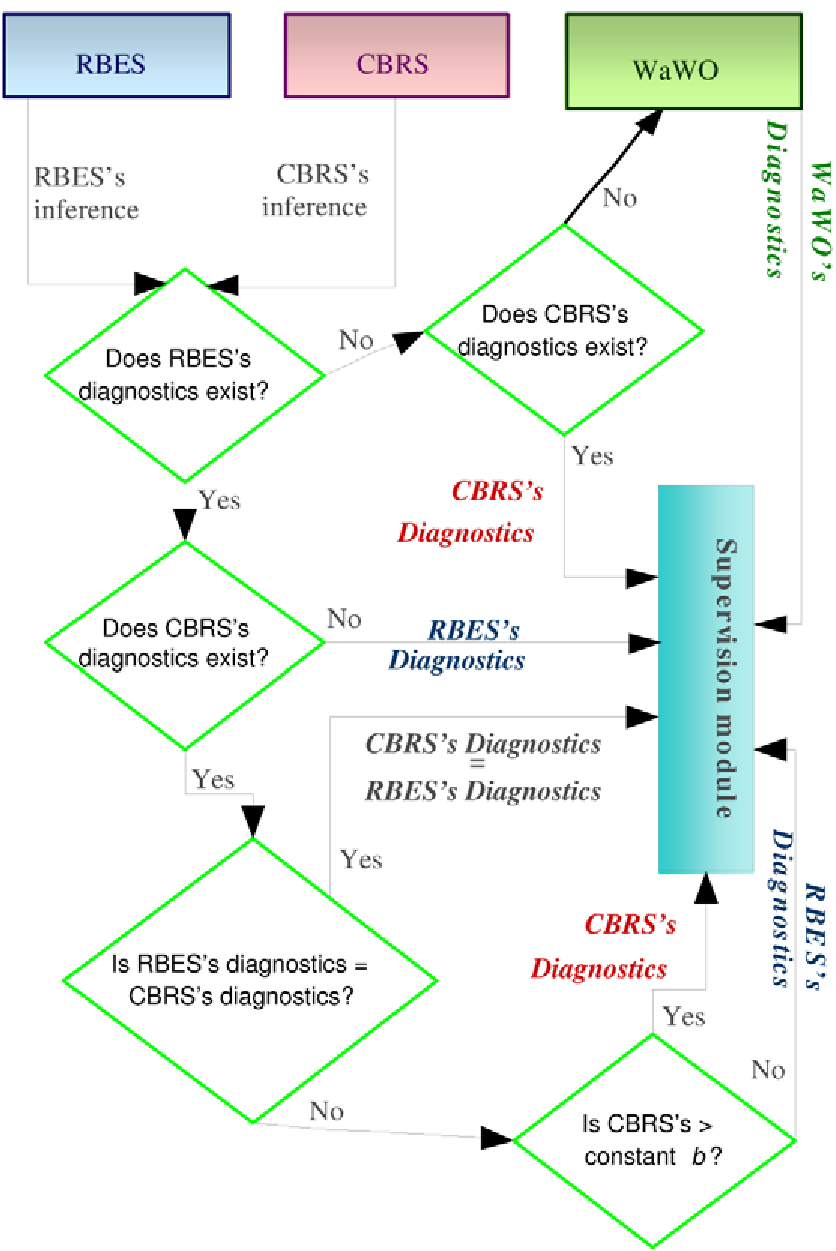 Figure 2: Simplified decision tree for filamentous bulking diagnosis.
Experimental Performance
The researchers tested OntoWEDSS against 10 specific "impasse" situations where prior versions of the software failed.
| Method | Success Rate | Reliability |
|---|---|---|
| Without Ontology | 60% - 73% | Medium |
| With OntoWEDSS (WaWO) | 73% - 100% | High |
The jump to 100% in some experiments was primarily due to the system's ability to utilize microbiological descriptors that were previously ignored by the rigid rule-based engines.
Critical Insight: Why This Matters
The true value of OntoWEDSS isn't just the accuracy boost—it's the portability. By separating the "World Knowledge" (Ontology) from the "Local Logic" (Rules), the system becomes much easier to deploy in new treatment plants. It provides a common language for machines and humans to communicate, moving us closer to the "Semantic Web" for industrial automation.
Conclusion & Future Outlook
OntoWEDSS successfully demonstrates that ontologies are the "glue" that can hold disparate AI techniques together. While the system was implemented in LISP (reflecting its era), the methodology of using semantic structures to resolve heuristic impasses remains a cornerstone of modern AI reliability. Future work would benefit from integrating these ontologies with modern probabilistic models to handle the inherent uncertainty of biological systems more gracefully.