
The Smart TV: A Familiar Gateway to Holistic Elder Care
An Open Architecture to Support Social and Health Services in a Smart TV Environment
This paper presents an open architecture for a Smart TV-based social and health services platform tailored for the elderly. It utilizes KODI as a media center foundation to integrate health monitoring, telecare, and social networking into a familiar 10-foot user interface.
Executive Summary
TL;DR: This research tackles the "digital divide" in elderly care by repurposing the most familiar device in the living room—the Television—into a sophisticated health and social hub. By building an open, service-oriented architecture on top of the KODI media center, the authors successfully integrated vital sign monitoring, cognitive stimulation, and social media into a single, non-intimidating ecosystem.
Context: Positioned at the intersection of Ambient Assisted Living (AAL) and Multimedia Computing, this work moves beyond simple "telecare pendants" to a proactive, holistic health ecosystem.
The Core Challenge: Tech Rejection in Aging Populations
As the global population over 60 is projected to hit 2 billion by 2050, the burden on formal caregivers is becoming unsustainable. While ICT (Information and Communication Technologies) solutions exist, they often fail for three reasons:
- Psychological Barriers: Seniors often view PCs and tablets as "too complex."
- Cost & Fragmentation: Services for medication, socialization, and medical monitoring usually require separate, expensive subscriptions and hardware.
- Intrusiveness: High-tech medical equipment can make a home feel like a clinical ward.
The authors' insight is simple: The TV set is a neutral territory. It is familiar, always present, and lacks the "fear factor" associated with modern computing.
Methodology: Building an "Ecosystem" Rather Than Just Apps
The researchers didn't just build a single app; they built an Open Architecture. Using a Home Theatre PC (HTPC) running KODI (formerly XBMC), they created a bridge between medical hardware and a 10-foot user interface.
Key Architectural Pillars:
- Unified Communications: Utilizing XMPP with custom extensions, the system can push "interrupts" or notifications (like medication reminders) even while the user is watching a standard broadcast.
- Peripherals Integration: Through Bluetooth and custom drivers, the platform connects to blood pressure monitors, WiiMotes for gesture control, and Microsoft Kinect for gait analysis.
- Modular Add-ons: The use of KODI add-ons allows for a "store-like" flexibility where new services (like a specific cognitive game) can be deployed without altering the core OS.
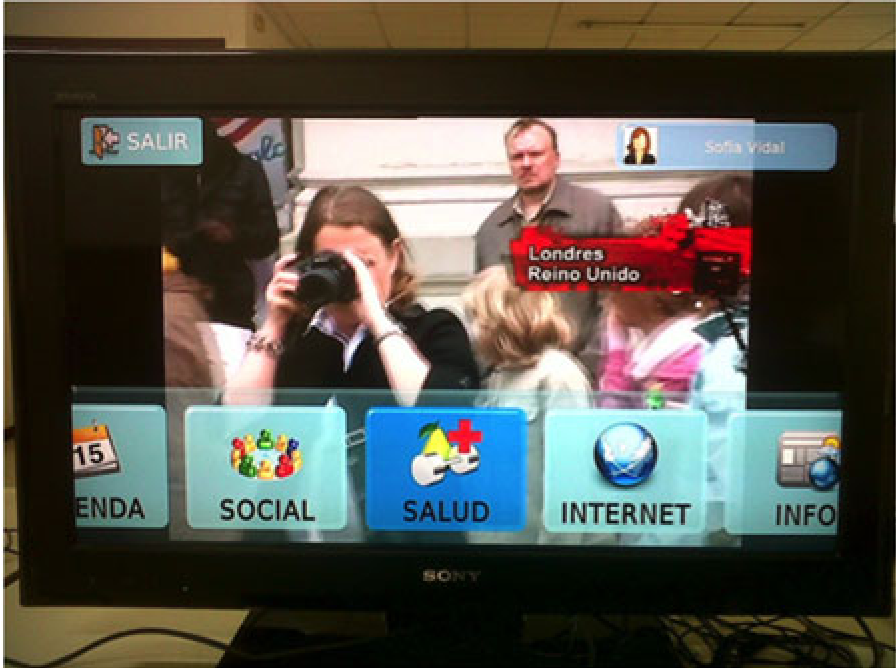
Real-World Validation: The Galicia Pilot
The system was tested with 62 senior citizens in rural and urban Spain. Unlike many lab-based studies, this was a field test in actual homes.
Key Findings:
- Usability Winner: 93% of users predicted the TV system would be easier than a PC; post-test results confirmed this perception.
- Preference for Wellness: The most popular services were cognitive "brain training" games and physical rehabilitation videos, indicating a strong desire among the elderly to maintain proactive control over their health.
- Bridging Modernity: 77% felt the platform brought them closer to new technologies, proving the TV can be a "stepping stone" to digital literacy.
| Service Category | Top Ranked Feature | Acceptance Rate |
|---|---|---|
| Cognitive | Memory & Sorting Games | 90%+ |
| Social | Facebook/Twitter Integration | 80%+ |
| Medical | Vital Signs Monitoring | High (Rule-based alerts) |
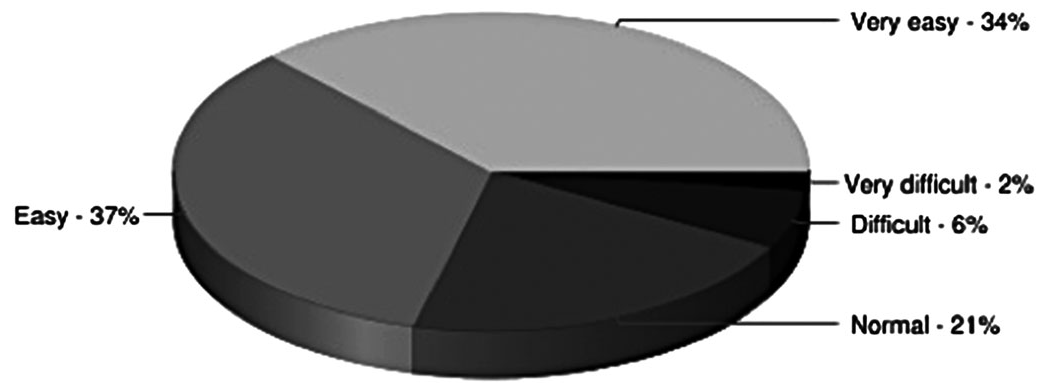
Critical Insight: Why This Matters
The breakthrough here isn't the hardware—it is the holistic integration. By combining "entertainment" (YouTube, Quizzes) with "necessity" (Blood Pressure, Reminders), the system ensures high daily engagement. Most medical devices are used only when the user is sick; this Smart TV ecosystem is used because the user is living.
Limitations & Future Work
While the HTPC approach works for a proof-of-concept, the industry is shifting toward proprietary platforms like Android TV and Apple TV. The challenge for future researchers will be maintaining this "openness" within the "walled gardens" of modern TV manufacturers. Furthermore, as the next generation of seniors (who are already tech-savvy) ages, the requirement for such "masking" of technology may decrease, but the need for integrated ecosystems will only grow.
Conclusion
This study proves that the most powerful tool for digital health in the home isn't the newest gadget—it is the one that has been sitting in our living rooms for decades, waiting to be made "smart."