
From Museums to Code: Bridging Cultural Heritage and Semantic Web Education
Open Cultural Heritage Data in University Programming Courses
This paper presents a university-level pedagogical framework led by KIT and FIZ Karlsruhe that integrates Open Cultural Heritage Data into a master-level "Information Service Engineering" (ISE) course. By leveraging the "Coding da Vinci" initiative, students developed four innovative applications using Semantic Web, Linked Data, NLP, and Machine Learning.
TL;DR
Can historical archives and museum data make students better engineers? This paper argues a resounding "Yes." By integrating Open Cultural Heritage Data into a Master's program at the Karlsruhe Institute of Technology (KIT), researchers demonstrated how "messy" real-world data from the Coding da Vinci initiative can spark creativity and technical mastery in Semantic Web, NLP, and Machine Learning.
Background Positioning: The Intersection of GLAM and CS
This isn't just a report on a programming class; it’s a case study in Information Service Engineering (ISE). It positions Cultural Heritage (part of the GLAM sector: Galleries, Libraries, Archives, and Museums) not just as a static subject for historians, but as a rich, complex playground for Semantic Web researchers.
The Core Motivation: Moving Beyond "Toy" Datasets
The pedagogical pain point is clear: many computer science students find Semantic Web technologies abstract. Building a basic ontology for a "University" or "Library" is dry. The authors propose that the inherent complexity and uncharted nature of historical datasets provide a superior inductive bias for learning.
- The Data Source: Coding da Vinci — Germany's first open cultural data hackathon.
- The Insight: By decoupling a high-pressure hackathon into a 14-week academic course, students can move past quick-and-dirty prototypes to implement rigorous, research-grade architectures.
Methodology: Four Pillars of Innovation
The course structure forced students to handle the full pipeline: Data Selection → Linked Data Engineering → Implementation → Evaluation.
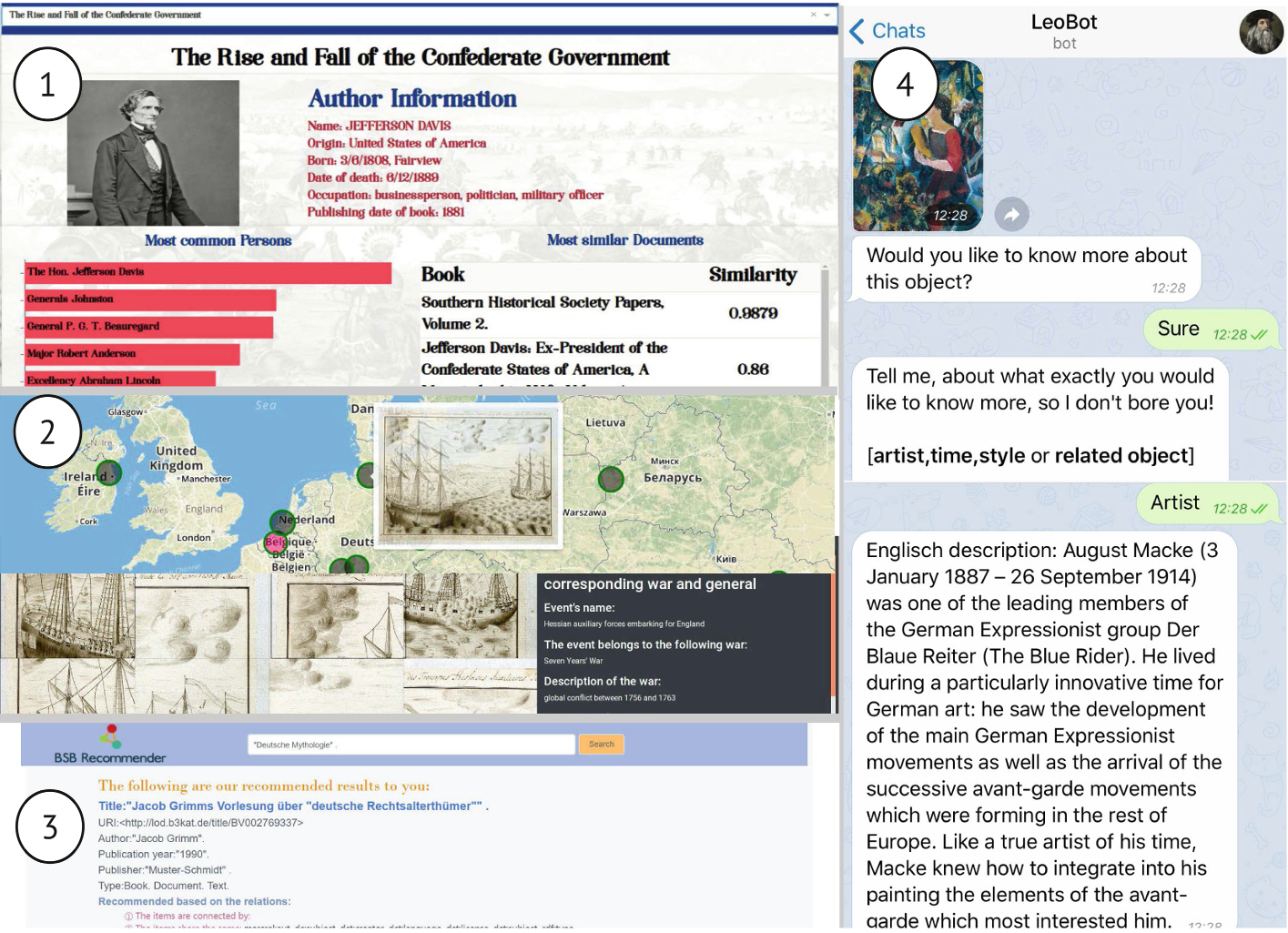 Figure 1: Visual overview of the student projects integrating historical data and web-based interaction.
The paper highlights four distinct technical approaches:
- Semantic Exploration: Using Word and Document Embeddings to analyze 19th-century USA texts, enriched via Wikidata.
- Gamified Education: A puzzle-based history app where completing a task triggers a SPARQL query to DBpedia for contextual historical facts.
- Big Data Recommenders: Handling a massive 135 GB dataset from the Bavarian State Library, utilizing semantic similarity to recommend books.
- Natural Language Interfaces: A Telegram Museum Chatbot for the Städel Museum that acts as a bridge between younger generations and classical art using Linked Data backend support.
Critical Results: The "Scale" Challenge
The results weren't just about "working code," but about dealing with data at scale.
- One group successfully managed over 100 million entities, proving that students can handle enterprise-level architecture when the domain (content-based book recommendations) is compelling.
- Evaluation by 37 participants in the "Gamification" project showed that the combination of entertainment and automatically generated knowledge from the Semantic Web significantly increased user engagement.
Deep Insights & Future Outlook
While the technical outcomes were impressive, the "Lessons Learned" section provides the most value for the academic community:
- The "Creativity Gap": Students not yet entrenched in the research community often find novel ways to bridge GLAM institutions and modern users.
- The Workload Trap: Working with real-world, often sparse or noisy historical data is time-consuming. The authors suggest that in the future, tutors must perform "pre-flight" data profiling to help students manage expectations.
Conclusion
This study proves that Cultural Heritage data is a goldmine for Linked Data pedagogy. It forces students to grapple with the "open world assumption," sparse properties, and huge datasets, turning them into engineers who don't just know how to code, but know how to extract meaning from the fragments of history.
Final Takeaway: For future AI/Semantic Web courses, the key to student engagement might just lie in the archives of the 19th century.