
Information as Power: How Open Data and Crowdsourcing Rewrite the Rules of City Planning
Open Data, Crowdsourcing, and City Planning A Novel Perspective on Public Participation in Planning and Public Governance
This paper explores the paradigm shift in urban planning and public governance in China driven by Open Data and Crowdsourcing. It introduces the Beijing City Lab (BCL) and its "Mega Model" framework, which leverages multi-source big data to achieve fine-grained, quantitative urban analysis at a national scale.
TL;DR
This seminal work argues that the rise of Open Data and Crowdsourcing is dismantling information monopolies in Chinese urban governance. By leveraging the "Mega Model" and platforms like Beijing City Lab (BCL), planners can now move beyond static, official statistics to embrace dynamic, human-centric data from OpenStreetMap and social media, fostering a new era of "bottom-up" public participation.
The Pain Point: The Two Monopolies of Information
For decades, urban planning in China has been a "top-down" technical tool restricted by two forms of information monopolization:
- Supply Monopolization: Planners relied exclusively on government-controlled data (survey maps, rough census stats) which are often "macro and rough," missing the granular nuances of individual behavior.
- Requirement Monopolization: Public participation was a mere formality. The feedback loop from citizens was non-existent, making the government both the sole provider of information and the sole voice of "requirement."
The authors argue that without breaking these silos, "scientific planning" remains an unattainable goal.
Methodology: The Rise of the "Mega Model"
To counter traditional limitations, the paper champions the Mega Model—a research paradigm that reconciles "Large Scale" with "Fine Granularity."
1. From "Managing Objects" to "Sensing People"
Instead of looking at land plots as static zones, the authors utilize check-in data from Sina Weibo and facility evaluations from Dianping.com. This allows researchers to monitor the "heartbeat" of the city—how people actually use space, which facilities they prefer, and their emotional response to urban events.
2. The BCL Framework
The Beijing City Lab (BCL) serves as the operational hub for this new science. By integrating:
- OpenStreetMap (OSM) for road networks.
- Point of Interest (POI) data for land-use inference.
- Automated Identification and Characterization of Parcels (AICP).
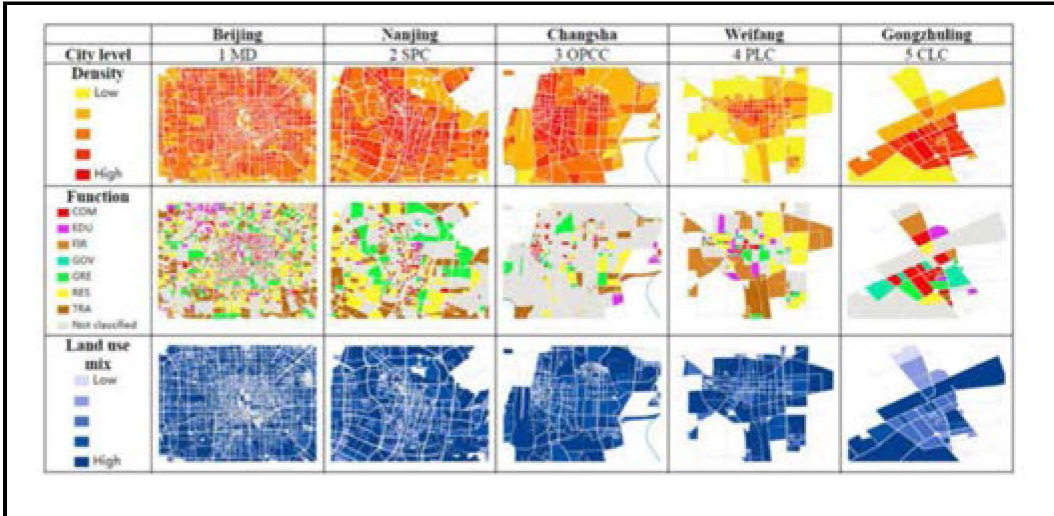 Figure: Visualizing urban gastronomy in China using Dianping.com data—an example of sensing city vitality through crowdsourcing.
Experimental Proof: Quantitative Urban Science
The BCL’s success stories provide a roadmap for this transition:
- National Scale: They identified urban parcels for 297 Chinese cities—a feat impossible with traditional, manual survey methods.
- Human Mobility: Using 15 million Sina Microblog records in Shanghai, they successfully modeled intra-urban movement, identifying "hot areas" and the temporal evolution of city usage.
- Open Data Sources: The paper lists a comprehensive taxonomy of open source and crowdsourcing platforms accessible to modern planners.
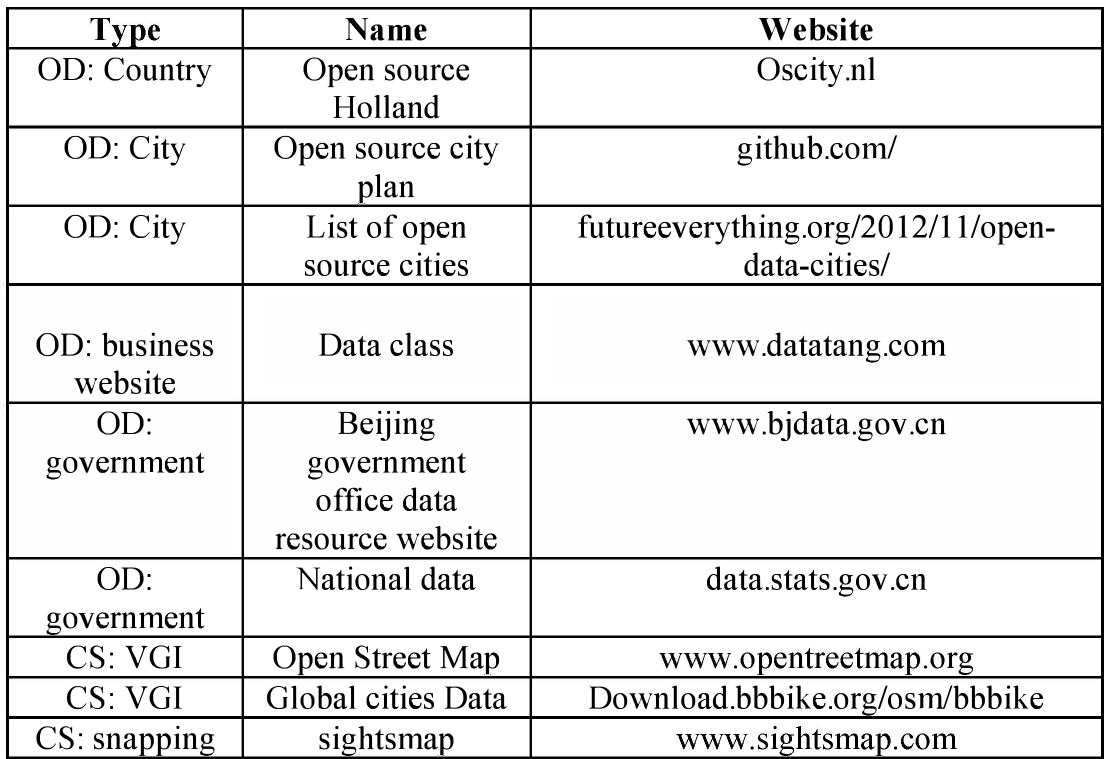 Table: Key Open Data and Crowdsourcing (CS) sources used in modern urban studies.
Deep Insights: The Democratization of Planning
The most profound contribution of this paper is the shift in the role of the citizen. In the "Crowdsourcing Pattern," the citizen is no longer just a "consumer" of government services but a "cooperator."
- Digital Democracy: Even if the government doesn't publish PM2.5 data, citizen-led testing forces transparency.
- Low Barriers: Crowdsourcing (e.g., Baidu Migration) reduces the threshold for participation. By simply living their lives and generating digital footprints, citizens provide the data required to build more "human-oriented" cities.
Conclusion & Future Outlook
The authors conclude that "Information is Power." The transition toward the New Science of Cities (as coined by Michael Batty) is inevitable. While hurdles like "representative bias" (not everyone uses microblogs) exist, the spirit of openness and sharing aligns with the modern citizen spirit and is the only path toward "fine-grained governance."
For future planners, the question is no longer how to find data, but how to embrace the "big happiness" of data abundance to create more equitable, efficient, and livable cities.