
Smart Cities: Bridging Open Data and Crowdsourcing in the US and Russia
Open data and crowdsourcing perspectives for smart city in the United States and Russia
This research paper conducts a comparative analysis of Smart City strategies in the United States and Russia, focusing on the integration of Open Data and Crowdsourcing. By evaluating 78 U.S. "Smart City Challenge" proposals and major Russian metropolitan projects, the study identifies distinct paradigms: the U.S. leans towards strategic, customer-centered management and cross-sector partnerships, while Russia employs a more centralized, top-down approach focused on transparency and efficiency.
TL;DR
Is a Smart City just a city with more sensors, or is it a new social contract between government and citizens? This research analyzes how the United States and Russia leverage Open Data and Crowdsourcing to redefine urban living. While the U.S. explores decentralized, collaborative "sharing economy" models, Russia faces structural challenges in moving beyond top-down transparency mandates to achieve true citizen engagement.
Problem & Motivation: The "Instrumental" Trap
Many cities rush to adopt Smart City technologies as a "marketing trend" rather than a management strategy. The authors identify a core tension:
- Passive Data Silos: Historically, government data stayed buried in internal departments.
- Unidirectional Communication: Older E-government models focus on "pushing" information to citizens rather than "pulling" insights from them.
- The Motivation Gap: Citizens often don't participate because they don't see the direct benefit or "value-add" of providing their data.
Methodology: Mapping the Smart City Triangle
The study defines the Smart City as the intersection of Technology (Data flows), People (Creativity/Education), and Institutions (Open Government).
To compare the two nations, the authors analyzed specific functional areas for crowdsourcing, such as Issue Tracking (reporting potholes), Idea Management (contests for urban solutions), and Microtasking (crowdsourced logistics or "last-mile" delivery).
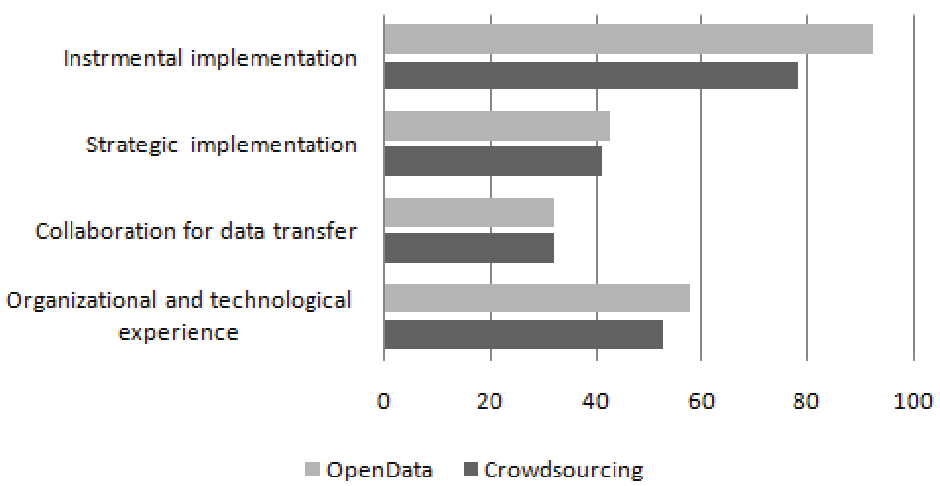
Key Insights: Strategic vs. Instrumental Implementation
The U.S. Perspective: The Rise of "Uber-style" Urbanism
The U.S. approach is characterized by a high degree of integration with the Sharing Economy. By analyzing 78 cities, the researchers found that:
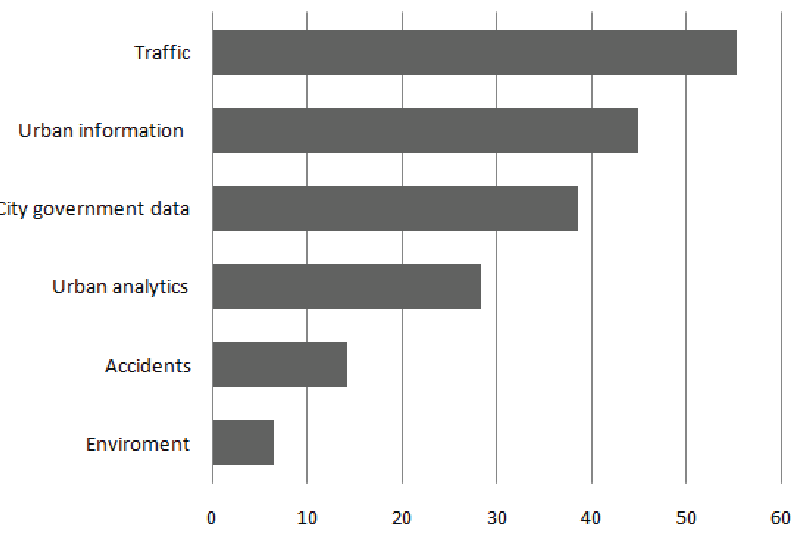
- Traffic and Mobility are the primary drivers for open data, leveraging real-time transit APIs.
- Strategic Commitment: Over 40% of U.S. proposals treated Crowdsourcing as a cornerstone of their management strategy, not just an auxiliary feature.
- Gamification: There is an emerging trend to use gamified mobile apps to maintain citizen interest in data mining and urban maintenance.
The Russian Perspective: Top-Down Transparency
In Russia, the Smart City vision is heavily influenced by federal mandates (e.g., the 2012 Presidential Decree). Key findings include:
- Centralization: The vision is largely restricted to global hubs like Moscow, St. Petersburg, and the specialized IT city of Innopolis (Kazan).
- Transparency Focus: Open Data is viewed mainly as an anti-corruption/accountability tool rather than a platform for collaborative innovation.
- Contention: Interestingly, much of Russia's urban crowdsourcing actually happens outside government platforms, through "contentious" civic apps like Beautiful Petersburg or RosYama, which arose from social movements.
Deep Insight: From "Ownership" to "Accessibility"
The paper’s most profound conclusion is that the bottleneck for Smart Cities isn't tech—it's culture. For a city to be truly "Smart," the government must undergo a transition from a mindset of data ownership (possessing and guarding information) to data accessibility (facilitating a space where others can build value).
Critical Analysis & Conclusion
While the paper provides a robust snapshot of 2016-era policies, it highlights a recurring flaw in urban tech: the Digital Divide. When cities rely on smartphones for pothole reporting (crowdsourcing), they risk prioritizing the infrastructure of affluent neighborhoods over poorer ones.
Future Outlook: Transitioning from passive "Open Data portals" to active "Civic Innovation ecosystems" remains the gold standard. Success depends on whether cities can prove to citizens that their input leads to tangible, visible change in their daily commute and environment.