
Unified Neuroimaging: Bridging the Gap Between fNIRS and fMRI via Metadata Standardization
Toward an Open Data Repository and Meta-Analysis of Cognitive Data Using fNIRS Studies of Emotion
This paper proposes a metadata-driven approach to establish an open data repository for functional Near-Infrared Spectroscopy (fNIRS) cognitive data, specifically focused on emotion research. By performing a meta-analysis of 20 fNIRS studies, the author demonstrates how term-based metadata analysis can facilitate the merging of incompatible fNIRS and fMRI datasets to enhance machine learning generalizability.
TL;DR
Cognitive science is currently plagued by "siloed" data and the "curse of dimensionality," making machine learning models for emotion recognition difficult to generalize. This paper argues for the creation of an open-data repository for fNIRS that uses term-based metadata and MNI coordinate mapping to merge datasets with fMRI, effectively "smoothing" noise and increasing sample populations for more robust AI models.
Background: The Problem of "Incompatible" Brains
In the quest to develop adaptive Human-Computer Interaction (HCI) and Brain-Computer Interfaces (BCI), researchers heavily rely on fNIRS (Functional Near-Infrared Spectroscopy) due to its portability and ecological validity. However, two major hurdles remain:
- Dimensionality vs. Sample Size: High-dimensional neuroimaging data paired with small participant pools leads to overfitting.
- The Subjectivity Gap: Ground-truth labels often rely on fallible self-report surveys, introducing significant noise into training sets.
While the fMRI community has moved toward "Big Science" with platforms like Neurosynth, fNIRS lacks a centralized infrastructure to aggregate findings.
Methodology: Mapping the Metadata Landscape
The author conducted a meta-analysis of 20 seminal fNIRS emotion studies, searching for commonalities that could serve as the "connective tissue" for a data repository.
1. Conceptual Synonymy
The study found that while a universal definition of "emotion" is absent, researchers use a stable set of technical and "folk" synonyms (e.g., "affect," "temperament," "frustration"). This linguistic consistency suggests that Natural Language Processing (NLP) can be used to automatically categorize and retrieve relevant datasets.
2. Standardized Stimuli and Surveys
A surprising degree of standardization already exists. Many studies utilize the International Affective Picture System (IAPS) and Self-Assessment Manikins (SAM).
 Figure 1: Comparison of hemodynamic response measurement (BOLD signal) between different neuroimaging modalities.
Key Findings: The Path to Integration
The analysis categorized fNIRS emotion research into three pillars that justify the move toward an open repository:
- Linguistic Stability: Authors frequently use neurophysiological markers (e.g., Prefrontal Cortex activation) as proxy definitions for emotional states.
- Stimulus Commonality: The widespread use of standardized audio/visual databases facilitates cross-study comparisons.
- MNI Coordinates: Since both fNIRS and fMRI can map data to MNI (Montreal Neurological Institute) coordinates, they inherently "speak the same language," allowing for the physical merging of BOLD signals across devices.
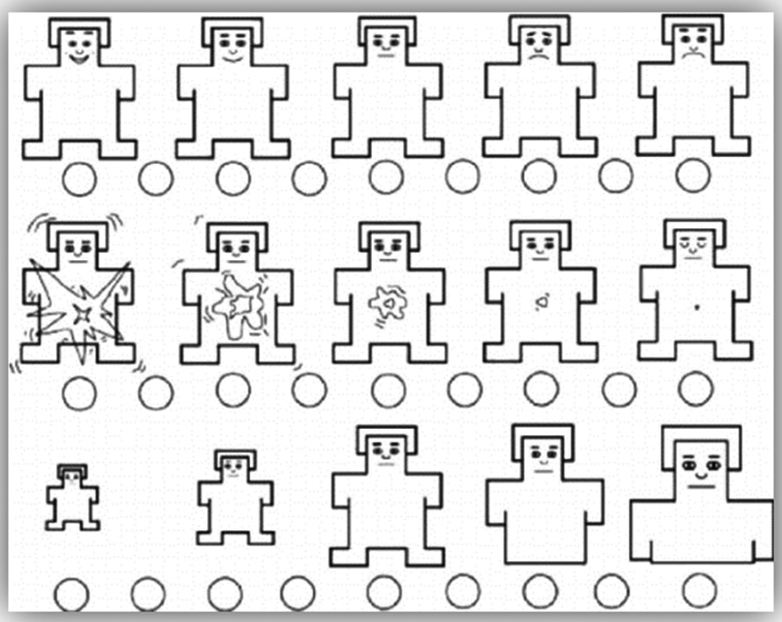 Figure 2: The Self-Assessment Manikin (SAM) remains a dominant standard for labeling affective data across fNIRS studies.
Critical Insight: Why This Matters for AI
The core value of this research lies in its vision for Machine Learning. By aggregating fNIRS data into a standardized repository, we can:
- Reduce Overfitting: Larger, merged datasets allow for more complex architectures without the risk of memorizing participant-specific noise.
- Account for Demographics: Metadata including age, gender, and culture (often ignored in single-lab studies) can be treated as features or control variables, addressing the reality that "sadness" looks different in the brain across different demographics.
Conclusion & Future Outlook
This paper is a call to action for fNIRS researchers to adopt the "Open Science" principles of the fMRI community. By standardizing naming conventions and stimulus metadata, the field can transition from isolated experiments to a collective, AI-driven understanding of human emotion. The next step? Prototyping automated metadata scrapers and resolving the technical hurdles of coordinate-based data fusion.
Takeaway: The future of BCI is not just better sensors, but better data infrastructure.