
OpenStudy: Transfoming Education into a Social Experience
Open social learning communities
This paper introduces OpenStudy, a large-scale Open Social Learning Community (SLC) designed to bridge the gap between static Open Education Resources (OER) and the need for interactive peer support. Using Web 2.0 technologies, it facilitates real-time collaborative study groups, connecting self-motivated learners globally.
TL;DR
The paper introduces OpenStudy, an innovative social learning community that transforms solitary online learning into a collaborative "world-wide campus quad." By combining open education content with real-time social tools and intelligent routing, it addresses the "engagement gap" in digital education.
The Engagement Gap: Why Content is Not Enough
The "Open Education movement" has successfully democratized access to high-quality materials (e.g., MIT OpenCourseWare). However, access does not equal success. The authors cite a startling statistic: 47% of dropouts cited boredom and lack of interest as their primary reason for leaving, despite 88% of them having passing grades.
Learners today live on the Internet and thrive on social interaction (Facebook, Twitter), yet traditional online education platforms often feel like "ghost towns." The intrinsic motivation of self-learners is easily dampened by the lack of a "study buddy" to help navigate difficult concepts.
Methodology: Engineering Social Presence
OpenStudy isn't just a forum; it's a dynamic system powered by several core technical pillars:
1. Real-Time Conversation Syncing
Unlike traditional asynchronous forums, OpenStudy prioritizes "really real-time" chat and group threads. This provides immediate gratification and creates a sense of "presence"—knowing others are studying the same material at the same time.
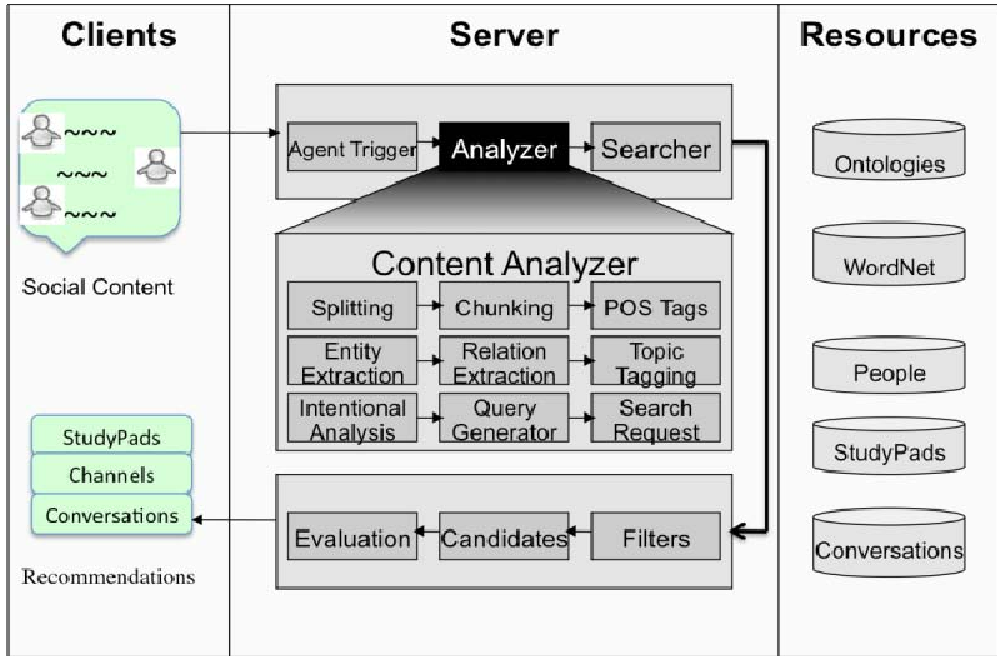
2. Socio-Semantic Routing & NLP
To prevent information overload and ensure questions are answered, the system uses:
- User Knowledge Profiles: Capturing short-term/long-term interests and expertise.
- Verbal Response Modes (VRM): Using NLP to categorize user intent (e.g., seeking help vs. offering advice).
- Intelligent Routing: Matching specific questions to peers most likely to provide a high-quality answer.
3. Establishing Social Capital
The platform treats reputation as a currency. By helping others ("thanking a user"), students build Social Capital. This capital mirrors real-world professional skills and expertise, providing an incentive for "reciprocity"—the mechanism that keeps communities sustainable.
Experimental Results: Community as a Catalyst
The platform's metrics since launch (Sept 2010) show significant traction:
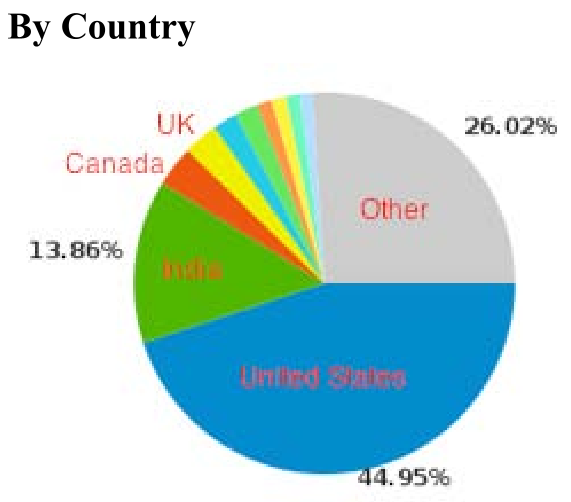
- Global Reach: 25,000+ students from 2,778 institutions.
- Engagement Growth: 20-25% monthly growth rate.
- Academic Impact: In college biology pilots, students who engaged with OpenStudy showed a strong correlation with higher final grades compared to non-users.
Critical Insight: The "Open" Disruption
The authors correctly identified that a university's value is bifurcated into Content and Community. While Content has been disrupted by Open Education Resources, OpenStudy represents the first serious attempt to disrupt the Community aspect through a scalable, technology-driven platform.
Conclusion & Future Outlook
OpenStudy proves that learning is inherently a social act. The shift from "I learn" to "We learn" is critical for the future of global education. However, the system faces challenges in maintaining long-term engagement levels once specific exams or courses end.
The future of this field lies in even deeper Learning Analytics—using the data from these hundreds of thousands of interactions to predict which learners are at risk of disengaging and intervening automatically via peer matching.
Disclaimer: This work acknowledges support from Georgia Tech and Emory University.