
OpenSocialGov: Reimagining Public Services as a Social Network
OpenSocialGov: A Web 2.0 Environment for Governmental E-Service Delivery
OpenSocialGov is a set of specialized libraries and a container environment designed to repurpose the Web 2.0 social networking paradigm for Transformational Government (T-Gov). By extending the Google-lead OpenSocial API, it enables decentralized e-service delivery through a "governmental network" where citizens, businesses, and agencies interact via secure, collaborative gadgets.
TL;DR
OpenSocialGov transforms rigid governmental e-services into a dynamic Web 2.0 social ecosystem. By extending the OpenSocial API, the framework allows citizens to manage their own "administrative profiles," delegate tasks to intermediates via an "Assign" relationship, and compose complex services (like tax clearances) through interoperable gadgets rather than centralized, black-box portals.
Problem & Motivation: The Silo Trap
For decades, Electronic Government (e-Gov) has been built on a provider-centric model. Public agencies act as the sole stewards of data, often hiding the "plumbing" of bureaucracy from the citizens they serve. This results in:
- Data Fragmentation: Citizens have no central view of their relationship across different ministries.
- Lack of Agency: Users cannot easily authorize intermediates (like accountants) to act on their behalf within digital systems.
- Rigid Composition: Combining services from two different agencies often requires expensive, custom-coded back-end integrations (e.g., BPEL workflows).
The authors' insight is profound: Why not treat governmental interactions like social interactions? If a citizen can manage a profile on MySpace or iGoogle, they can manage a "Governmental Profile" where agencies provide tools (gadgets) instead of just static forms.
Methodology: Extending OpenSocial for T-Gov
The core of OpenSocialGov is an extension of the Google-developed OpenSocial API. While standard social APIs focus on "Friends" and "Likes," governmental logic requires much stricter protocols.
1. The "Assign" Relationship
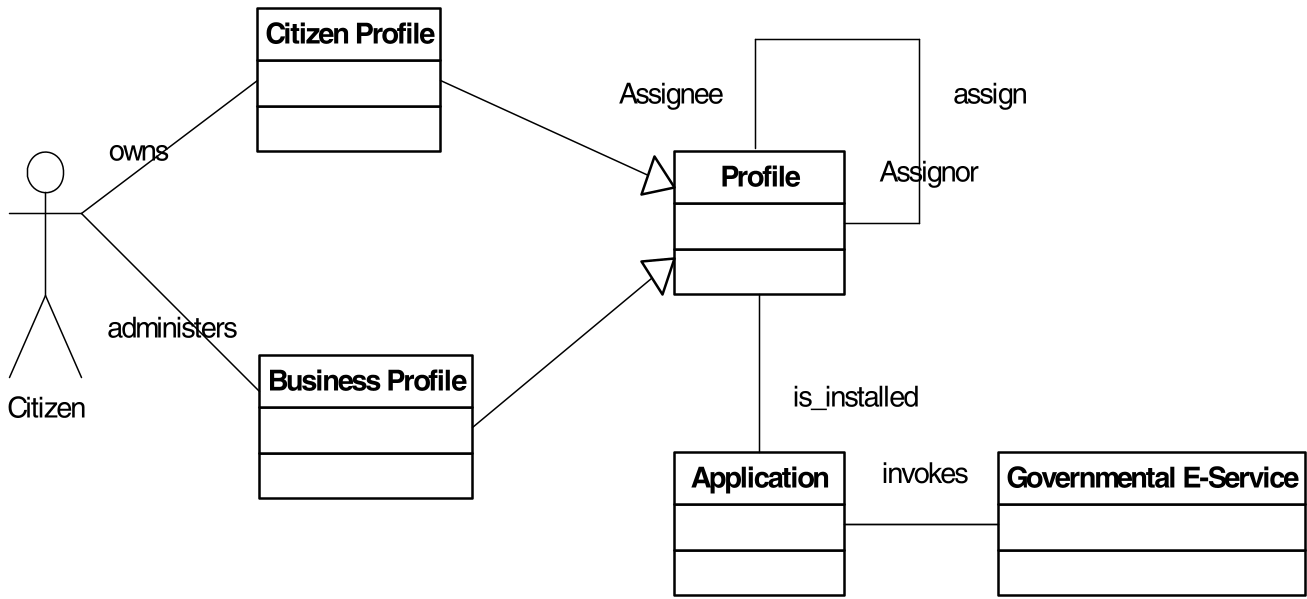
In the real world, citizens often use intermediaries (businesses or other individuals). OpenSocialGov extends the standard "Friend" relationship to create an Assign Relationship. This allows an assignor to delegate specific domains of their profile to an assignee for a set duration, ensuring the citizen remains the "reference point" for all actions.
2. Inter-Gadget Communication (Pub/Sub)
Instead of a single monolithic portal, services are delivered as Gadgets. Using the OpenAjax Hub, gadgets can "subscribe" to certain data (e.g., a "Payment" gadget waits for "Tax-Clearance" data). Once the required clearances are generated by other gadgets, the initial service executes automatically.
Experiments & Results: Modular Service Delivery
The authors illustrate the power of this model through a cross-organizational workflow example. Imagine a citizen, "Jason," seeking a public payment.
- Traditional Approach: A "One-stop portal" hides the logic. Jason provides his ID, and the system fetches data behind the scenes. Jason has no visibility into what data is shared.
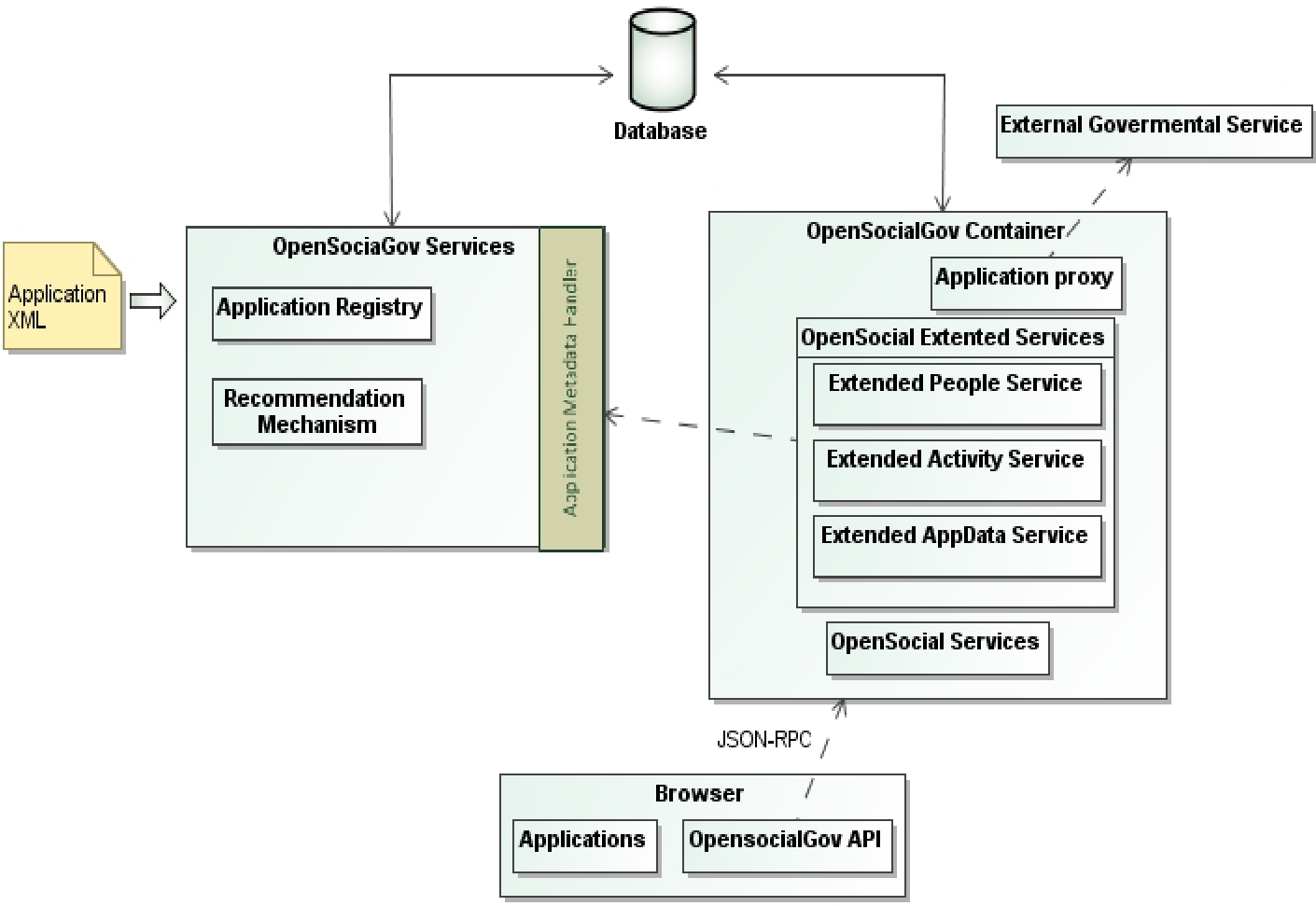
- OpenSocialGov Approach: Jason installs a "Payment Gadget." The gadget notifies him: "I need Tax and Insurance clearance." Jason then installs the respective agency gadgets. He sees the data flow, retains control, and the platform handles the complexity via a unified Application Registry.
The Application Registry
To ensure semantic interoperability, the system uses a dual-layer approach:
- Taxonomy: A formal hierarchy managed by agencies (based on standards like UK IPSV).
- Folksonomy: A "collaborative tagging" system where citizens can label services in natural language (e.g., "VAT" vs. "Value Added Tax"), which feeds into a Recommendation Mechanism.
Critical Analysis & Conclusion
Takeaway
OpenSocialGov successfully shifts the burden of technical integration from the back-end (G2G) to a standardized front-end (C2G). It treats "Government as a Platform" (GaaP), where the citizen’s profile acts as a personal data vault.
Limitations & Future Work
While the architecture is elegant, the paper identifies significant hurdles:
- Security & Trust: Moving sensitive data through a Web 2.0-style container requires robust OAuth implementation and cryptographic verification to prevent tampering.
- User Adoption: Will citizens find managing "gadgets" more or less complex than existing portals?
- Real-world Deployment: The current work is a prototype. Future evaluation in a high-stakes environment (like actual tax filing) is needed to prove scalability.
By leveraging existing social network standards, OpenSocialGov provides a blueprint for a more transparent, collaborative, and truly "transformational" relationship between a state and its constituents.