
Breaking the "Purdah" Barrier: How Gendered Networks Shape Community Opinions
Opinion Dynamics in Gendered Social Networks: An Examination of Female Engagement Teams in Afghanistan.
This paper presents a computational study on "Opinion Dynamics in Gendered Social Networks," specifically focusing on the deployment of Female Engagement Teams (FETs) in Afghanistan. By utilizing an extended Deffuant-Weisbuch (DW) bounded confidence model on gender-assortative graphs, it demonstrates that engaging the overlooked female demographic is a SOTA-effective strategy for stabilizing community-wide opinions.
TL;DR
Stabilization missions in conflict zones often fail because they only talk to half the population. This paper uses mathematical Opinion Dynamics to prove that Female Engagement Teams (FETs)—units capable of bypassing social segregation—are significantly more effective at shifting community sentiment than traditional male-only teams, even in the face of active opposition propaganda.
Background Positioning: This work bridges the gap between sociological observations of Afghan tribal structures and statistical physics models of opinion formation. It provides a theoretical backbone to years of anecdotal evidence from the field.
The "Purdah" Problem: Why Traditional Engagement Fails
In Afghan Pashtun culture, the concept of Purdah creates a "gender-assortative" network—a community where men talk to men and women talk to women, with very few links between the two.
From a network science perspective, this creates social silos. Historically, international forces (mostly male) could only interact with the male side of the graph. The authors identify a critical vulnerability: if women—who are highly influential within the household—are ignored, they remain an untapped or even hostile network component that stabilizes the community toward whichever influence (often the opposition) they are exposed to.
Methodology: Modeling Influence via Bounded Confidence
The researchers didn't just guess; they built a mathematical simulation using an extended Deffuant-Weisbuch (DW) Model.
1. The Math of Persuasion
The core equation determines how person changes their mind after talking to person :
But there's a catch: Bounded Confidence. If the difference in opinion is greater than a threshold , no influence occurs. This perfectly mirrors the "Backfire Effect" in psychology—we don't listen to people whose views are too extreme compared to our own.
2. The Network Architecture
The authors used two Erdős–Rényi random graphs to represent the two genders:
- The Female Network: Denser connectivity based on the "triadic closure" (friends of friends) observed in sociological data.
- The Male Network: Sparser, reflecting the individualistic and egalitarian "warrior" values of Pashtunwali.
- The Bridge: Limited links representing household ties (husband-wife, mother-son).
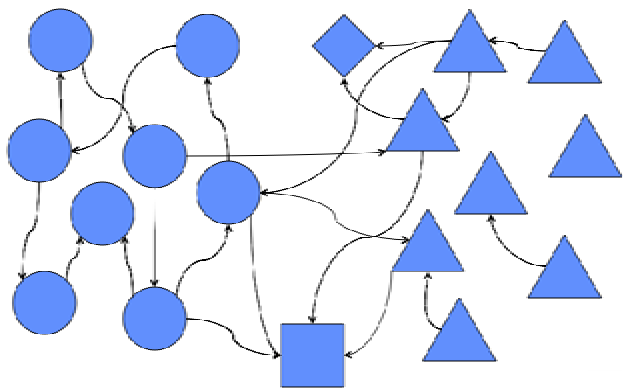 Note: Visualizing the higher density of communication within the female sub-network relative to the male network.
Experiments: FETs as a "Force Multiplier"
The study simulated several intervention scenarios. "NONE" represents the baseline, while "FEM," "MALE," and "MIX" represent who the FETs talk to.
| Intervention | Targeted Population | Resulting Mean Opinion |
|---|---|---|
| NONE | N/A | 0.500 |
| MALE | Men Only | 0.544 |
| FEM | Women Only | 0.613 |
| MIX | Everyone | 0.600 |
Key Insight: The Asymmetry of Influence
Surprisingly, targeting only women (FEM) resulted in a higher overall community opinion (0.613) than targeting only men (MALE) (0.544). Why? Because the female network is more tightly interconnected. A message that enters the female network spreads faster and more durably than in the sparser male network.
Countering the Opposition
The most critical test was the FEMOPPO scenario. Even when opposition forces successfully radicalized the male population ( opinion), the presence of FETs engaging the women successfully pulled the community average back to a positive .
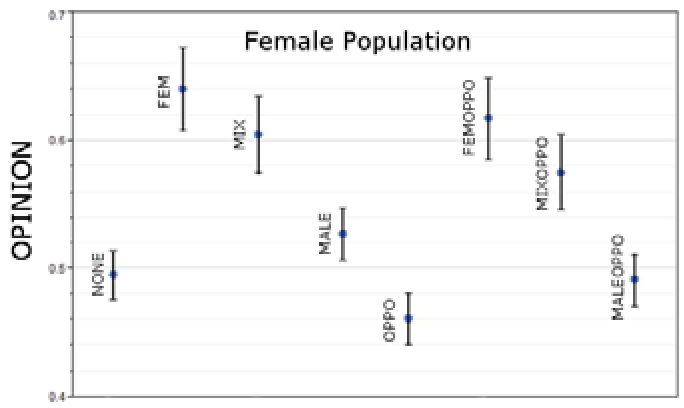 Fig 2: The clear performance gap showing FET interventions (blue/green) consistently outperforming traditional methods in shifting mean population opinion.
Critical Analysis & Real-World Value
Takeaway
This paper proves that in "gendered" social structures, information access is a strategic asset. FETs aren't just a "nice-to-have" for humanitarian aid; they are a structural necessity for any organization—military or NGO—wishing to communicate with a community effectively.
Limitations
- Topological Simplicity: The authors use random graphs, but real social networks often follow "Scale-Free" (power law) distributions where a few "super-spreaders" hold all the power.
- Single-Issue Opinion: Real life involves multidimensional opinions that interact (e.g., religion, economy, safety), which the 1D model doesn't capture.
Future Outlook
This methodology isn't limited to Afghanistan. It can be applied to any highly assortative network, such as polarized political groups, immigrant communities, or even corporate departments. By identifying the "hidden" network (the one typically ignored by mainstream engagement), strategists can find much more efficient paths to consensus.