
Cultivating Data: Designing Human-Centric Crowdsourcing for Urban Agriculture
Opinions concerning crowdsourcing applications in agriculture in D.C.
This paper presents a user-centered study exploring the design of a crowdsourcing application for agricultural ground-truthing in Washington D.C. Focusing on the plant "Lamb’s Quarters," it identifies human-centric motivators to bridge the labor gap in precision agriculture data collection.
TL;DR
Agriculture is entering a "Big Data" era, but it faces a bottleneck: we need humans on the ground to verify what satellites see—a process called ground-truthing. This study explores how to motivate urban residents in Washington D.C. to help researchers track "Lamb’s Quarters" (a nutritious weed) through a crowdsourcing app, finding that community and education matter far more than cash.
Background: The Ground-Truthing Bottleneck
In precision agriculture, we have more aerial imagery than we know what to do with. However, a machine learning model can't always distinguish a specific weed from a crop just by looking at a pixelated satellite image. It needs Ground Truth.
The problem? Farmers and researchers are stretched thin. Crowdsourcing seems like the logical solution, but most existing apps focus on simple classification (like tagging photos) rather than physical data collection. The authors argue that to get people into the fields, we must understand their intrinsic motivations.
Methodology: Listening to the "Crowd"
To design an effective crowdsourced platform, the researchers utilized a User-Centered Design (UCD) approach. They focused on Lamb's Quarters (Chenopodium album L.), a resilient, edible plant with significant nutritional value, especially relevant for urban "food deserts."

The team conducted six focus groups across the DMV (D.C., Maryland, Virginia) area. They used a codebook based on Brabham’s four motivators:
- Payment (Money/Rewards)
- Job Market Signaling (Resume building)
- Competence Development (Learning skills)
- Social Affiliation (Belonging and Altruism)
Deep Insight: What Actually Drives Participation?
The results were surprising and challenged the "Mechanical Turk" model of micro-payments.
1. The Power of Community (Social Affiliation)
This was the strongest motivator. Participants didn't just want an app; they wanted a connection. They expressed a deep desire to help their community—specifically if the data helped tackle food insecurity. However, they also noted a "disconnect" with researchers, feeling like "data points" rather than partners.
2. Learning as Incentive (Competence Development)
Urban gardeners in D.C. are eager for expertise. Participants suggested that the "payment" for their data should be access to exclusive foraging classes or seed swaps, rather than small sums of money.
3. Demographic Nuance
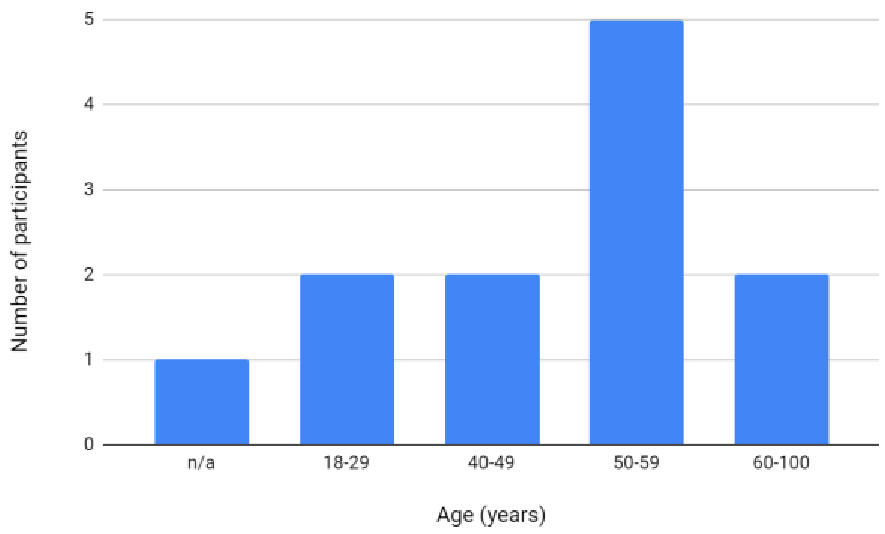
The study captured a specific demographic: a majority of participants were 50–59 years old and highly educated (Master’s or higher). This suggests that for this specific group, "hobbyist" fulfillment is a higher priority than "gig-work" income.
Design Implications for Tech Leaders
If you are building a crowdsourcing or citizen science platform, the study offers three gold standards:
- Context is King: Laypeople want to know why they are collecting data and where it goes.
- Temporal Boundaries: Instead of an "always-on" app, create data collection "events" with a finite timeframe. This respects user time and creates a sense of urgency.
- Trust and Safety: Since Lamb’s Quarters are edible, data quality isn't just a math problem—it’s a safety issue. The authors proposed a "training phase" where users must prove their identification skills before contributing live data.
Conclusion & Future Outlook
This paper serves as a reminder that "Big Data" in specialized fields like agriculture isn't just about algorithms; it's about the humans who provide the "Ground Truth." By pivoting from a transactional relationship to a social and educational one, researchers can build more resilient and high-quality datasets.
The next step for this research involves moving from focus groups to wireframes and interactive prototypes, ensuring that the software reflects the "Social Affiliation" that users crave.